

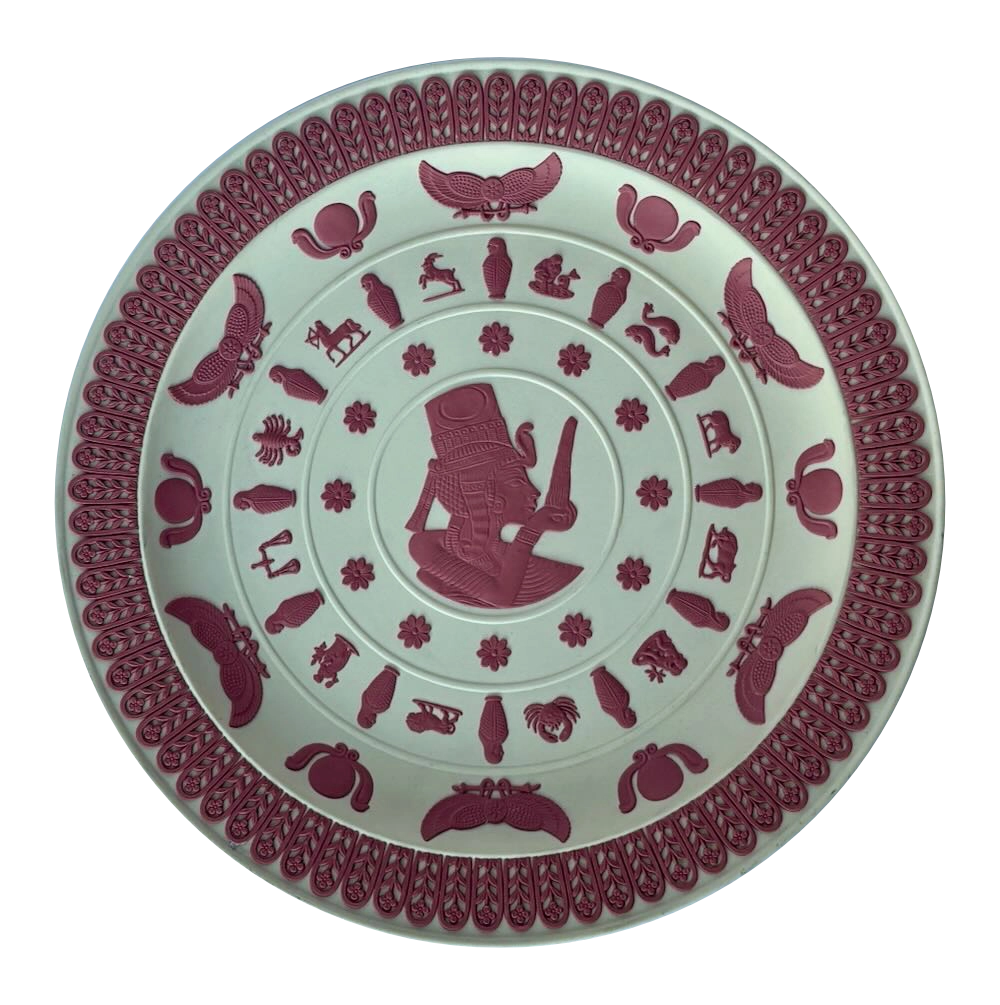
Wedgwood Jasperware stands as one of it’s most recognizable and enduring achievements, but it has never remained static. From its experimental beginnings in the 18th century to its role as a heritage product today, jasperware has evolved in ways that reflect changes in materials, craftsmanship, and market demand.
At first glance, a piece from the 1770s may look similar to one produced in the 20th century. Both share the same matte surface and classical decoration. Look closer, however, and the differences become clear. Relief thickness, translucency, body composition, and even the way decoration meets the surface all tell a story of gradual change.
Understanding this evolution does more than provide historical context. It gives you practical tools to identify, date, and evaluate jasperware with greater confidence.
Understanding the Origins of Jasperware
Wedgwood developed jasperware in the early 1770s as part of a broader effort to create refined, classical ceramics that could rival ancient carved stones and cameos. Earlier materials, including black basalt, had already explored classical forms, but jasperware introduced something new—the combination of color and applied relief.
This innovation required careful control of materials. Wedgwood experimented extensively with clay bodies and additives, eventually creating a fine, dense stoneware that could be colored throughout while remaining stable during firing. The addition of barium played a key role, helping produce the smooth, matte surface that defines jasperware.
From the beginning, the goal was not simply decoration, but imitation. Wedgwood aimed to reproduce the appearance of carved gems and shell cameos, where figures appear to emerge naturally from the surface.
Early Jasperware (1770s–1820): Precision and Experimentation
The earliest jasperware represents the highest level of technical and artistic achievement. Craftsmen worked with extremely fine materials and applied reliefs with remarkable precision.
Several characteristics define this period:
- Very thin sprigs: Skilled workers applied reliefs so thin that light can pass through their edges. This creates the subtle translucency that gives early pieces their cameo-like quality.
- Feathered transitions: Craftsmen blended the edges of each sprig into the body so carefully that the decoration appears to grow from the surface rather than sit on top of it.
- Dip jasper construction: Many early pieces use a white body coated with a thin colored layer on the exterior, leaving the interior white.
- Refined color palette: Pale blue, sage green, and lilac dominate, each chosen to enhance the classical aesthetic.
These features reflect a production process that prioritized craftsmanship over speed. Losses during firing were higher, and each piece required significant skill to complete successfully.
The Golden Age of Jasperware
By the late 18th and early 19th centuries, jasperware reached what many collectors consider its peak. Designs by artists such as John Flaxman brought classical subjects to life with exceptional clarity and balance.
Reliefs from this period maintain their thinness and precision, while compositions become more complex and ambitious. Larger vases, plaques, and medallions appear, often featuring continuous scenes rather than isolated figures.
At the same time, production expands. Wedgwood refines its formulas and techniques, allowing for greater consistency without sacrificing quality. The result is a body of work that combines technical mastery with artistic sophistication.
Victorian Jasperware (1830–1900): Adaptation and Expansion
As tastes changed during the Victorian period, jasperware adapted. Production increased, and the balance between craftsmanship and efficiency began to shift.
Key changes include:
- Thicker reliefs: Sprigs become slightly heavier, reducing breakage during handling and firing.
- Reduced translucency: Changes in material composition and thickness limit the subtle glow seen in earlier pieces.
- Broader product range: Jasperware expands beyond decorative vases and plaques to include functional objects such as boxes, desk items, and small ornaments.
- Transition toward solid jasper: Colored bodies increasingly extend throughout the piece rather than appearing only on the surface.
These changes reflect a growing market. Jasperware moves from exclusive luxury toward wider availability, while still maintaining its association with classical design.
Industrial Modernization (1900–1980): Standardization and Consistency
The 20th century brings significant changes in production methods. Mechanization and improved kiln technology allow Wedgwood to produce jasperware more efficiently and with greater consistency.
During this period:
- Reliefs become thicker and more uniformStandardized molds and processes reduce variation.
- Translucency disappearsChanges in formulation and firing eliminate the delicate glow seen in early work.
- Solid jasper dominatesMost pieces are colored throughout, with matching interiors and exteriors.
- Surface texture becomes more consistentThe silky quality of early jasper gives way to a more even, matte finish.
While these changes reduce some of the refinement seen in earlier pieces, they also make jasperware more durable and accessible.
Modern Jasperware (1980–Present): Heritage and Revival
In recent decades, jasperware has taken on a new role as a heritage product. Wedgwood continues to produce it, often drawing on historic designs and forms.
Modern pieces show:
- Very consistent color and finishAdvances in materials ensure uniform results.
- Thicker, more defined reliefsDesigned for durability and clarity.
- Reissues and commemorative piecesMany designs revisit earlier motifs rather than introducing entirely new styles.
- Strong branding and standardizationMarks, packaging, and presentation reflect modern production practices.
These pieces serve a different purpose than their 18th-century counterparts. Rather than representing cutting-edge innovation, they preserve a tradition.
What Has Changed—and What Has Stayed the Same
Despite these shifts, jasperware retains its essential identity.
What has remained consistent:
- Matte, unglazed finish
- Colored body with white relief decoration
- Strong connection to classical themes
What has changed over time:
- Relief thickness and sharpness
- Degree of translucency
- Body composition and color application
- Production methods and scale
These changes provide valuable clues for dating and evaluation.
A Practical Way to Recognize the Period
When examining a piece, focus on a few key features and consider how they work together.
Start with the relief. Thin, crisp edges suggest earlier production, while thicker, rounded forms point toward later periods.
Then look for translucency. Early pieces often show a soft glow along the edges of the relief when held to light. Later examples do not.
Next, check the body. A white interior usually indicates dip jasper, which is more common in earlier work. A fully colored body suggests later production.
Finally, observe how the relief meets the surface. Seamless transitions indicate careful hand application, while more visible edges suggest faster, more standardized production.
Each of these observations narrows the timeframe. Taken together, they provide a reliable sense of when the piece was made.
Why This Evolution Matters to Collectors
Understanding how jasperware evolved allows you to see beyond surface appearance. Two pieces may share the same design, yet differ significantly in age, quality, and value.
Collectors tend to value:
- early pieces with thin, translucent reliefs
- examples showing exceptional craftsmanship
- forms and colors associated with earlier production
Later pieces still hold appeal, particularly for their durability and consistency, but they serve a different role in a collection.
Recognizing these distinctions helps you make informed decisions, whether you are buying, selling, or simply studying a piece.
Final Thoughts
Jasperware tells a story of continuous refinement. It begins as an ambitious experiment, reaches a peak of craftsmanship, adapts to changing markets, and ultimately becomes a symbol of tradition.
Each phase leaves its mark in the material itself. By learning to recognize these changes, you gain a deeper understanding of the object in front of you—not just what it is, but where it fits within Wedgwood’s long history.