

Description
Vintage Baluchi Embroidered Panel from Iran
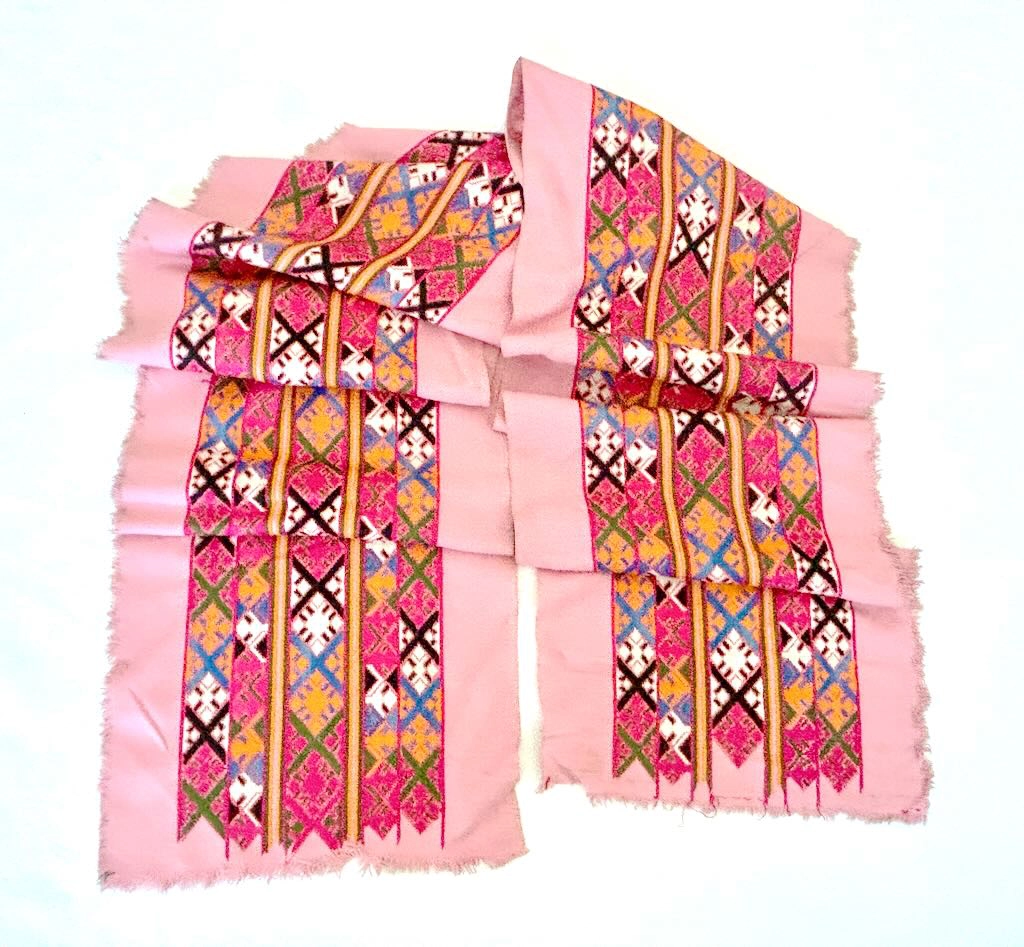
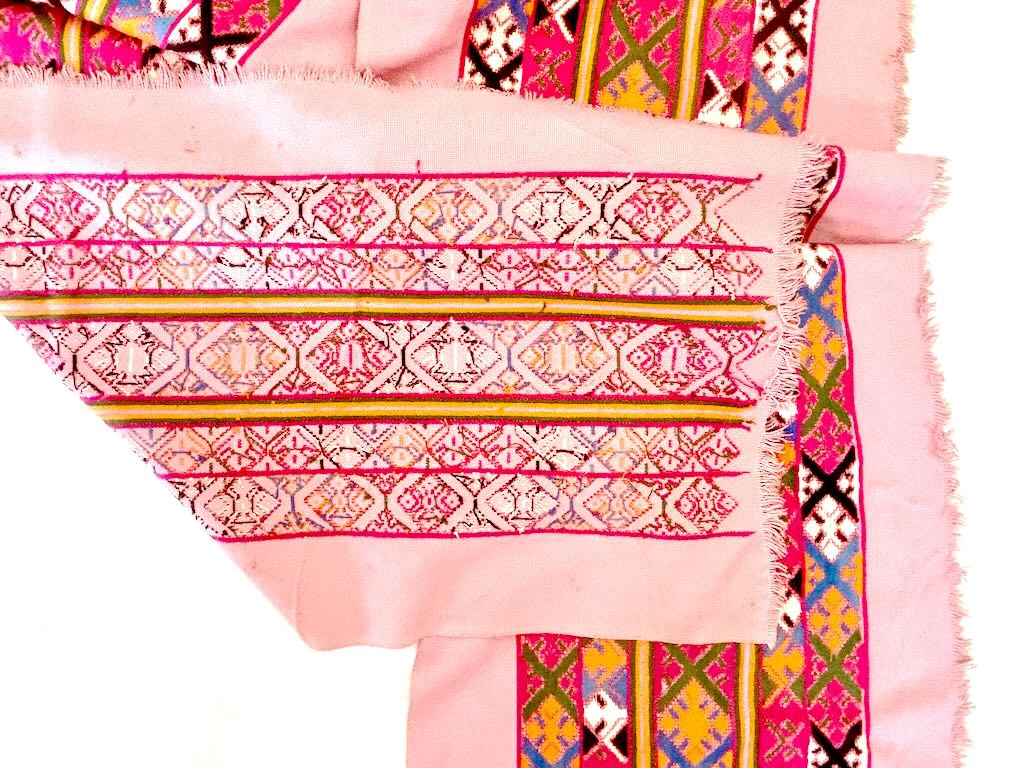
This beautiful Baluchi embroidered panel represents an authentic example of one of Iran’s most celebrated tribal textile traditions. Unlike completed garments, this remarkable panel survives exactly as it would have left the embroiderer’s hands before being incorporated into clothing or another finished textile. Its untouched condition offers a fascinating glimpse into the traditional methods used by Baluchi artisans and preserves the craftsmanship exactly as it was intended.
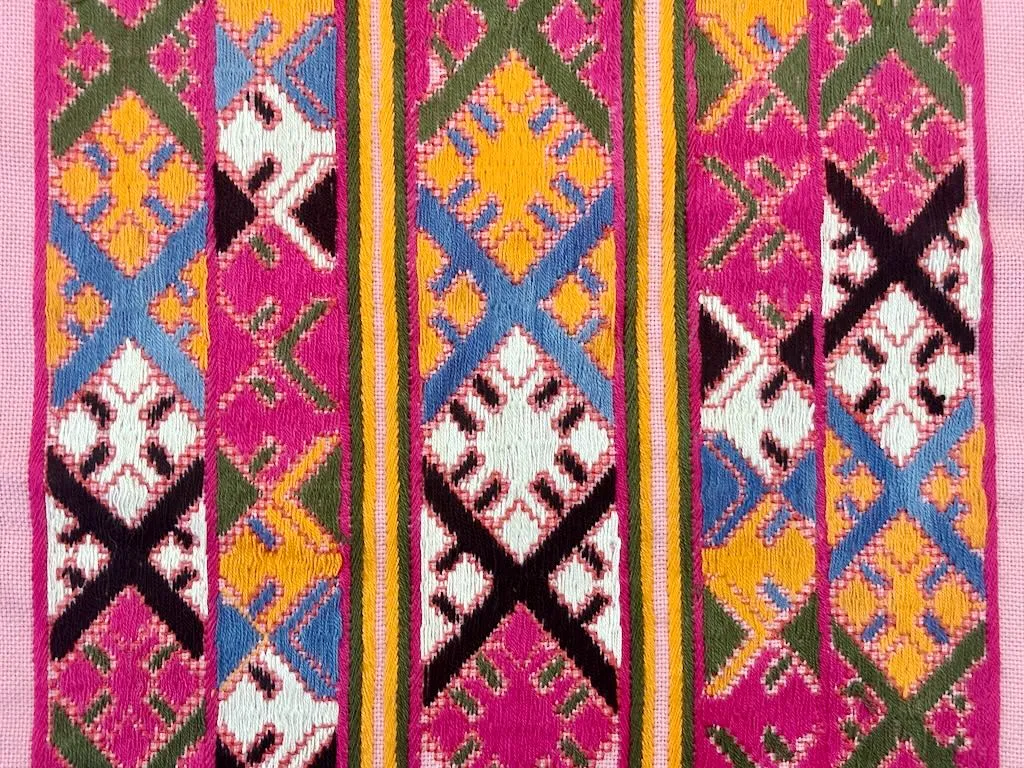
The richly embroidered geometric composition stretches almost the full length of the textile, creating a striking visual rhythm through repeating diamonds, stepped motifs, and carefully balanced borders. The harmonious palette of rose pink, raspberry, lavender blue, golden yellow, olive green, ivory, and black produces a vibrant composition that remains fresh and remarkably well preserved.
To learn more about the history, symbolism, and remarkable craftsmanship of this textile tradition, we invite you to read our companion articles, “Baluchi Embroidery of Iran: A Remarkable Textile Tradition“ and “How to Understand the Structure of Traditional Baluch Clothing.“
Traditional Baluchi Needlework
For centuries, Baluchi embroidery has been admired for its extraordinary precision, brilliant color combinations, and intricate geometric designs. Skilled artisans created these embroideries by carefully counting threads and placing thousands of individual stitches with remarkable consistency. The resulting patterns achieved a level of symmetry and refinement that distinguished Baluchi embroidery throughout southeastern Iran.
This panel beautifully demonstrates that tradition. Every embroidered band aligns with remarkable precision while the repeating geometric motifs create movement across the entire composition. The reverse of the textile clearly reveals the meticulous hand embroidery, providing further evidence of the remarkable skill required to produce work of this quality.
An Unused Garment Panel
Unlike many surviving examples that were sewn into dresses or altered over time, this embroidered panel remains unused. The generous fabric attachment margins surrounding the embroidery were intentionally left un-embroidered to allow the finished panel to be incorporated into a garment or another textile without disturbing the decorative work.
Its untouched condition makes it particularly appealing to collectors and textile enthusiasts because it preserves an authentic stage in the traditional production process. Today, the panel may be appreciated as a collectible textile, displayed as textile art, or carefully incorporated into a future conservation or design project according to the owner’s vision while maintaining its historical integrity.
Baluchi Embroidery and the Cultural Revival of the 1960s
During the 1960s and 1970s, Baluchi embroidery experienced renewed recognition throughout Iran as traditional regional craftsmanship attracted growing national and international appreciation. Designers began incorporating Baluchi embroidery into elegant contemporary fashion, while Empress Farah Pahlavi actively promoted Iranian arts and crafts through exhibitions, cultural initiatives, and public appearances featuring traditional textiles.
Acquired in Tehran during this important period, this embroidered panel reflects the remarkable artistic tradition that gained international recognition through those efforts. Today, authentic examples continue to be sought by collectors of Persian textiles, Islamic decorative arts, tribal embroidery, and ethnographic material for both their cultural significance and extraordinary craftsmanship.
Condition and Provenance
This embroidered garment panel remains in excellent vintage condition. The embroidery retains exceptional color, crisp stitch definition, and remarkable visual impact throughout its entire length. The reverse displays beautifully preserved hand embroidery that confirms its authentic handmade construction.
The surrounding attachment margins show light age-related handling marks and minor surface soiling consistent with decades of careful storage. These marks are confined primarily to the unused fabric margins and do not affect the embroidered section itself.
Acquired from an antique dealer in Tehran during the 1960s, the panel has remained carefully preserved in the Bernardi Family Collection ever since.
Whether preserved as an outstanding example of Baluchi embroidery, displayed as an important work of tribal textile art, or incorporated into a carefully considered conservation project, this remarkable embroidered panel celebrates the enduring beauty and technical mastery of one of Iran’s finest regional embroidery traditions.