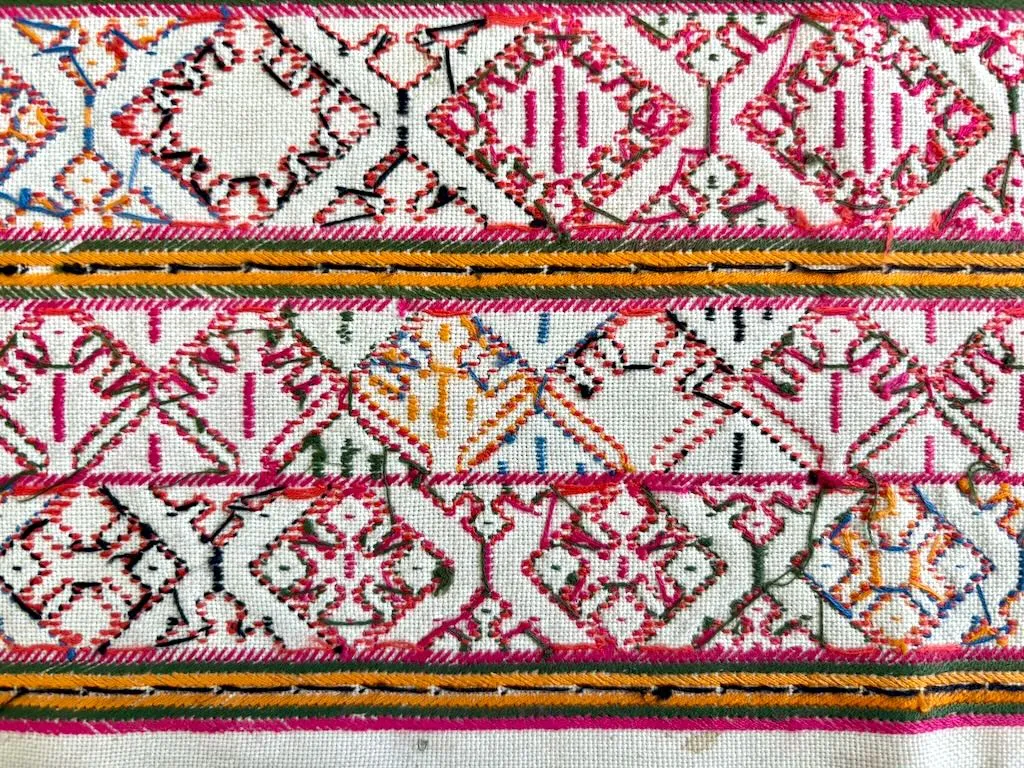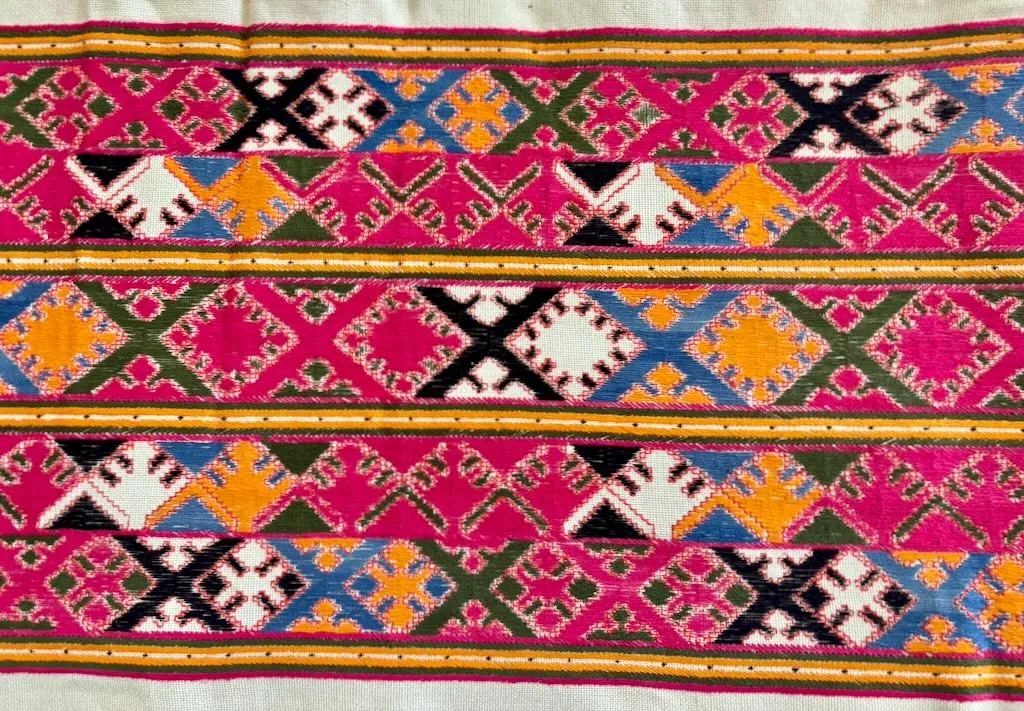

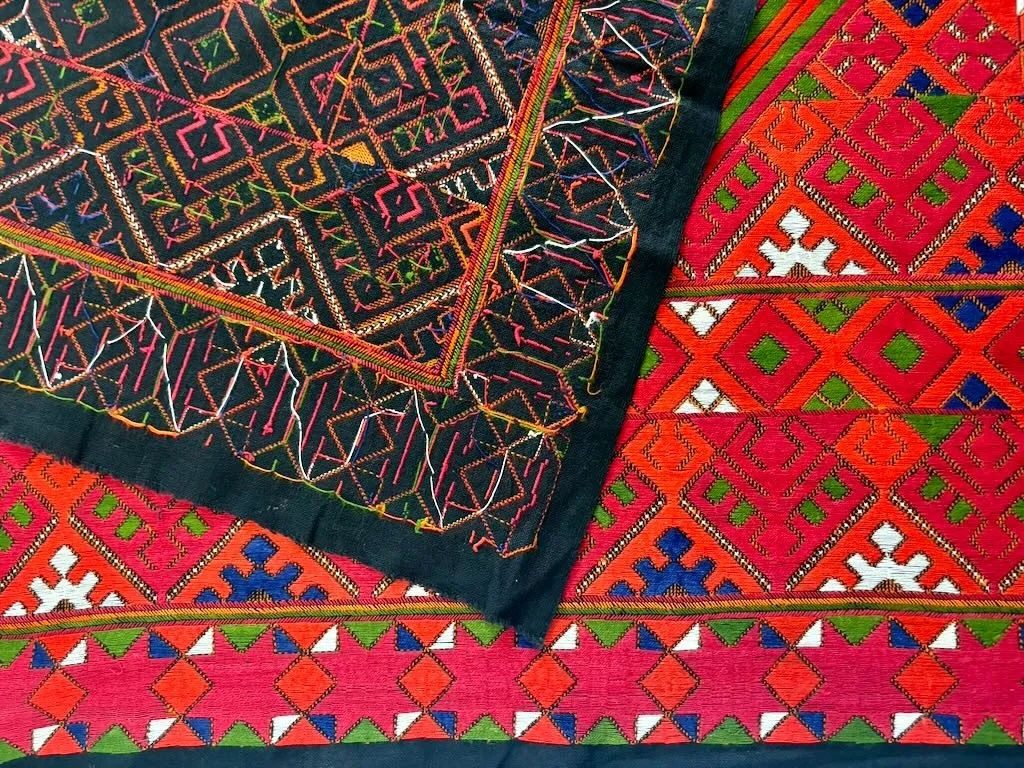
Baluchi embroidery ranks among the most distinctive textile traditions of Iran. Created primarily by women in the southeastern province of Sistan and Baluchestan, this remarkable needlework transforms simple cotton garments into dazzling displays of color, geometry, and cultural identity. For generations, embroidered panels have adorned dresses, trousers, caps, and household textiles, carrying with them stories of family heritage, regional identity, and artistic skill.
Unlike many decorative arts that migrated into workshops and factories, Baluchi embroidery remained deeply connected to domestic life. Mothers taught daughters, grandmothers guided granddaughters, and patterns passed from one generation to the next through practice rather than written instruction. As a result, the tradition preserved a remarkable degree of authenticity while continuing to evolve within the communities that created it.
Today, collectors, museums, and textile scholars recognize Baluchi embroidery as one of the most sophisticated forms of counted-thread needlework in the Middle East. Yet its appeal extends beyond technical excellence. Every embroidered panel reflects the creativity of the woman who stitched it, the village where it was made, and the cultural traditions that shaped its design.
The Cultural Landscape of Baluchistan
To understand Baluchi embroidery, it helps to understand the region that produced it. Iranian Baluchistan occupies the southeastern corner of Iran, bordering both Pakistan and Afghanistan. The landscape ranges from arid deserts and rugged mountains to coastal settlements along the Gulf of Oman.
Historically, the region developed somewhat independently from the major urban centers of Iran. Tribal communities maintained their own customs, clothing styles, and artistic traditions. Isolation encouraged the preservation of local practices, while trade routes connecting Persia, Central Asia, India, and Arabia introduced new materials and ideas.
Embroidery became an important means of personal expression within these communities. While architecture and luxury arts flourished in the great cities of Isfahan, Shiraz, and Tabriz, women in Baluchistan developed a textile language all their own. The result was an embroidery tradition that differed markedly from the floral elegance of Persian court textiles or the gold-work associated with urban workshops.
Baluchi Embroidery: A Tradition Passed Through Generations
For centuries, Baluchi embroidery formed an essential part of daily life rather than a separate artistic profession. Girls often began learning basic stitches at a young age. Over time, they mastered increasingly complex patterns and eventually created embroidered garments for themselves, their families, and their future households.
Skill in embroidery carried social significance. A beautifully embroidered garment demonstrated patience, discipline, and artistic ability. Wedding trousseaus frequently included embroidered clothing, and some pieces required months of labor to complete.
Because knowledge was transmitted orally and visually, local styles developed naturally. Villages only a short distance apart sometimes favored different motifs, color combinations, or stitch arrangements. These regional distinctions remain valuable clues for researchers attempting to identify the origins of antique pieces.
The Geometry Behind Baluchi Embroidery
One of the first things that strikes viewers encountering Baluchi embroidery is its strong geometric character. Diamonds, stepped forms, zigzags, chevrons, and intricate grids dominate the visual vocabulary.
This geometric appearance developed partly from the technical nature of the embroidery itself. Traditional artisans worked on loosely woven cotton fabrics, counting warp and weft threads to create symmetrical designs. Unlike freehand floral embroidery, counted-thread work naturally encourages angular forms and precise repetition.
As a result, many patterns display an architectural quality. Shapes interlock, expand, and repeat with remarkable precision across the surface of a garment. Even highly complex compositions often reveal an underlying mathematical structure.
Scholars have proposed various interpretations for these motifs. Some researchers associate certain forms with mountains, water sources, protection, fertility, or tribal identity. While such interpretations may reflect local beliefs, definitive meanings are often difficult to establish. Consequently, most museum collections describe these designs as geometric motifs rather than assigning specific symbolic meanings without supporting evidence.
Traditional Materials and Construction
The materials used in Baluchi embroidery reflect both practicality and artistic ambition.
Historically, women embroidered on handwoven cotton or linen fabrics. Dark backgrounds were particularly popular because they created dramatic contrast with brightly colored threads. Black, deep red, plum, and dark brown fabrics frequently appear in older garments.
Embroidery threads varied according to the purpose of the garment. Everyday clothing often incorporated cotton thread, while special occasion garments featured silk and, in some cases, metallic embellishments. Mirrors occasionally appeared as decorative accents, especially in coastal regions where interaction with neighboring cultures introduced additional decorative techniques.
The embroidery itself was usually created separately on individual panels before being incorporated into a completed garment. This approach allowed artisans to concentrate their work on highly visible areas while also making it possible to reuse valuable embroidered sections when clothing wore out.
The Remarkable Vocabulary of Baluchi Stitches
The visual richness of Baluchi embroidery emerges from a sophisticated combination of stitches rather than a single technique.
Among the most frequently documented are:
- Ṣarrāfī-dūzī, a fine double back stitch used to create structural outlines and intricate linear patterns.
- Ẓarīf-dūzī, a satin stitch technique often employed in geometric fillings.
- Perīvār-dūzī, a delicate interlacing stitch used for borders and decorative details.
- Balūčī-dūzī, small blocks of satin stitching arranged into geometric compositions.
Additional techniques include running stitches, ladder stitches, buttonhole stitches, eyelet work, and raised braid-like stitches that create subtle surface texture.
What makes Baluchi embroidery particularly impressive is the way these techniques work together. A single panel may combine multiple stitch types to create visual depth, texture, and structural stability. Dense embroidery often covers the underlying fabric almost entirely, producing a richly textured surface that resembles woven tapestry at first glance.
Regional Variations Across Iranian Baluchistan
Although outsiders often refer to Baluchi embroidery as a single tradition, the reality is far more complex.
Communities throughout Iranian Baluchistan developed distinctive regional styles. Areas around Iranshahr, Saravan, Khash, and other settlements cultivated unique approaches to color, scale, and pattern composition.
Qasemabad gained particular recognition through the work of master embroiderers such as Mahtab Norouzi, whose extraordinary skill eventually attracted national attention. Her work helped introduce Baluchi embroidery to a broader audience while preserving traditional methods.
Some regions favored extremely fine, densely packed patterns requiring exceptional technical precision. Others preferred bolder geometric forms with larger visual elements. Color palettes also varied, influenced by local preferences and available materials.
For collectors, these regional differences add another layer of interest. Identifying a piece’s likely place of origin often requires careful examination of stitch structure, motif arrangement, color selection, and construction techniques.
Embroidered Dress as Cultural Identity
Baluchi embroidery was never merely decorative. It formed an integral part of traditional clothing and played an important role in expressing identity.
The most distinctive women’s garment is the pashk, a long dress adorned with elaborate embroidered panels. These panels typically appear on the bodice, sleeves, cuffs, and front skirt section. The most impressive examples transform large portions of the garment into fields of intricate geometric embroidery.
Clothing also reflected age, marital status, social standing, and regional affiliation. Special occasion garments often displayed considerably more embroidery than everyday clothing. Wedding attire, in particular, showcased the highest levels of craftsmanship.
Men’s clothing generally featured less embroidery, although decorated caps and accessories remained important elements of traditional dress.
The Influence of Modern Fashion
During the twentieth century, Baluchi embroidery began attracting attention beyond its traditional communities. Designers, collectors, and cultural advocates recognized both its artistic value and its potential within contemporary fashion.
One of the most important figures in this revival was Mehr Monir Jahanbani, who helped bring Baluchi needlework to wider national attention during the 1960s. Collaborations with designer Keyvan Khosrovani introduced traditional embroidery into sophisticated modern garments.
This movement eventually reached the highest levels of Iranian society. Empress Farah Pahlavi famously incorporated Baluchi embroidery into several formal ensembles, demonstrating that a regional folk tradition could stand alongside the finest examples of contemporary fashion.
The revival created new opportunities for artisans while helping preserve techniques that might otherwise have declined during a period of rapid social change.
Collecting Baluchi Embroidery Today
Interest in Baluchi embroidery continues to grow among collectors, museums, and textile historians. Antique garments, embroidered panels, and related textiles offer valuable insights into the cultural history of southeastern Iran.
When evaluating Baluchi embroidery, collectors often consider several factors:
- Stitch density and technical quality.
- Condition and preservation.
- Original garment context.
- Regional characteristics.
- Age and provenance.
- Use of silk, mirrors, or metallic elements.
Detached panels deserve particular attention. Many surviving examples originated from worn garments whose embroidered sections were carefully preserved and reused. Although separated from their original clothing, these fragments often represent some of the finest needlework produced by Baluchi artisans.
Museum collections in institutions such as the Victoria and Albert Museum, the British Museum, and the Textile Research Centre in Leiden have helped document these traditions, providing valuable reference material for researchers and collectors alike.
Why Baluchi Embroidery Matters Today
Baluchi embroidery represents far more than decorative needlework. It preserves a visual record of community traditions, regional identities, and generations of artistic knowledge. Every panel reflects countless hours of labor, extraordinary technical skill, and a deep understanding of design.
At a time when many traditional crafts face increasing pressure from industrial production and changing lifestyles, Baluchi embroidery remains a powerful reminder of the creativity embedded in everyday life. Its geometric beauty continues to captivate modern audiences, while its historical significance offers valuable insights into the cultural heritage of Iran.
For collectors, scholars, and textile enthusiasts, these embroidered works provide an opportunity to engage with a living tradition that has endured for centuries. Whether encountered as a complete garment, a wedding panel, or a carefully preserved fragment, Baluchi embroidery stands as one of the most remarkable achievements of Persian textile art.
Key Takeaways
Baluchi embroidery developed in southeastern Iran and remains one of the country’s most distinctive needlework traditions. Women traditionally created embroidered panels for clothing, dowries, and household textiles using sophisticated counted-thread techniques. Regional variations emerged across Baluchistan, producing diverse styles and motif traditions. Although deeply rooted in local culture, Baluchi embroidery gained national recognition during the twentieth century and continues to attract collectors, museums, and textile scholars around the world. Its combination of technical precision, cultural significance, and visual beauty ensures its place among the great textile traditions of Iran.