
Baluchi Dress Panels and Garment Construction
Traditional Baluch clothing is among the most recognizable forms of dress in Iran and neighboring regions. While many observers immediately notice the intricate embroidery, the structure of the garments themselves is equally fascinating. A Baluch dress is not simply decorated with embroidery. Instead, it is carefully constructed around embroidered panels that serve both decorative and practical purposes.
For generations, Baluch women transformed simple fabrics into striking garments through the placement of highly detailed embroidered sections. These panels often required weeks or even months of work and frequently represented the most valuable part of the finished garment. In some cases, families preserved and reused them long after the surrounding fabric had worn out.
Understanding how these garments were constructed provides valuable insight into the artistry of Baluchi embroidery and helps collectors identify antique dress fragments that survive today in museums and private collections.
The Importance of Embroidered Panels in Baluch Clothing
Unlike many forms of embroidery that cover an entire garment, Baluchi embroidery traditionally concentrates on specific areas of clothing. This approach allowed embroiderers to create maximum visual impact while using their time and materials efficiently. The embroidered sections became focal points that immediately attracted attention. Their placement highlighted the wearer’s craftsmanship, social identity, and regional heritage.
Because these panels required such a significant investment of labor, they often outlasted the garments to which they were attached. As a result, many antique Baluchi textiles encountered today survive as individual embroidered panels rather than complete dresses. For collectors and historians, these surviving fragments provide an important record of traditional clothing construction.
The Pashk: The Traditional Baluch Woman’s Dress
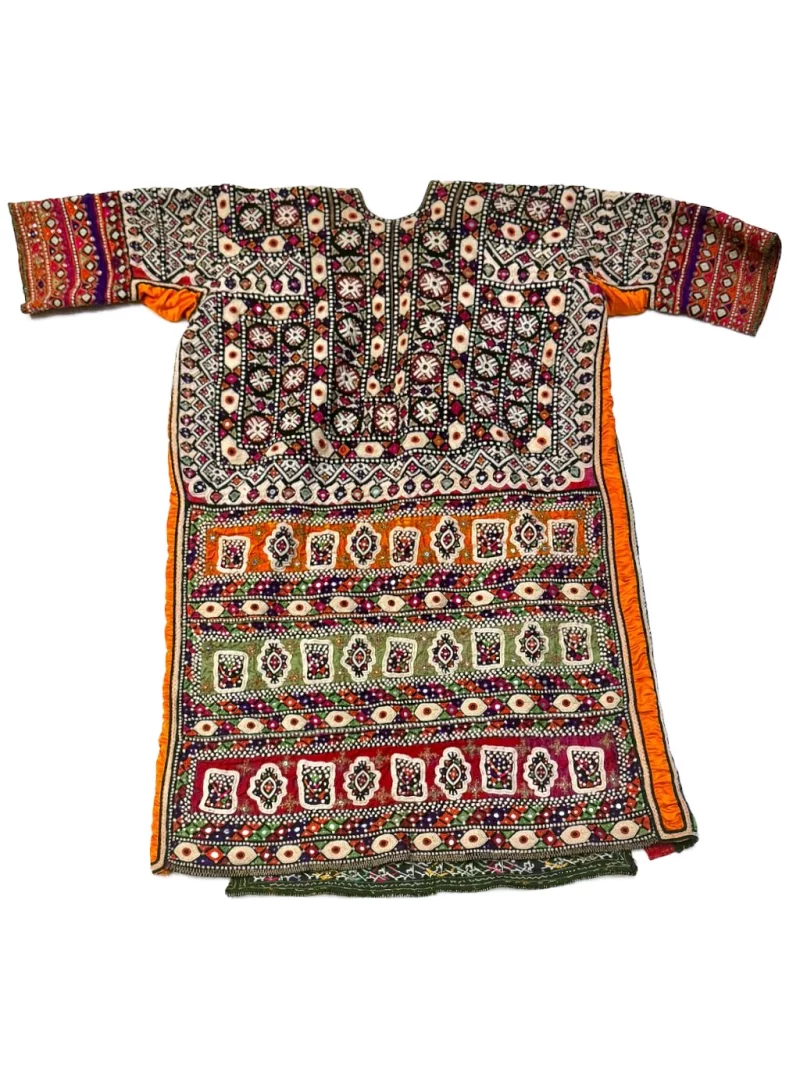
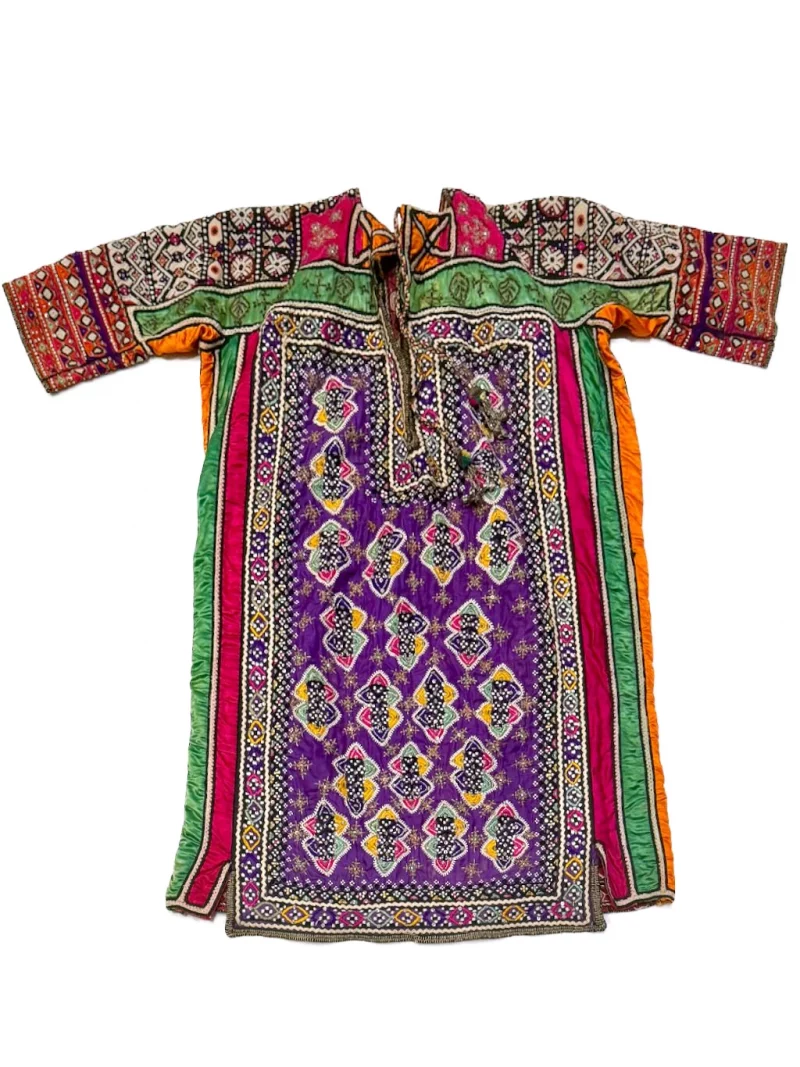
The traditional Baluch woman’s dress, commonly known as the pashk, forms the foundation of the region’s embroidered costume tradition. At first glance, the garment appears relatively simple. It typically consists of a long, loose-fitting dress designed for comfort and practicality in the harsh climate of Baluchistan. Closer examination, however, reveals an extraordinary level of craftsmanship concentrated in specific areas.
Large embroidered panels decorate the chest, sleeves, cuffs, and sometimes portions of the skirt. These sections transform an otherwise modest garment into a remarkable work of textile art. Regional preferences influenced both the size and arrangement of these embroidered elements. Some communities favored densely embroidered surfaces covering large areas of fabric, while others preferred more restrained decorative schemes.
The Doch System
One of the most distinctive features of Baluch clothing construction is the use of separately embroidered panels, often collectively described as doch. Rather than embroidering directly onto a completed garment, women frequently created individual embroidered sections first and then incorporated them into the finished dress. This method offered several advantages.
First, it allowed the embroiderer to work comfortably on manageable pieces of fabric. Second, it made it possible to replace worn sections of a garment without recreating the entire embroidered design. Finally, it enabled valuable embroidered panels to be preserved and reused. Many surviving antique examples demonstrate how important these panels were within Baluch textile culture.
The Jig: The Central Chest Panel
Among the most visually striking elements of traditional Baluch dress is the jig, the large embroidered panel positioned on the front of the bodice. This section often contains the most elaborate embroidery found on the garment. Complex geometric designs, carefully arranged borders, and densely stitched patterns combine to create a powerful visual centerpiece.
The jig frequently served as a showcase for an embroiderer’s skill. Fine examples display extraordinary precision, with motifs aligned so accurately that the embroidery appears almost woven rather than stitched. Collectors often encounter detached jig panels in museum collections and antique textile markets because these sections were commonly preserved when garments deteriorated.
The Toi: The Decorative Central Strip
Within the larger chest panel, many garments incorporate a narrow vertical element known as the toi. The toi divides the composition and introduces additional visual structure. Depending on the regional style, it may feature distinct motifs, contrasting colors, or specialized stitch techniques that differ from the surrounding embroidery. Although relatively small, this component contributes significantly to the overall balance of the design. Its presence also helps researchers identify regional construction methods and stylistic traditions.
Sleeve Embroidery and the Banzar Panels
The sleeves of traditional Baluch dresses frequently feature embroidered sections known as banzar or banzari panels. These embroidered elements vary considerably in size and complexity. Some examples consist of narrow decorative bands, while others cover substantial portions of the sleeve.
The arrangement of sleeve embroidery creates visual continuity between the chest panel and the rest of the garment. Repeating motifs often connect the various embroidered sections into a unified design. In particularly fine garments, sleeve panels demonstrate the same technical precision found in the central chest embroidery.
Pado and Las: Embroidered Pocket Panels
Traditional Baluch clothing sometimes incorporate smaller embroidered components known as pado or las. These decorative panels often appear near pockets or functional openings in the garment. Although less prominent than the chest or sleeve embroidery, they contribute to the overall harmony of the design.
Because smaller panels experienced less wear than major garment sections, they occasionally survive in excellent condition. Such fragments can provide important information about stitching techniques and design preferences.
Pakka: Dense Surface Embroidery
Baluchi embroidery is famous for its dense, richly textured appearance. One term frequently encountered in textile studies is pakka, which refers to embroidery that covers the underlying fabric almost completely. In pakka work, geometric motifs interlock so closely that little of the foundation cloth remains visible. The resulting surface resembles a mosaic of color and pattern.
Creating this level of coverage requires exceptional patience and technical skill. Fine pakka embroidery ranks among the most impressive achievements of Baluch needlework and remains highly valued by collectors.
Shisha: The Use of Mirror Work
Some Baluch textiles incorporate small mirrors known as shisha. Mirror embroidery appears more frequently in certain regions and reflects cultural exchanges with neighboring communities in present-day Pakistan and western India. Tiny reflective elements add sparkle and visual contrast to geometric embroidery. While not present on every garment, shisha work represents another example of the adaptability and diversity of Baluch textile traditions.
Embroidered Caps and Accessories
The embroidery skills used in dress construction also appeared on a variety of accessories. Women’s caps, often called topi, frequently featured intricate geometric needlework. Embroidered bags, pouches, and household textiles extended the decorative vocabulary beyond clothing.
These smaller objects offer collectors another window into Baluch embroidery traditions and often preserve regional styles that may no longer be common in contemporary dress.
Why Antique Panels Survive More Often Than Complete Baluch Clothing
Collectors frequently encounter embroidered fragments rather than intact garments. This pattern reflects the practical realities of traditional clothing use. A dress might remain in use for many years, eventually becoming worn beyond repair. When that happened, families often removed valuable embroidered sections before discarding the remaining fabric. The preserved panels could then be incorporated into new garments, retained as keepsakes, or passed down through generations.
As a result, museums and private collections now contain numerous detached chest panels, sleeve sections, and decorative fragments that once formed part of complete dresses. Far from diminishing their importance, these surviving elements often provide the clearest evidence of the extraordinary skill of Baluch embroiderers.
Ceremonial and Bridal Garments
The finest Baluch garments often served ceremonial rather than everyday purposes. Wedding and festive dresses could incorporate dense embroidery, mirrors, sequins, silver ornaments, and brightly colored silk inserts. These elaborate garments demonstrated both the skill of the maker and the status of the wearer, while preserving decorative traditions that connected Baluch communities across the broader Baluchistan region.
Baluch Clothing as a Record of Cultural Heritage
Traditional Baluch clothing represents much more than regional fashion. Every embroidered panel reflects generations of artistic knowledge, technical expertise, and cultural identity.
The structure of the garments reveals a practical approach to clothing construction, while the embroidery transforms everyday dress into a powerful expression of creativity. From the large jig panel to the smallest decorative detail, each component contributes to a sophisticated textile tradition that has endured for centuries. For historians, collectors, and textile enthusiasts, understanding these dress panels provides a deeper appreciation of Baluchi embroidery and the women whose skill preserved this remarkable artistic heritage.
Key Takeaways
Traditional Baluch dress is built around embroidered panels rather than uniform surface decoration. The pashk, or women’s dress, incorporates components such as the jig, toi, banzar, and pado panels, each serving decorative and structural roles. Dense pakka embroidery demonstrates exceptional technical skill, while shisha mirror work appears in some regional styles. Because embroidered sections often outlasted the garments themselves, collectors today frequently encounter detached panels that preserve the artistry of Baluch textile traditions.