
The Art Behind Iranian Needlework
Persian embroidery stitches have shaped some of the most beautiful textile traditions in the Middle East for centuries. From the deserts of Baluchistan to the cities of Kerman and Isfahan, skilled artisans have used a wide variety of stitches and techniques to decorate clothing, household furnishings, ceremonial textiles, and objects of daily life. While regional styles differ considerably, many share a foundation of carefully executed needlework that combines technical skill with artistic expression. Understanding Persian embroidery stitches provides valuable insight into the craftsmanship, symbolism, and cultural heritage that distinguish Iranian textiles from those of neighboring regions.
The Rich Tradition of Persian Needlework
Embroidery has long occupied an important place within Iranian culture. For generations, women created embroidered textiles for family use, special occasions, dowries, and ceremonial purposes. These works ranged from simple household items to highly elaborate pieces displaying extraordinary technical sophistication.
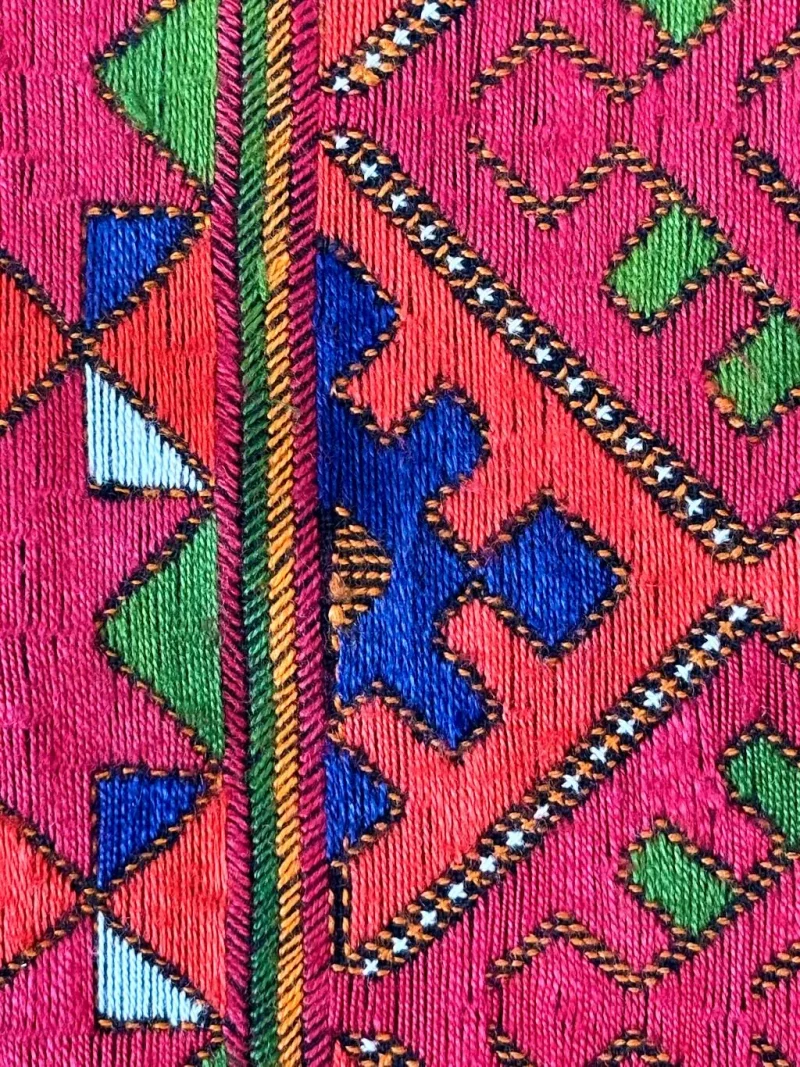
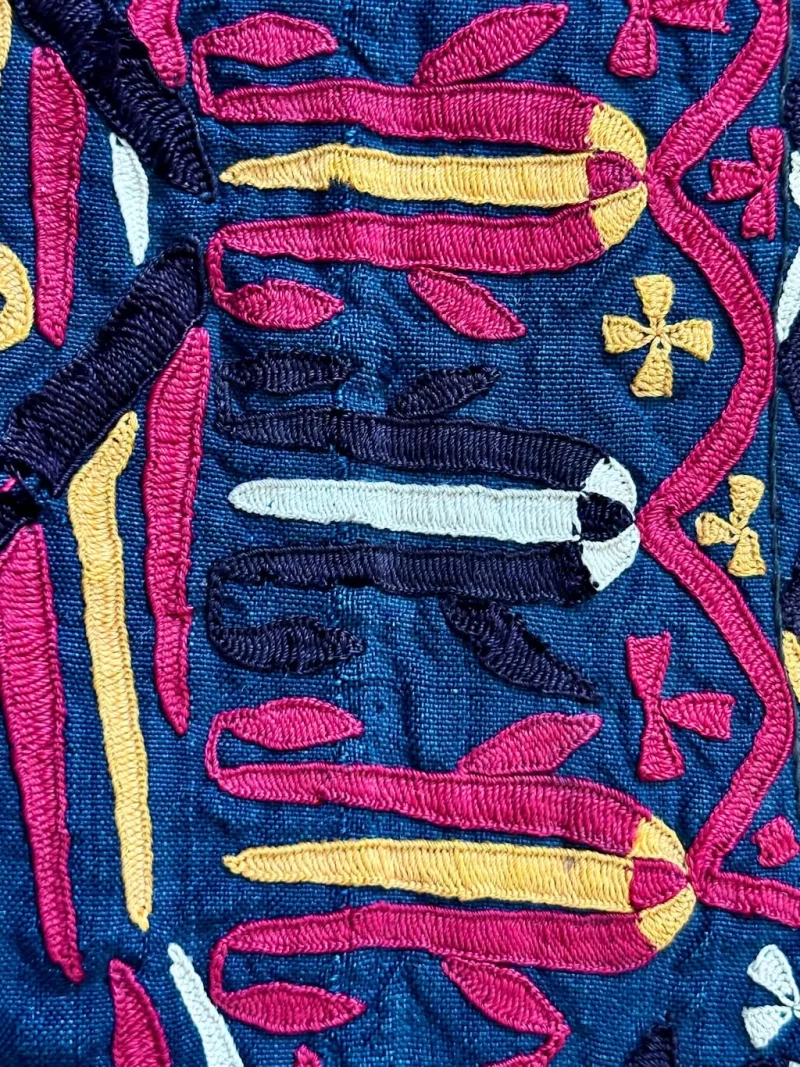
Persian embroidery developed across diverse regions, climates, and ethnic communities. As a result, techniques evolved according to local materials, cultural influences, and aesthetic preferences. Some traditions favored dense wool embroidery covering large surfaces, while others emphasized delicate white-work, metal thread decoration, or counted-thread designs. Despite these differences, many forms of traditional Persian embroidery share a commitment to precision, balance, and carefully executed craftsmanship.
The Importance of Persian Embroidery Stitches
The beauty of an embroidered textile depends not only on its design but also on the techniques used to create it. Different Persian embroidery stitches produce distinct visual effects, textures, and levels of durability.
A skilled embroiderer selects stitches based on several factors:
- Fabric type
- Thread material
- Intended use
- Regional tradition
- Desired decorative effect
Some stitches create smooth areas of color, while others emphasize texture or outline intricate motifs. Metal-thread techniques add brilliance, while counted-thread methods produce geometric precision. Understanding these distinctions helps collectors and enthusiasts appreciate the technical accomplishments behind historic embroidered textiles.
Chain Stitch in Persian Embroidery Stitches
Chain stitch ranks among the most widely used Persian embroidery stitches. Created by forming a series of connected loops, it produces a flexible line that can outline motifs or fill larger decorative areas.
Artisans often employed chain stitch to create:
- Floral designs
- Vine patterns
- Geometric borders
- Curvilinear motifs
The stitch allows smooth transitions around curves and complex shapes, making it particularly suitable for Persian decorative designs. Variations in thread thickness and stitch density can dramatically alter the final appearance. Chain stitch appears in numerous regional embroidery traditions throughout Iran and remains one of the most recognizable techniques in Persian needlework.
Satin Stitch and Surface Filling Techniques
Satin stitch creates smooth, solid areas of color by placing closely spaced parallel stitches across the surface of the fabric. When executed skillfully, the result resembles a painted surface.
Persian embroiderers frequently used satin stitch to fill:
- Petals
- Leaves
- Birds
- Decorative medallions
- Symbolic motifs
The effectiveness of satin stitch depends on consistent tension and careful placement. Uneven stitching can disrupt the smooth appearance that characterizes high-quality work. Many antique Persian textiles demonstrate remarkable mastery of this technique, with densely embroidered surfaces displaying both precision and artistic control.
Stem Stitch and Outline Work
Stem stitch serves as an important outlining technique within many Persian embroidery traditions. Its slightly twisted appearance creates elegant lines suitable for stems, tendrils, borders, and decorative details.
The stitch offers several advantages:
- Smooth curved lines
- Strong visual definition
- Excellent durability
- Adaptability to complex designs
Because Persian decorative arts often emphasize flowing botanical forms, stem stitch became an essential component of many embroidered compositions.
Couching and Metal Thread Embroidery
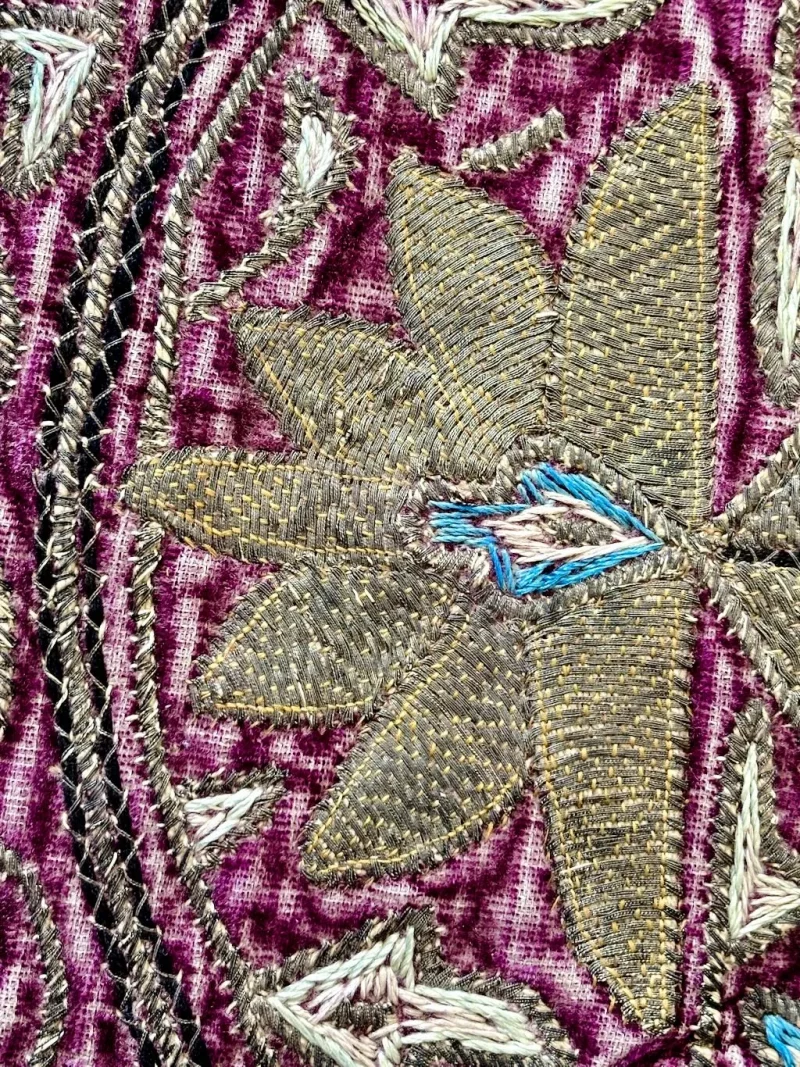
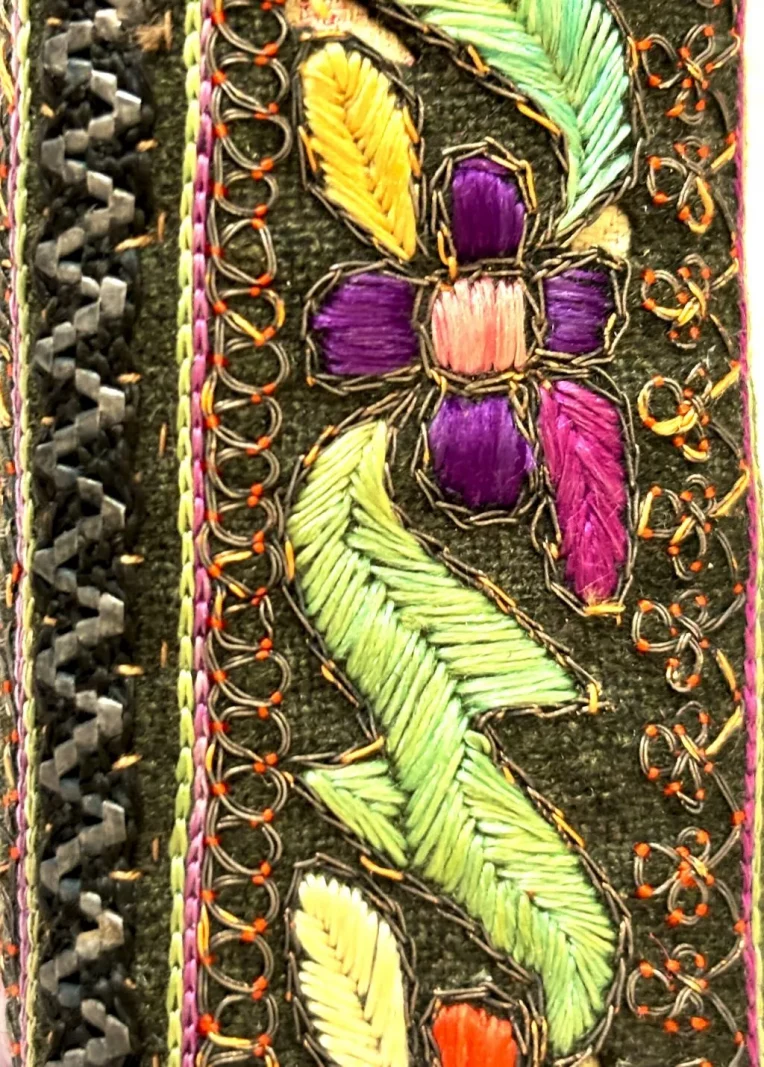
Among the most luxurious Persian embroidery techniques is couching. Rather than passing thick metallic threads repeatedly through fabric, artisans place them on the surface and secure them with tiny stitches.
This method became especially important in:
- Sermeh-Duzi
- Court textiles
- Ceremonial garments
- Religious furnishings
- Decorative panels
Gold and silver-colored threads often created spectacular visual effects. In some historic examples, genuine metal threads were used, while others employed metal-wrapped fibers. Couching allowed embroiderers to create elaborate patterns while preserving expensive metallic materials and reducing wear on delicate threads.
Persian Embroidery Stitches Used in Sermeh-Duzi
Sermeh-Duzi represents one of Iran’s most celebrated embroidery traditions. The technique relies heavily on couching methods to secure metallic threads in intricate patterns.
Designs frequently feature:
- Floral sprays
- Arabesques
- Paisleys
- Medallions
- Calligraphic elements
The success of these works depends largely on the precision with which the metallic threads are positioned and secured. Even slight irregularities can affect the visual harmony of the finished design. Many collectors consider fine examples of Sermeh-Duzi among the most impressive achievements in Persian embroidery.
Counted Thread Techniques
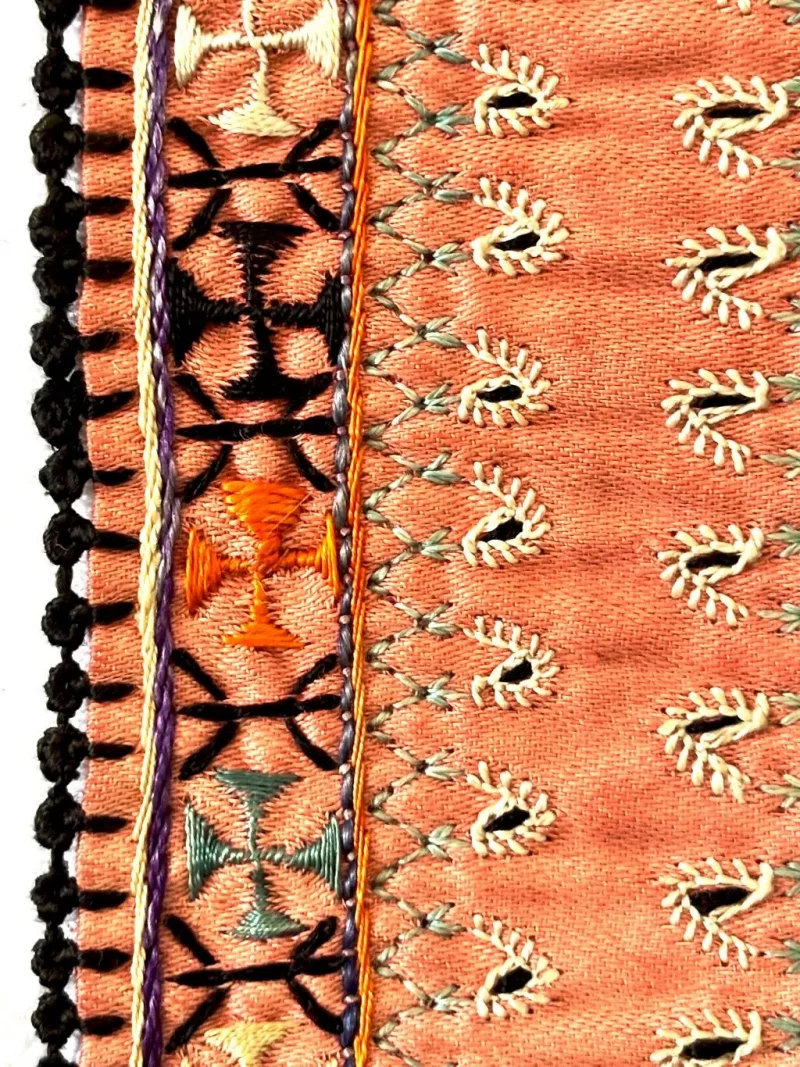
Counted thread embroidery occupies an important place within Iranian textile traditions. Unlike free-form surface embroidery, these techniques rely on counting the fabric threads to maintain symmetry and structure. This approach creates highly organized geometric patterns that often reflect regional aesthetics.
Counted thread methods are particularly common in:
- Baluchi embroidery
- Village embroidery traditions
- Tribal textiles
- Decorative dress panels
Because the designs depend on mathematical precision, embroiderers must maintain careful attention throughout the process. The resulting patterns often display remarkable consistency even across large embroidered surfaces.
Regional Variations in Persian Embroidery Stitches
One of the most fascinating aspects of Persian embroidery stitches is their regional diversity. Although certain techniques appear throughout Iran, each area developed distinctive preferences and styles.
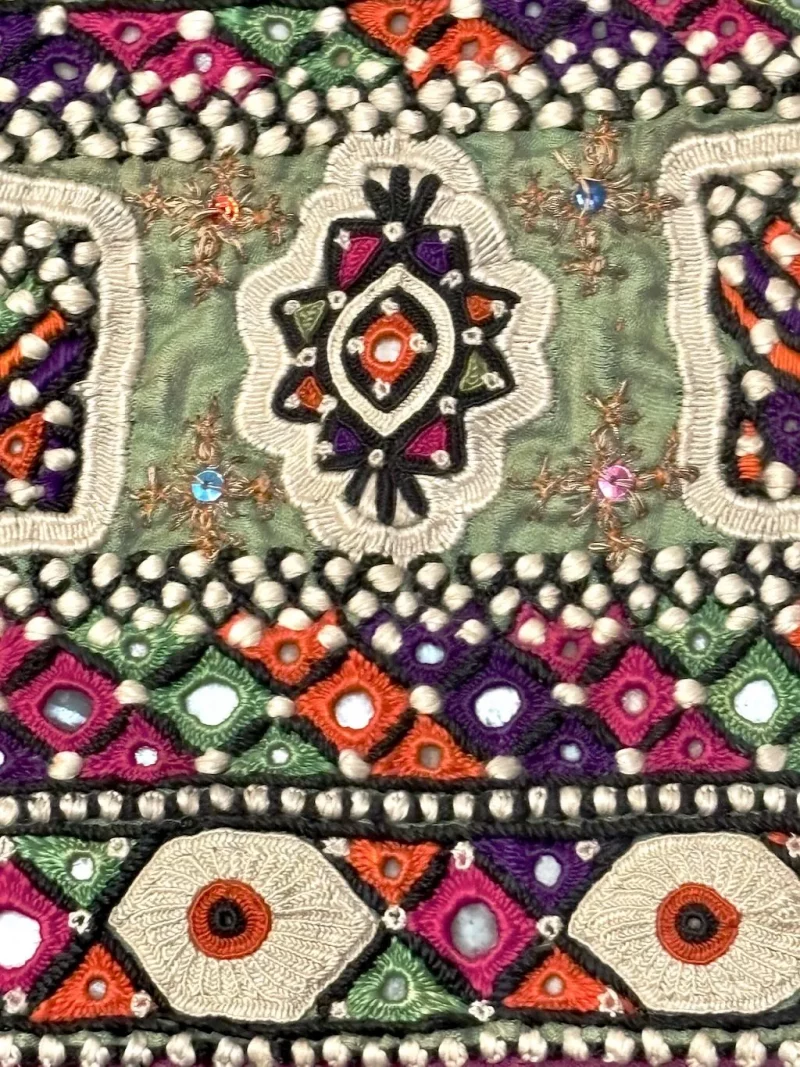
In Baluchistan, embroidery often features geometric designs worked with counted-thread methods and vibrant colors. These embroideries commonly decorate dress panels and garments.
In Kerman, artisans became known for Pateh-Duzi, a wool embroidery tradition characterized by dense stitching and richly decorated surfaces.
In Isfahan and other urban centers, luxury embroidery frequently incorporated metallic threads and refined decorative motifs influenced by courtly artistic traditions.
Turkmen communities developed their own embroidery styles, employing techniques that reflected both local customs and broader Central Asian influences.
These regional variations contribute significantly to the richness of Iranian textile heritage.
Whitework and Delicate Needlecraft
Not all Persian embroidery relies on bold colors or metallic threads. Some traditions emphasize subtle elegance through white-work techniques. Khameh-Duzi, practiced primarily in eastern Iran, demonstrates this approach beautifully. Traditionally worked with white silk thread on white fabric, the embroidery creates delicate patterns through texture and stitch variation rather than contrasting colors.
The visual effect depends on:
- Fine thread quality
- Consistent stitch execution
- Precise pattern placement
- Balanced composition
Although less visually dramatic than some embroidered traditions, white-work demands exceptional technical skill and control. Many textile scholars regard fine examples of Khameh-Duzi as masterpieces of restraint and craftsmanship.
Mirror Work and Decorative Embellishment
Certain regional traditions incorporate mirrors, beads, or decorative elements into embroidered compositions. Small mirrors are secured using specialized stitching techniques that both protect and highlight the reflective surfaces.
Mirror work appears most commonly in southeastern regions where cultural exchanges with neighboring areas influenced local textile traditions. These embellishments serve both decorative and symbolic purposes, adding visual complexity and brilliance to garments and household textiles.
How Persian Embroidery Stitches Reflect Cultural Identity
Embroidery in Iran has never been merely decorative. Patterns, colors, motifs, and techniques often communicate aspects of cultural identity, regional affiliation, and social tradition. Different communities developed recognizable visual languages that reflected local history and values.
Through embroidery, artisans preserved:
- Regional traditions
- Family knowledge
- Cultural symbolism
- Artistic heritage
- Community identity
As a result, embroidered textiles often function as important historical documents that reveal insights into the societies that produced them. For collectors and researchers, understanding Persian embroidery stitches helps unlock these deeper layers of meaning.
Persian Embroidery Techniques in Modern Iran
Traditional Persian embroidery continues to be practiced throughout Iran today, although many techniques face challenges that were unknown to earlier generations. Historically, embroidery skills were often passed from mothers and grandmothers to younger family members through daily life and community traditions. As lifestyles changed and machine-produced textiles became more widely available, some regional embroidery practices experienced a gradual decline in the number of practitioners. Nevertheless, many artisans remain dedicated to preserving these techniques. Cultural organizations, educational programs, workshops, and heritage initiatives continue to support traditional embroidery throughout the country.
The future of Persian embroidery stitches depends largely on the successful transmission of knowledge to new generations. When traditions are actively taught and practiced, their technical quality and artistic richness can continue to flourish. This ongoing preservation effort has also increased appreciation for historic textiles. Many antique examples display extraordinary workmanship developed through generations of continuous practice, making them highly valued by collectors, museums, and textile scholars.
The Enduring Legacy of Persian Embroidery
Persian embroidery stitches represent far more than decorative techniques. They embody centuries of artistic development, cultural exchange, technical innovation, and regional identity. Whether worked in wool, silk, cotton, or metallic thread, these stitches transformed ordinary fabrics into objects of beauty and meaning.
From the geometric precision of Baluchi embroidery to the luxurious metallic surfaces of Sermeh-Duzi and the delicate refinement of Khameh-Duzi, the embroidery traditions of Iran demonstrate remarkable diversity and craftsmanship. Although the circumstances surrounding their production have evolved over time, these techniques continue to connect contemporary artisans with a rich textile heritage that remains one of the most significant artistic traditions of the Persian world.