

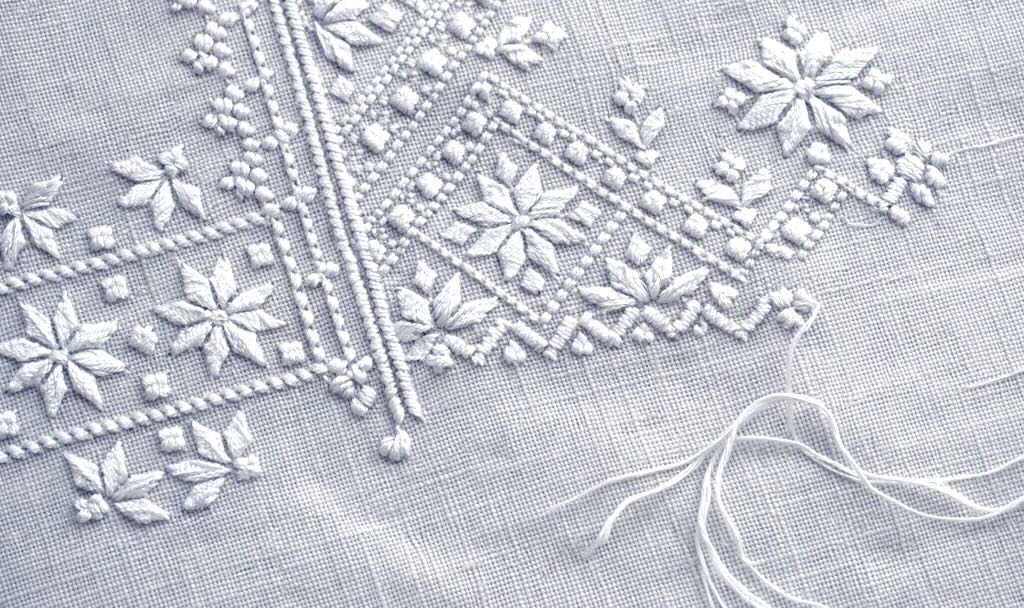
Khameh-Duzi is one of the most refined and distinctive embroidery traditions in Iran. Characterized by white silk thread, geometric patterns, and delicate openwork, this remarkable form of needlework transforms simple fabric into intricate works of textile art. Although less widely known than some other Persian embroidery traditions, Khameh-Duzi has earned admiration for its technical precision, subtle beauty, and strong connection to the cultural heritage of eastern Iran. For generations, skilled artisans have used this technique to create textiles that rely not on bold colors but on the interplay of light, texture, and extraordinary craftsmanship.
The Origins of Khameh-Duzi
Khameh-Duzi developed in eastern Iran, particularly in the region of Sistan and Baluchestan. The tradition is closely associated with communities that preserved embroidery skills through family teaching and local cultural practices. Unlike many embroidery styles that emphasize vibrant colors, Khameh-Duzi evolved around a restrained aesthetic in which white silk thread creates decoration through texture rather than contrast.
The name Khameh-Duzi appears in various forms in English-language sources due to differing methods of transliterating Persian words into the Latin alphabet. However, Khameh-Duzi remains the most widely accepted spelling and is commonly used in publications describing Iranian textile traditions. Over time, the technique became recognized as one of the region’s most important forms of decorative needlework and a valuable expression of local artistic identity.
Why Khameh-Duzi Is Different from Other Persian Embroidery
Many Persian embroidery traditions use colorful wool, cotton, or metallic threads to create striking decorative effects. Khameh-Duzi takes a very different approach.
Instead of relying on color, Khameh-Duzi achieves beauty through:
- White silk thread
- Geometric pattern construction
- Openwork techniques
- Texture and relief
- Precision stitching
The result is a sophisticated white-on-white appearance that rewards close examination. At a distance, the embroidery may appear understated. As the viewer moves closer, however, the complexity of the patterns and the quality of the workmanship become increasingly apparent. This subtle elegance is one of the characteristics that distinguishes Khameh-Duzi from many other embroidery traditions.
Materials Used in Khameh-Duzi
Traditional Khameh-Duzi was worked with white silk thread on a light-colored foundation fabric. Historical descriptions often emphasize the use of white silk on white fabric, creating a harmonious monochromatic effect. However, the technique itself depends on more than thread color alone. Many examples incorporate open areas within the fabric structure that allow light to pass through the textile. These open sections create visual contrast between solid embroidered motifs and delicate mesh-like backgrounds.
The materials traditionally associated with Khameh-Duzi include:
- White silk thread
- Fine foundation fabrics
- Embroidery frames or hoops
- Needles suited to delicate thread work
The quality of the silk thread plays an important role in the finished appearance. Fine silk reflects light differently than cotton or wool, contributing to the luminous effect that characterizes high-quality examples.
Geometric Design in Khameh-Duzi
One of the most recognizable features of Khameh-Duzi is its reliance on geometric design.
Common motifs include:
- Diamonds
- Triangles
- Stars
- Crosses
- Lattice patterns
- Repeating borders
These motifs are often arranged in highly structured compositions that demonstrate careful planning and mathematical precision. Unlike floral embroidery traditions that emphasize natural forms, Khameh-Duzi frequently relies on symmetry and repeated geometric units. The resulting patterns possess a distinctive visual rhythm that reflects the broader geometric traditions found throughout Persian art and architecture. Many antique examples display remarkable consistency across large embroidered areas, highlighting the skill required to maintain alignment and proportion throughout the work.
The Techniques Behind Khameh-Duzi
The beauty of Khameh-Duzi depends on a combination of embroidery techniques that work together to create texture, depth, and visual complexity. Artisans employ carefully controlled stitching to build raised geometric forms while preserving open areas within the design. These contrasting elements generate the distinctive whitework effect for which the tradition is known.
Openwork and Drawn-Thread Elements in Khameh-Duzi
One of the most fascinating aspects of Khameh-Duzi is the use of openwork structures. In many examples, portions of the foundation fabric appear almost transparent. This effect creates a striking contrast between embroidered motifs and the surrounding ground. Light passing through these open sections becomes part of the design itself.
The combination of dense embroidery and delicate open spaces gives Khameh-Duzi a unique visual character that differs significantly from surface embroidery traditions that completely cover the fabric. These openwork features also help explain why fine examples are often admired for their remarkable technical sophistication.
The Skill Required for Khameh-Duzi
Although the finished embroidery appears delicate, producing high-quality Khameh-Duzi requires considerable skill and patience.
Artisans must maintain:
- Consistent thread tension
- Precise geometric alignment
- Uniform stitch size
- Balanced pattern spacing
- Structural integrity within openwork sections
Even small errors can disrupt the symmetry of a design. Because geometric patterns repeat throughout the composition, inconsistencies become immediately noticeable. The finest examples demonstrate extraordinary control, with each section contributing to an overall sense of harmony and precision.
Traditional Uses of Khameh-Duzi
Historically, Khameh-Duzi decorated a variety of household and personal textiles. Embroidered panels could be incorporated into garments, furnishings, and ceremonial textiles. The technique was particularly well suited to objects that benefited from close inspection, allowing viewers to appreciate the intricate details of the needlework.
Traditional applications included:
- Decorative textile panels
- Household linens
- Garment embellishments
- Ceremonial textiles
- Dowry items
Like many forms of traditional Iranian embroidery, Khameh-Duzi carried cultural significance beyond its decorative function. The production of embroidered textiles often reflected family traditions, local identity, and the transmission of knowledge across generations.
Khameh-Duzi and the Role of Women Artisans
Women played a central role in preserving and developing Khameh-Duzi. Embroidery skills were often taught within families, with younger generations learning techniques through observation and practice. This process allowed knowledge to pass from one generation to the next while preserving regional styles and patterns.
The creation of fine embroidery required patience, discipline, and a deep understanding of traditional techniques. As a result, accomplished embroiderers earned respect for their craftsmanship and artistic abilities. Many of the finest surviving examples of Khameh-Duzi represent the accumulated knowledge of generations of skilled women artisans.
How Khameh-Duzi Reflects Persian Artistic Traditions
Although Khameh-Duzi developed within a specific regional context, it shares characteristics with broader Persian artistic traditions.
Persian art has long celebrated:
- Geometric balance
- Repetition
- Symmetry
- Precision
- Refined craftsmanship
These same qualities appear throughout Khameh-Duzi embroidery. The geometric motifs found in many embroidered panels echo principles visible in Persian architecture, tile-work, wood carving, and manuscript illumination. This connection helps place Khameh-Duzi within the wider artistic heritage of Iran. Rather than existing in isolation, the embroidery reflects design principles that have influenced Persian visual culture for centuries.
Khameh-Duzi in Modern Iran
Khameh-Duzi continues to be practiced in Iran today, although the tradition faces challenges common to many forms of heritage craftsmanship. Historically, embroidery knowledge was transmitted through families and local communities. As social and economic conditions changed, fewer individuals learned these specialized techniques through traditional means. Contemporary artisans, cultural organizations, and educational programs have helped preserve the tradition by teaching new generations and promoting awareness of regional textile heritage.
Modern examples sometimes incorporate different fabrics, materials, and design adaptations intended for contemporary markets. While these variations may differ from historic examples, they demonstrate the continuing vitality of the tradition. The future of Khameh-Duzi depends on maintaining both technical knowledge and appreciation for the extraordinary craftsmanship that defines the art form.
Why Collectors Value Khameh-Duzi
Collectors and textile enthusiasts often admire Khameh-Duzi for its combination of technical difficulty and understated beauty. Unlike highly colorful embroideries that attract immediate attention, Khameh-Duzi rewards careful observation. The complexity of the stitching, the precision of the geometry, and the subtle interaction between light and texture become more apparent with closer examination.
Fine examples offer insight into:
- Regional textile traditions
- Women’s artistic practices
- Historical craftsmanship
- Persian design principles
- Cultural heritage preservation
As interest in traditional textiles continues to grow, Khameh-Duzi remains an important example of the remarkable diversity found within Iranian embroidery traditions.
The Enduring Appeal of Khameh-Duzi
Khameh-Duzi stands among the finest embroidery traditions of Iran because it achieves extraordinary beauty through restraint and precision. Using little more than white silk thread, geometric design, and exceptional technical skill, artisans created textiles of remarkable elegance and sophistication.
The tradition demonstrates that embroidery does not require vibrant color or elaborate materials to make a lasting impression. Instead, Khameh-Duzi relies on craftsmanship, structure, and subtle visual effects that reveal themselves gradually to the viewer. Today, these embroidered works continue to preserve the artistic heritage of eastern Iran while reminding us of the creativity, patience, and skill of the artisans who transformed simple thread and fabric into enduring works of textile art.