

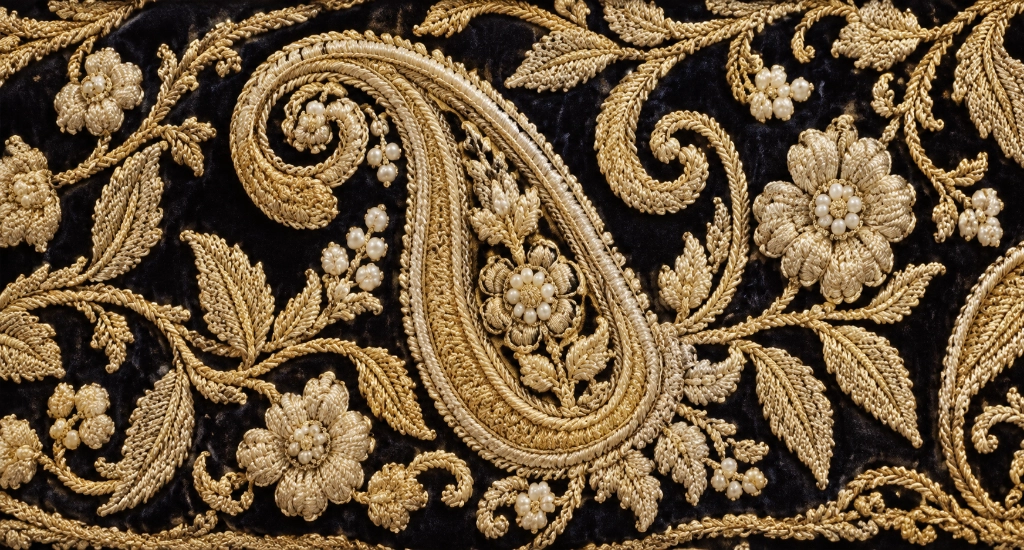
Sermeh-Duzi is one of the most luxurious embroidery traditions in Iran and one of the finest examples of Persian decorative arts. Distinguished by the use of shimmering metallic threads, this remarkable needlework transformed textiles into objects of prestige, beauty, and artistic expression. For centuries, artisans embroidered elaborate floral designs, scrolling vines, and intricate borders onto velvet, silk, and other fine fabrics, creating works that reflected both technical mastery and social status. Whether used on ceremonial garments, religious textiles, or decorative furnishings, Sermeh-Duzi became closely associated with elegance and refinement, earning its place among the most celebrated embroidery traditions of Persia.
The Origins of Sermeh-Duzi
The history of Sermeh-Duzi is closely linked to the broader tradition of luxury textiles that flourished throughout Persia. Iranian courts, wealthy merchants, and religious institutions all valued finely embroidered fabrics, commissioning artisans to create textiles that demonstrated both artistic achievement and material wealth. Within this environment, metallic embroidery emerged as one of the most prestigious forms of needlework.
The word sermeh refers to the metallic thread used in the embroidery. Historically, these threads were often produced from precious metals or metal-wrapped fibers designed to catch and reflect light. When stitched onto rich fabrics such as velvet or silk, the resulting effect was striking. Ordinary textiles became luxurious works of art whose brilliance could be appreciated from across a room.
As Persian textile production expanded over the centuries, Sermeh-Duzi developed into a highly respected craft. The finest pieces required not only expensive materials but also extraordinary skill, making them symbols of both wealth and craftsmanship.
What Makes Sermeh-Duzi Unique?
Many embroidery traditions rely on colorful silk, wool, or cotton threads to create decorative patterns. Sermeh-Duzi is different because metallic thread forms the foundation of the design. Gold- and silver-colored threads introduce a reflective quality that changes as light moves across the surface, giving the embroidery a sense of depth and movement.
This distinctive appearance sets Sermeh-Duzi apart from other Persian embroidery traditions. Khameh-Duzi achieves elegance through subtle white-on-white stitching, while Pateh-Duzi is celebrated for its rich wool colors and densely embroidered surfaces. Sermeh-Duzi, by contrast, derives much of its beauty from the interaction between light and metal thread. The embroidery seems almost alive, shimmering differently throughout the day as lighting conditions change.
The association with luxury further distinguishes the tradition. Historically, metallic embroidery was often reserved for important objects, including ceremonial garments, decorative furnishings, and religious textiles. As a result, Sermeh-Duzi became a visual language of prestige and refinement.
Materials and Techniques
The success of Sermeh-Duzi depends on the careful selection of both thread and foundation fabric. Velvet was particularly popular because its rich surface created a dramatic contrast with metallic embroidery. Silk was equally valued for its smooth texture and elegant appearance, although wool and cotton fabrics were also used depending on the purpose of the textile.
The metallic thread itself was the true star of the composition. Artisans employed it in a variety of ways, outlining floral motifs, defining scrolling vines, creating elaborate borders, or filling decorative elements with shimmering detail. In some pieces, the metallic thread appears sparingly as an accent. In others, it dominates the entire surface, creating an effect that resembles jewelry more than embroidery.
Working with metallic thread requires considerable skill. Unlike silk or cotton, metallic fibers can be less flexible and more prone to damage during stitching. Artisans must therefore maintain precise tension and placement while preserving the integrity of the thread. Even a small mistake may become immediately visible because reflective surfaces naturally draw the viewer’s attention.
Traditional Motifs and Persian Design
The decorative vocabulary of Sermeh-Duzi reflects the broader artistic traditions of Iran. Floral sprays, scrolling vines, cypress trees, arabesques, and medallions appear frequently throughout the embroidery. Among the most recognizable motifs is the boteh, known in the West as the paisley design, which has become one of the enduring symbols of Persian decorative art.
These motifs rarely appear in isolation. Instead, artisans arrange them into balanced compositions that combine symmetry with movement. Flowing vines connect floral elements, while carefully structured borders frame central motifs. The resulting designs feel both disciplined and organic, reflecting a design philosophy that has shaped Persian art for centuries.
The same visual language appears throughout Iranian culture. Similar motifs can be found in carpets, manuscript illumination, tile-work, metalwork, and architectural decoration. Sermeh-Duzi therefore belongs to a much larger artistic tradition rather than existing as a separate craft.
Sermeh-Duzi in Ceremonial and Religious Life
The luxurious appearance of metallic embroidery made it particularly suitable for ceremonial and religious use. Richly embroidered textiles often adorned shrines, religious spaces, and objects associated with important occasions. The brilliance of gold-colored thread conveyed a sense of reverence and importance that was difficult to achieve with ordinary materials.
Sermeh-Duzi was also widely used in decorative furnishings and special garments. Historical examples include embroidered cushions, wall hangings, table covers, textile panels, and ceremonial clothing. Wealthy patrons frequently commissioned elaborate pieces that demonstrated both their status and their appreciation for fine craftsmanship.
These commissions allowed artisans to produce some of the most impressive examples of the tradition. The finest works combined luxurious materials, sophisticated design, and hundreds of hours of meticulous labor.
The Role of Women Artisans
Like many forms of traditional Iranian embroidery, Sermeh-Duzi was preserved through the work of skilled artisans, many of whom were women. Techniques were often passed from one generation to the next through observation, practice, and apprenticeship within families or local communities.
This transfer of knowledge ensured the survival of both technical skills and artistic traditions. Experienced embroiderers taught younger artisans not only how to execute individual stitches but also how to balance patterns, select materials, and maintain the aesthetic standards associated with the craft.
The contributions of these artisans helped preserve one of Iran’s most distinguished forms of decorative needlework and ensured that the tradition continued despite changing fashions and economic conditions.
Sermeh-Duzi Today
Sermeh-Duzi remains an important part of Iran’s artistic heritage. Contemporary artisans continue to produce embroidered works for cultural exhibitions, interior decoration, traditional ceremonies, and collectors interested in Persian textile arts. Although modern materials are sometimes used in place of historic metal threads, the essential techniques and design principles remain largely unchanged.
Collectors are particularly drawn to antique examples because they demonstrate the extraordinary craftsmanship associated with traditional production. The combination of metallic thread, luxurious fabrics, and intricate design creates a visual richness that remains difficult to replicate. Fine pieces reveal not only technical skill but also a deep understanding of Persian decorative aesthetics.
The Enduring Legacy of Sermeh-Duzi
Sermeh-Duzi became a symbol of Persian luxury because it united exceptional craftsmanship with some of the most beautiful materials available to textile artists. Through the use of metallic thread, intricate patterns, and carefully balanced compositions, artisans transformed fabric into objects that conveyed prestige, beauty, and cultural identity.
Centuries after its emergence, the tradition continues to fascinate collectors, historians, and textile enthusiasts. Its shimmering surfaces and elegant motifs serve as a reminder of the extraordinary skill of Persian embroiderers and the enduring appeal of Iran’s decorative arts. For those interested in the history of textiles, Sermeh-Duzi remains one of the most remarkable expressions of Persian artistic achievement.