

Persian Embroidery and its Enduring Place in Iranian Culture
Persian embroidery is one of the oldest and most diverse textile traditions in the world. Across Iran, generations of artisans have transformed cloth into works of art using silk, cotton, wool, metallic threads, and intricate needlework techniques. These embroidered textiles served practical, decorative, ceremonial, and symbolic purposes, appearing on clothing, household furnishings, religious objects, and royal garments. Over centuries, regional communities developed distinctive styles that reflected local history, environment, beliefs, and artistic traditions.
Unlike many textile arts that evolved around a single technique, Persian embroidery encompasses a wide range of regional schools and specialized methods. From the geometric embroidery of the Baluch people in southeastern Iran to the glittering metallic threads of Hormozgan and the richly decorated textiles of Kerman, Persian embroidery represents a remarkable fusion of craftsmanship and cultural identity.
Today, these traditions continue to preserve an important part of Iran’s artistic heritage while inspiring contemporary textile artists and designers around the world.
The Ancient Origins of Persian Embroidery
The history of Persian embroidery reaches deep into antiquity. Although textiles rarely survive the passage of time, historical records and archaeological evidence suggest that decorative needlework played an important role in ancient Persian society.
The Achaemenid Empire (550–330 BCE), one of the largest empires of the ancient world, became famous for luxurious garments, elaborate court dress, and finely woven textiles. Classical writers frequently praised Persian fabrics for their beauty and sophistication. Later dynasties, including the Parthians and Sasanians, continued this tradition, producing textiles that were highly prized throughout Asia, the Middle East, and Europe.
By the Islamic period, Persian textile production had become internationally renowned. Embroidered garments, ceremonial textiles, and decorative fabrics circulated along trade routes connecting Persia with Central Asia, India, the Ottoman Empire, and China. These exchanges introduced new motifs and techniques while preserving distinctive Persian artistic traditions.
The Safavid era (1501–1736) marked a particularly important period for embroidery. The flourishing arts of the Safavid court encouraged the production of luxurious textiles decorated with silk and metallic thread embroidery. Many of the motifs still associated with Persian embroidery today gained prominence during this period.
The Diversity of Persian Embroidery Traditions
One of the defining characteristics of Persian embroidery is its regional diversity. Different provinces and ethnic communities developed their own distinctive styles, techniques, and decorative vocabularies.
Rather than representing a single embroidery tradition, Persian embroidery is better understood as a family of related textile arts united by a shared cultural heritage.
Baluchi Embroidery: Geometry and Tribal Identity
Among the most recognizable forms of Persian embroidery is the embroidery of the Baluch people, who inhabit southeastern Iran and neighboring regions of Pakistan and Afghanistan.
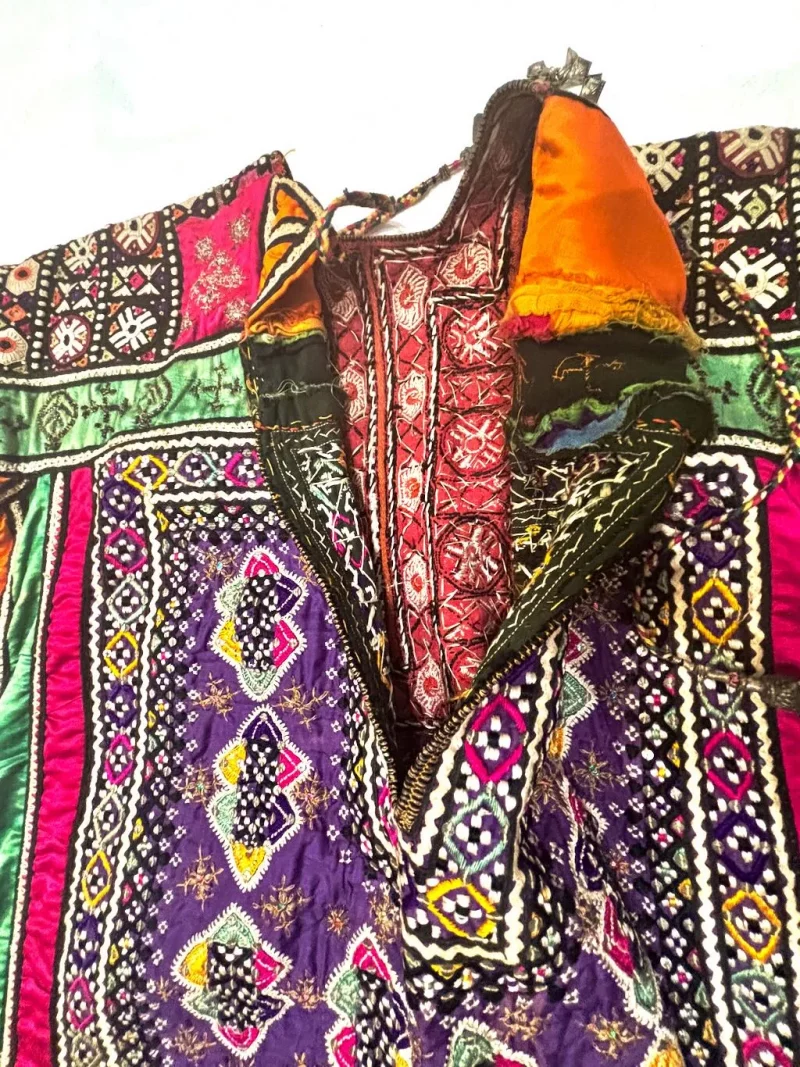
Baluchi embroidery is characterized by highly geometric patterns worked with remarkable precision. Artisans traditionally decorate garments, dresses, trousers, caps, and household textiles using dense arrangements of diamonds, stepped motifs, crosses, and protective symbols.
The embroidery often appears in rich combinations of red, black, orange, white, and yellow thread. These designs serve not only decorative purposes but also reflect tribal identity, cultural traditions, and regional aesthetics.
Many scholars regard Baluchi embroidery as one of the finest examples of geometric needlework in the Islamic world.
Turkmen Embroidery: Symbols of Heritage and Status
In northeastern Iran, Turkmen communities developed a distinctive embroidery tradition closely associated with clothing and ceremonial life.
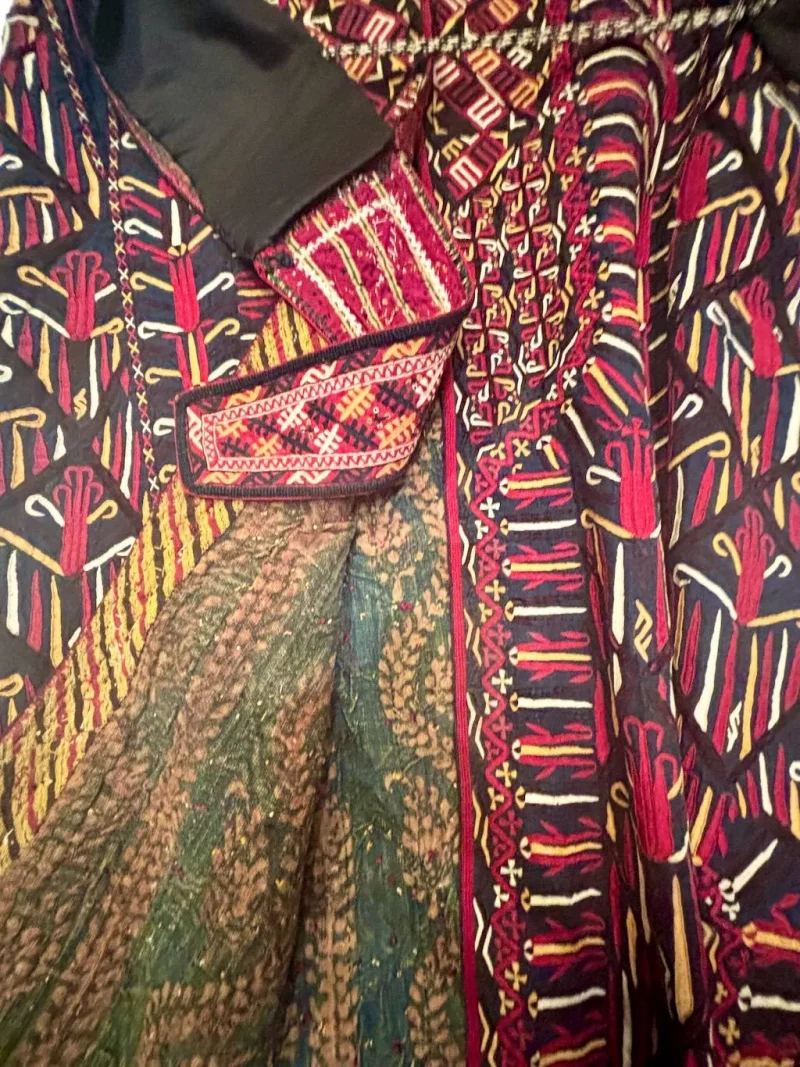
Turkmen embroidery frequently appears on women’s garments, bridal robes, headdresses, and household textiles. Unlike Baluchi embroidery, which relies heavily on geometric structures, Turkmen work often combines geometric forms with stylized motifs that carry symbolic meaning.
Deep red fabrics frequently serve as the foundation for embroidered designs, reflecting the broader visual culture of Turkmen textiles and carpets. Repetition, symmetry, and balance create a powerful visual language that remains immediately recognizable.
For centuries, embroidered garments played an important role in expressing social status, tribal affiliation, and cultural identity among Turkmen communities.
The Tekke tribe became especially famous for richly embroidered bridal robes that rank among the most impressive surviving examples of Turkmen textile art.
Pateh-Duzi: The Floral Embroidery of Kerman
Pateh-Duzi originated in Kerman Province and represents one of Iran’s most celebrated forms of decorative embroidery.
Traditionally worked on handwoven wool cloth known as pateh, the embroidery features dense coverage of colorful stitches that often leave little of the background fabric visible. Artisans create elaborate compositions filled with floral motifs, cypress trees, boteh designs, and arabesques.
The craft became especially associated with dowries, ceremonial textiles, and decorative household furnishings. Large embroidered panels often required months or even years of work.
The richness of color and intricate design make Pateh-Duzi one of the most visually striking forms of Persian embroidery.
Khameh-Duzi: The Elegance of Whitework Embroidery
Khameh-Duzi demonstrates a very different aesthetic from the colorful traditions of Kerman and Baluchistan.
Practiced primarily in central Iran, this refined form of embroidery relies on white silk thread stitched onto light-colored fabric. Rather than creating dramatic contrasts, artisans achieve beauty through texture, precision, and subtle relief.
Traditional Khameh-Duzi appears on garments, household textiles, and decorative objects. Floral patterns, geometric forms, and delicate borders characterize the embroidery.
Its restrained elegance reflects a different aspect of Persian artistic taste, one that values refinement and understated beauty.
Sermeh-Duzi: The Luxury of Metal Thread Embroidery
Sermeh-Duzi represents one of the most prestigious forms of Persian embroidery.
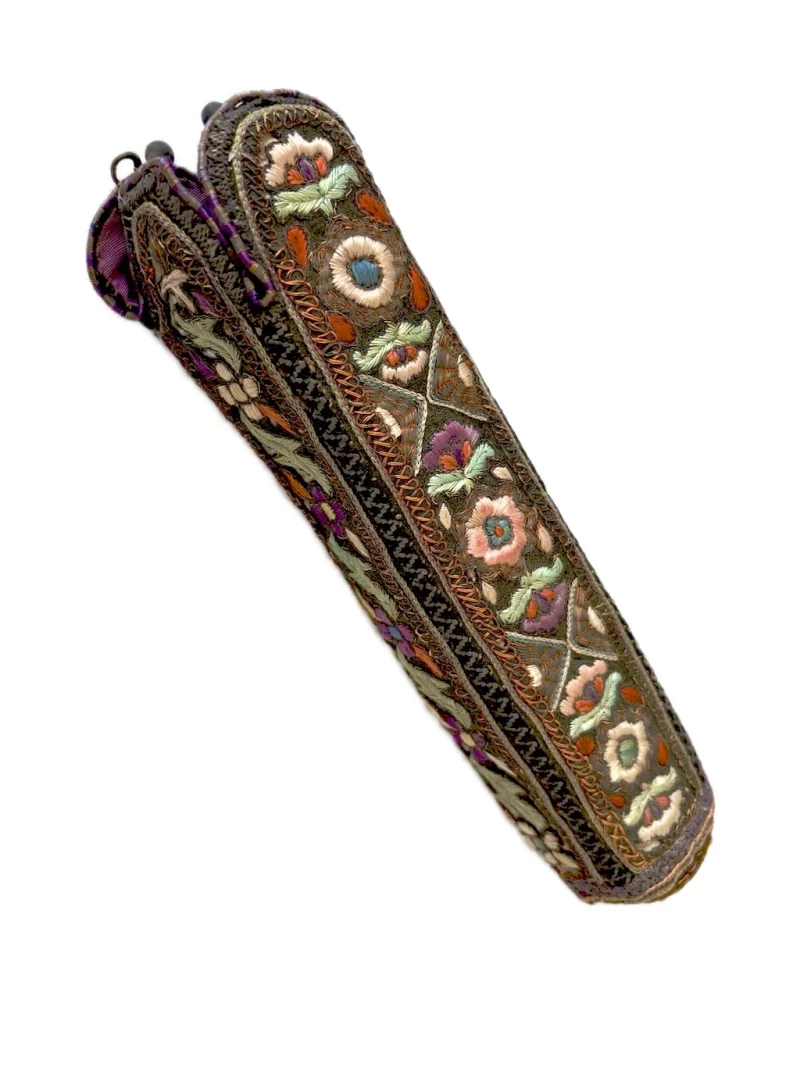
The technique employs metallic coils traditionally made from gold or silver-colored wire. Artisans stitch these coils onto fabric to create richly textured surfaces that shimmer under changing light.
Historically, Sermeh-Duzi adorned royal garments, ceremonial textiles, religious objects, and luxury furnishings. Velvet, silk, and fine wool often served as foundations for the embroidery.
Persian floral motifs, arabesques, calligraphy, and boteh patterns frequently appear in Sermeh-Duzi compositions, demonstrating the close relationship between embroidery and other Persian decorative arts.
Golabatoon-Duzi: The Glittering Embroidery of Southern Iran
The coastal province of Hormozgan is home to Golabatoon-Duzi, one of Iran’s most distinctive embroidery traditions.
Artisans create these shimmering designs using metallic-wrapped threads worked with a hooked needle known as a ghollab. The fabric is stretched tightly over a wooden frame called a kaman, allowing embroiderers to produce flowing lines and intricate decorative patterns.
Common motifs include Eslimi arabesques, Khatayi floral forms, and various boteh designs. Gold and silver threads create dazzling effects that have long made Golabatoon-Duzi popular for festive clothing, bridal garments, and ceremonial textiles.
The World Crafts Council has recognized Hormozgan as an important center for preserving this remarkable craft.
Sokmeh-Duzi (Drawn-Thread Embroidery)
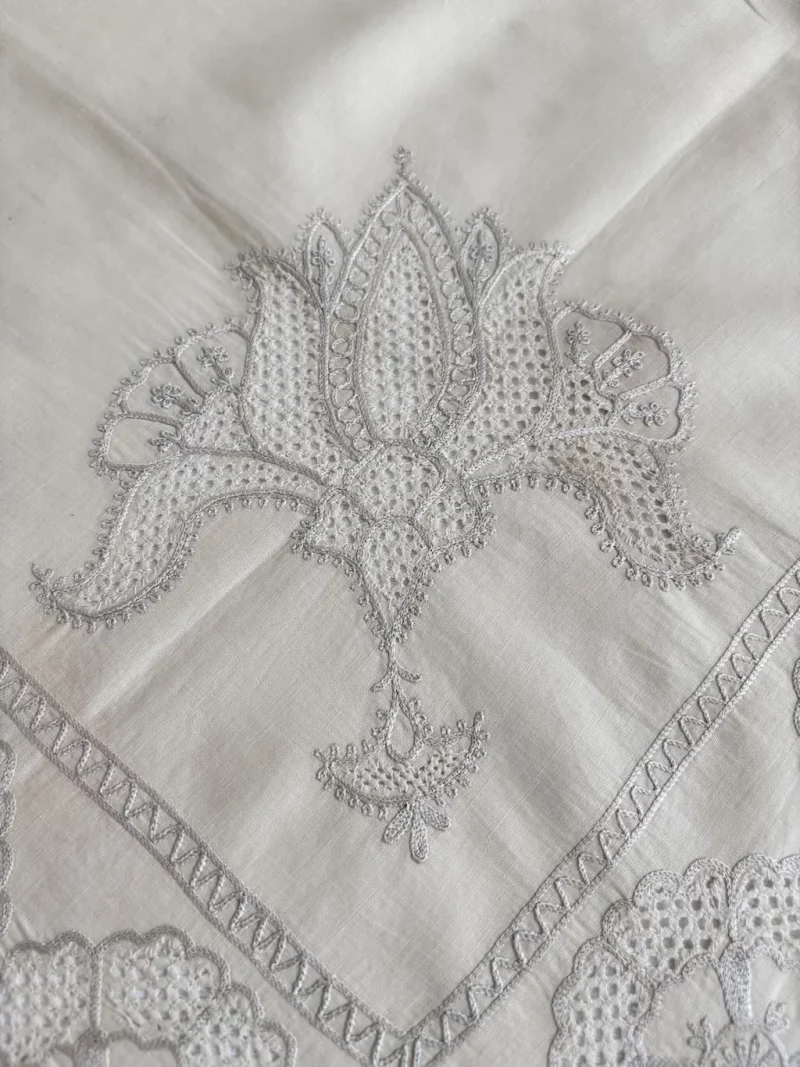
Sokmeh-Duzi is a traditional Persian form of drawn-thread embroidery in which selected warp and weft threads are withdrawn from the fabric and the remaining threads are bound into decorative openwork patterns. Practiced on tablecloths, napkins, doilies, lampshades, and other household textiles, the technique creates delicate lace-like designs while preserving the structure of the fabric. Examples were documented in Isfahan during the twentieth century, where artisans combined drawn-thread work with fine decorative stitching to produce geometric and floral motifs.
Motifs and Symbolism in Persian Embroidery
Despite the diversity of regional traditions, many forms of Persian embroidery share a common visual vocabulary.
Boteh Motifs
The boteh, known internationally as paisley, is among the most enduring symbols in Persian decorative art. The motif appears in embroidery, carpets, textiles, manuscripts, and architecture.
Floral Designs
Flowers and gardens occupy a central place in Persian culture. Stylized blossoms, leaves, vines, and cypress trees frequently appear throughout embroidered textiles.
Eslimi and Arabesque Patterns
Flowing arabesque forms symbolize continuity, harmony, and the interconnectedness of nature. These motifs became especially important during the Islamic period.
Geometric Patterns
Many tribal embroidery traditions emphasize geometric arrangements that reflect local artistic preferences and cultural symbolism.
Persian Embroidery in Daily Life
Throughout history, Persian embroidery extended far beyond decoration. Embroidered textiles played an important role in everyday life and major life events.
Women embroidered garments for weddings, births, festivals, and religious celebrations. Dowries often included embroidered textiles that demonstrated a family’s skill and artistic accomplishment. Decorative household furnishings, cushion covers, curtains, bags, and ceremonial cloths helped transform ordinary spaces into expressions of beauty and cultural identity.
In many communities, embroidery also served as a means of transmitting knowledge and tradition from one generation to the next.
Persian Embroidery and Global Influence
Persian embroidery has influenced textile traditions far beyond Iran’s borders. Trade networks carried Persian textiles throughout Asia, the Middle East, and Europe for centuries.
The appeal of Persian motifs continued into the modern era. Designers and collectors around the world admired the boteh motif, floral arabesques, and metallic embroidery techniques that originated in Persian artistic traditions.
During the twentieth century, Persian-inspired embroidery appeared in international fashion, including couture garments created for Empress Farah Pahlavi. These commissions demonstrated the enduring appeal of Persian design and helped introduce Iranian textile traditions to a global audience.
Preserving a Living Textile Heritage
Today, Persian embroidery remains a living tradition. Across Iran, artisans continue to practice and teach techniques that have been preserved for generations.
Museums, cultural organizations, universities, and heritage institutions increasingly recognize the importance of documenting and protecting these textile traditions. Workshops, exhibitions, and educational programs help ensure that regional embroidery styles continue to thrive despite modern challenges.
The survival of Persian embroidery reflects the dedication of countless artisans whose skills have preserved one of the world’s great textile traditions.
Conclusion
Persian embroidery represents a remarkable tapestry of regional traditions, technical mastery, and artistic expression. From the geometric precision of Baluchi embroidery and the symbolic designs of Turkmen needlework to the colorful floral panels of Pateh-Duzi and the glittering metallic threads of Sermeh-Duzi and Golabatoon-Duzi, each tradition contributes to the rich cultural landscape of Iran.
Together, these embroidery arts tell the story of a civilization that has long valued beauty, craftsmanship, and creative expression. As artisans continue to preserve and adapt these traditions for modern audiences, Persian embroidery remains a vibrant and enduring symbol of Iran’s cultural heritage.