

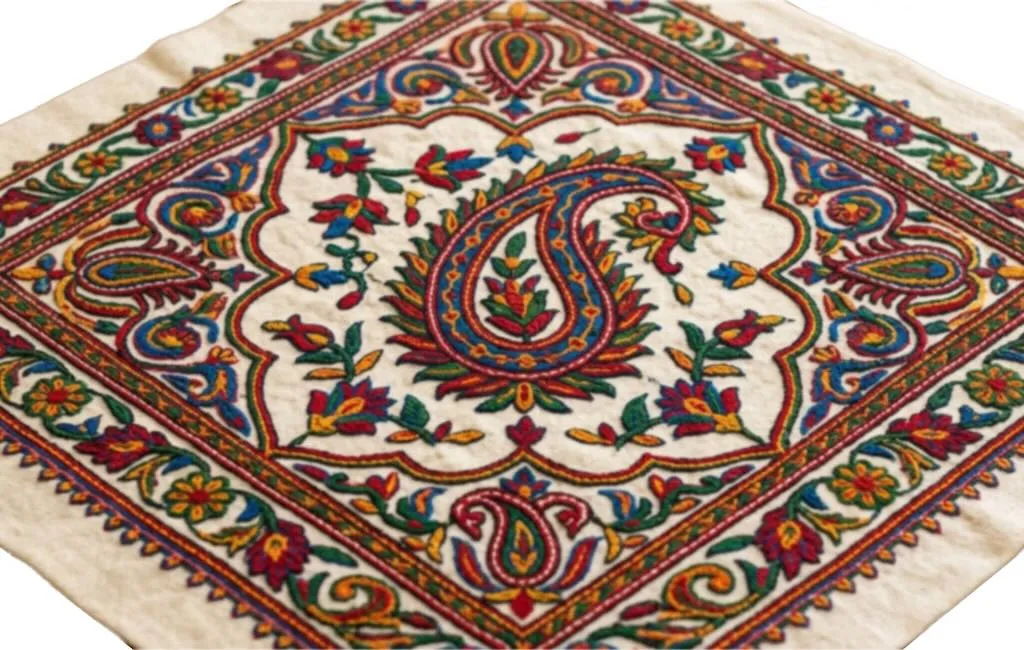
Pateh-Duzi is one of the most recognizable and celebrated embroidery traditions in Iran. Known for its vibrant wool threads, richly embroidered surfaces, and intricate floral designs, Pateh-Duzi transforms plain cloth into colorful works of textile art. For centuries, artisans in the province of Kerman have used this remarkable technique to create decorative textiles that combine artistic expression with cultural heritage. Today, Pateh-Duzi remains one of the best-known forms of Persian embroidery and an enduring symbol of Iranian craftsmanship.
The Origins of Pateh-Duzi
Pateh-Duzi developed in Kerman, a historic city in southeastern Iran with a long tradition of textile production and artistic craftsmanship. The region became known for producing fine wool, carpets, shawls, and embroidered textiles that reflected both local culture and broader Persian artistic traditions.
Although the exact origins of Pateh-Duzi are difficult to establish, the embroidery has been practiced for centuries and is deeply connected to the cultural identity of Kerman. Generations of artisans refined the technique, creating increasingly elaborate designs that decorated household furnishings, ceremonial textiles, and personal belongings. Unlike some regional embroidery traditions that remained relatively isolated, Pateh-Duzi developed in a region that participated actively in trade and cultural exchange. This exposure contributed to the richness and sophistication of its designs.
Why Pateh-Duzi Is Different from Other Persian Embroidery
Every embroidery tradition has distinctive characteristics, and Pateh-Duzi is immediately recognizable because of its dense use of colorful wool thread. Several features distinguish Pateh-Duzi:
- Richly embroidered surfaces
- Vibrant wool thread
- Floral and paisley motifs
- Curving botanical designs
- Dense decorative coverage
- Strong visual contrast
While Khameh-Duzi achieves elegance through white-on-white subtlety, Pateh-Duzi embraces color, movement, and visual abundance. The embroidery often covers large portions of the textile surface, creating a dramatic decorative effect. This bold approach has helped make Pateh-Duzi one of Iran’s most admired embroidery traditions.
Materials Used in Pateh-Duzi
Traditional Pateh-Duzi relies on two essential materials: a wool foundation fabric and colored wool embroidery thread. The foundation cloth, known as pateh, provides the surface upon which artisans create their designs. Wool thread is then used to build intricate patterns that may cover much of the visible fabric.
Traditional materials include:
- Handwoven wool cloth
- Colored wool embroidery thread
- Embroidery needles
- Pattern templates
- Drawing tools
The use of wool gives the embroidery a distinctive texture and warmth. Unlike silk embroidery, which often emphasizes delicacy and refinement, wool embroidery produces a richer and more tactile surface. The durability of wool also contributes to the longevity of many surviving examples.
The Color Palette of Pateh-Duzi
Color plays a central role in Pateh-Duzi. Traditional examples often feature combinations of:
- Red
- Green
- Blue
- Orange
- Yellow
- Cream
- Brown
Artisans carefully balance these colors to create harmonious compositions that remain visually striking without becoming chaotic. The choice of colors often varies according to regional preferences, available materials, and the intended purpose of the textile. Because color is so important to the tradition, Pateh-Duzi offers a dramatically different visual experience from many other forms of Persian embroidery.
The Designs and Motifs of Pateh-Duzi
The artistic vocabulary of Pateh-Duzi reflects centuries of Persian design traditions. Many motifs derive from themes commonly found in Persian decorative arts, including:
- Cypress trees
- Paisleys (boteh)
- Flowers
- Leaves
- Vines
- Arabesques
- Medallions
These elements are frequently arranged in flowing compositions that create movement across the textile surface. The paisley motif deserves particular attention. Known in Persian as boteh, it became one of the most enduring decorative forms in Persian art and appears extensively in Pateh-Duzi embroidery.
Pateh-Duzi and the Persian Boteh Motif
The boteh is one of the most recognizable symbols in Persian decorative arts. Often described as a stylized cypress tree, flame, leaf, or seed form, it appears throughout Persian textiles, carpets, manuscripts, and embroidery.
In Pateh-Duzi, boteh motifs may appear:
- Individually
- In mirrored pairs
- In repeating borders
- As central design elements
- Within larger floral compositions
The versatility of the boteh helps explain its enduring popularity across centuries of Persian artistic production. Collectors often identify antique Pateh-Duzi pieces by the quality and complexity of their boteh designs.
The Techniques Behind Pateh-Duzi
The creation of Pateh-Duzi requires patience, planning, and considerable technical skill. The process typically begins with the preparation of a design. Artisans transfer the pattern onto the fabric before beginning the embroidery itself. Once the design is established, the embroiderer gradually fills the surface using carefully controlled stitches and color combinations. The resulting embroidery creates a dense decorative layer that transforms the foundation cloth into a richly textured work of art.
Stitching Methods Used in Pateh-Duzi
Although the visual impact of Pateh-Duzi often comes from color and design, the success of the embroidery depends equally on technical execution. Artisans must maintain:
- Consistent stitch length
- Smooth transitions between colors
- Balanced pattern density
- Accurate motif placement
- Uniform thread coverage
Large embroidered surfaces require exceptional concentration. Small inconsistencies become more visible as the design expands across the textile. The finest examples demonstrate remarkable precision despite their complexity.
The Famous Pateh of Shah Nematollah Vali
One of the most celebrated examples of Pateh-Duzi is the large embroidered covering created for the shrine of Shah Nematollah Vali in Mahan, near Kerman. This extraordinary work is often cited as one of the masterpieces of Iranian embroidery. It demonstrates the artistic and technical achievements that Pateh-Duzi artisans were capable of producing on a monumental scale.
The shrine textile helped establish the reputation of Pateh-Duzi beyond its regional origins and remains an important symbol of Kerman’s embroidery heritage. Its survival provides valuable insight into the sophistication and ambition of historic Persian needlework.
The Role of Women in Pateh-Duzi
Like many embroidery traditions throughout Iran, Pateh-Duzi has historically been associated with women artisans. Skills were commonly transmitted through families and local communities. Young girls learned techniques by observing experienced embroiderers and gradually developing their own abilities.
This system of informal apprenticeship allowed knowledge to pass from one generation to the next while preserving regional styles and methods. The embroidery also provided opportunities for artistic expression within domestic settings, enabling women to contribute significantly to the preservation of cultural traditions.
How Pateh-Duzi Reflects Persian Artistic Heritage
Pateh-Duzi embodies many of the principles that characterize Persian art as a whole. These include:
- Balance
- Harmony
- Repetition
- Symbolism
- Attention to detail
- Skilled craftsmanship
The flowing floral patterns found in many embroidered pieces echo similar motifs seen in Persian carpets, tile-work, manuscripts, and architectural decoration. This connection places Pateh-Duzi within the broader context of Iranian artistic traditions and helps explain its lasting appeal. Rather than existing as an isolated craft, the embroidery forms part of a larger visual culture that has influenced Persian art for centuries.
Pateh-Duzi in Modern Iran
Pateh-Duzi continues to be practiced in Iran today and remains one of the country’s most recognizable embroidery traditions. Contemporary artisans produce embroidered textiles for:
- Home decoration
- Gifts
- Cultural exhibitions
- Tourism markets
- Traditional ceremonies
Although modern production methods and commercial demands have influenced some aspects of the craft, many artisans remain committed to preserving traditional designs and techniques. As with other forms of heritage needlework, maintaining high standards depends upon successfully transmitting skills to future generations. The continued popularity of Pateh-Duzi has helped support preservation efforts and sustain interest in Kerman’s textile heritage.
Why Collectors Appreciate Pateh-Duzi
Collectors value Pateh-Duzi for several reasons. The embroidery offers:
- Strong visual impact
- Rich color combinations
- Exceptional craftsmanship
- Cultural significance
- Historical importance
Fine examples reveal the skill of the artisans who created them while also preserving elements of Persian artistic tradition. Older pieces are often admired for the quality of their materials, the complexity of their designs, and the remarkable amount of labor required to complete them. For textile collectors, Pateh-Duzi represents one of the most vibrant and distinctive forms of Persian embroidery.
The Enduring Legacy of Pateh-Duzi
Pateh-Duzi has earned its place among Iran’s most important embroidery traditions through centuries of artistic excellence and cultural significance. Using wool thread, vibrant color, and intricate design, artisans transformed simple cloth into richly decorated textiles that continue to captivate collectors and admirers today.
From its origins in Kerman to its continued practice in modern Iran, Pateh-Duzi demonstrates the creativity, skill, and artistic vision that define Persian embroidery. Its colorful surfaces, flowing motifs, and enduring connection to Iranian cultural heritage ensure that this remarkable tradition remains one of the most celebrated achievements in the history of Persian textile art.