
Description
Antique Iranian Baluch Hand-Embroidered Kurta Dress
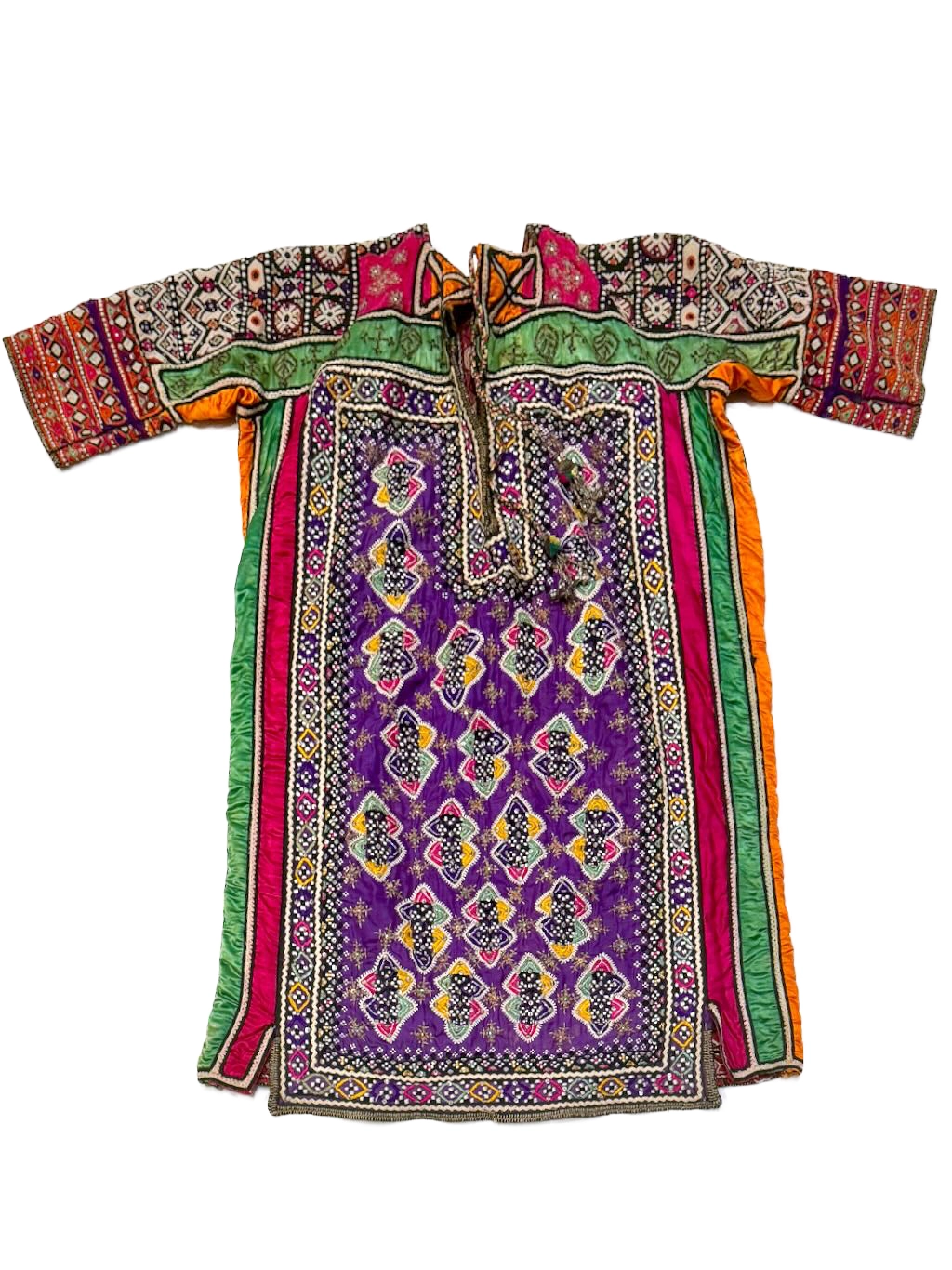
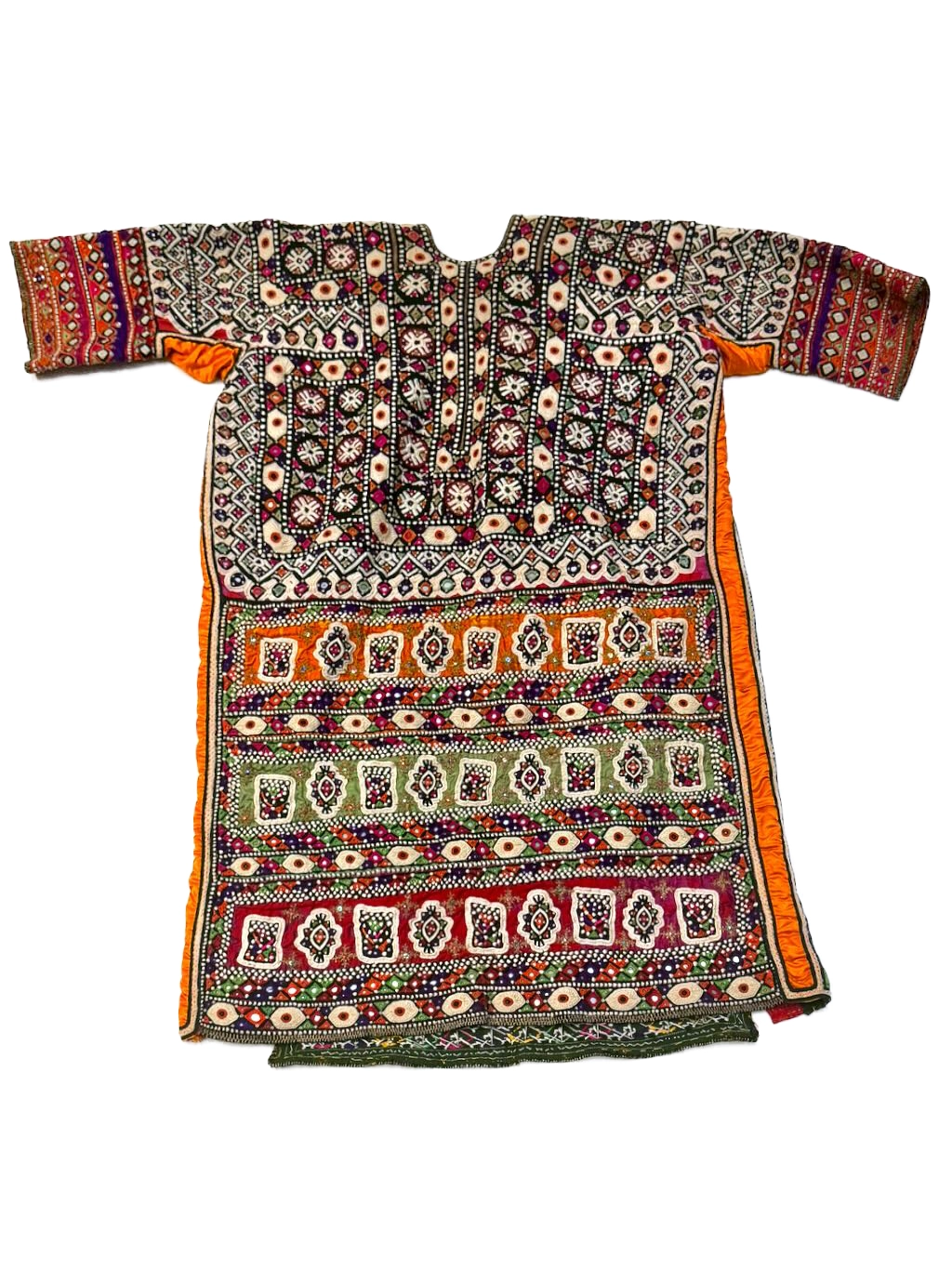
This extraordinary antique Iranian tribal Kurta dress brings together brilliant color, intricate geometry, and an astonishing amount of handwork. Attributed to the Baluch textile tradition of southeastern Iran, the complete woman’s kurta displays dense embroidery, mirror work, metallic details, and vivid textile appliqué across both its front and back.
Rich purple, magenta, orange, green, red, black, and white create a dramatic palette. However, color represents only one part of its visual impact. Nearly every decorated area rewards closer inspection.
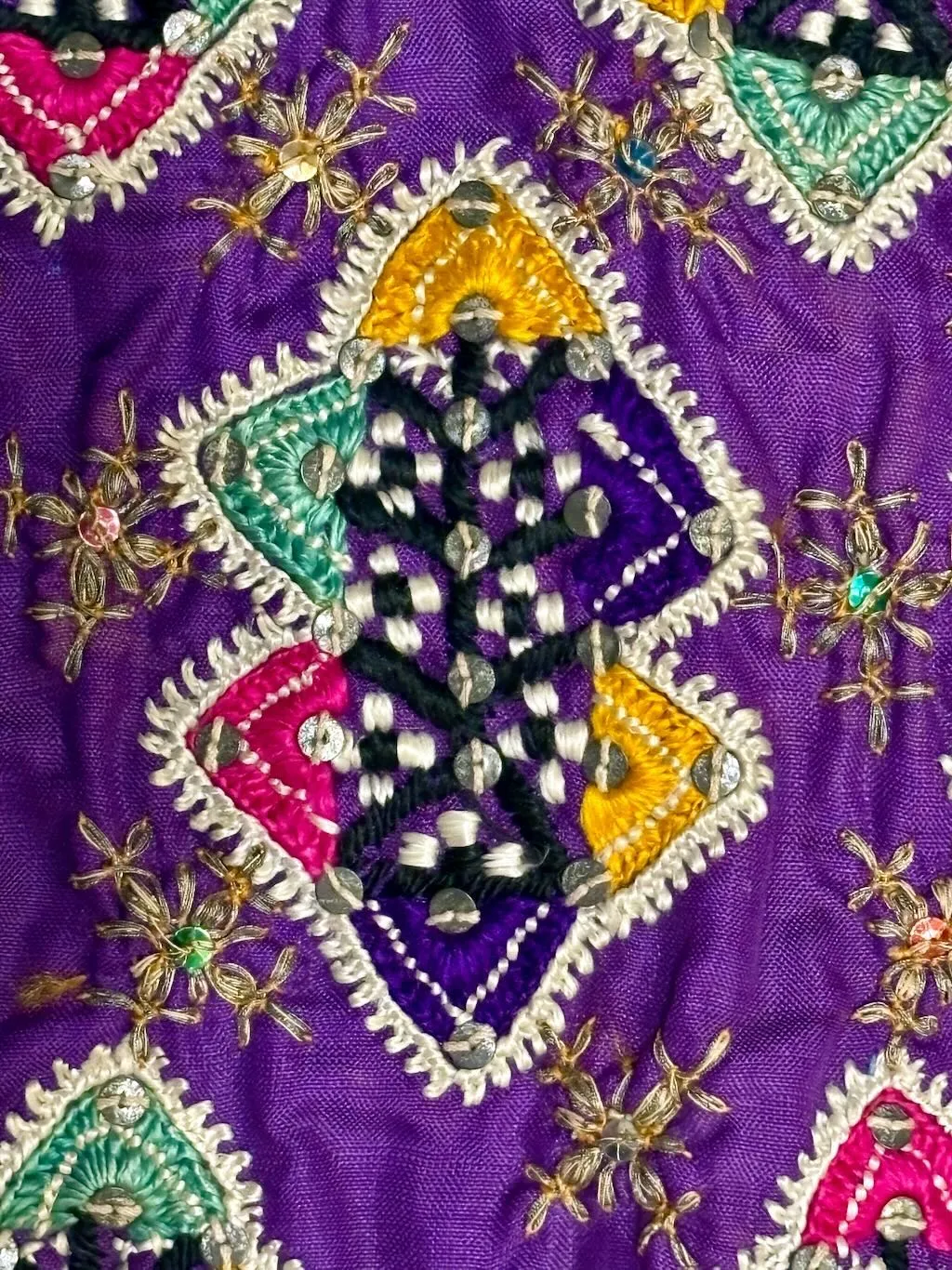
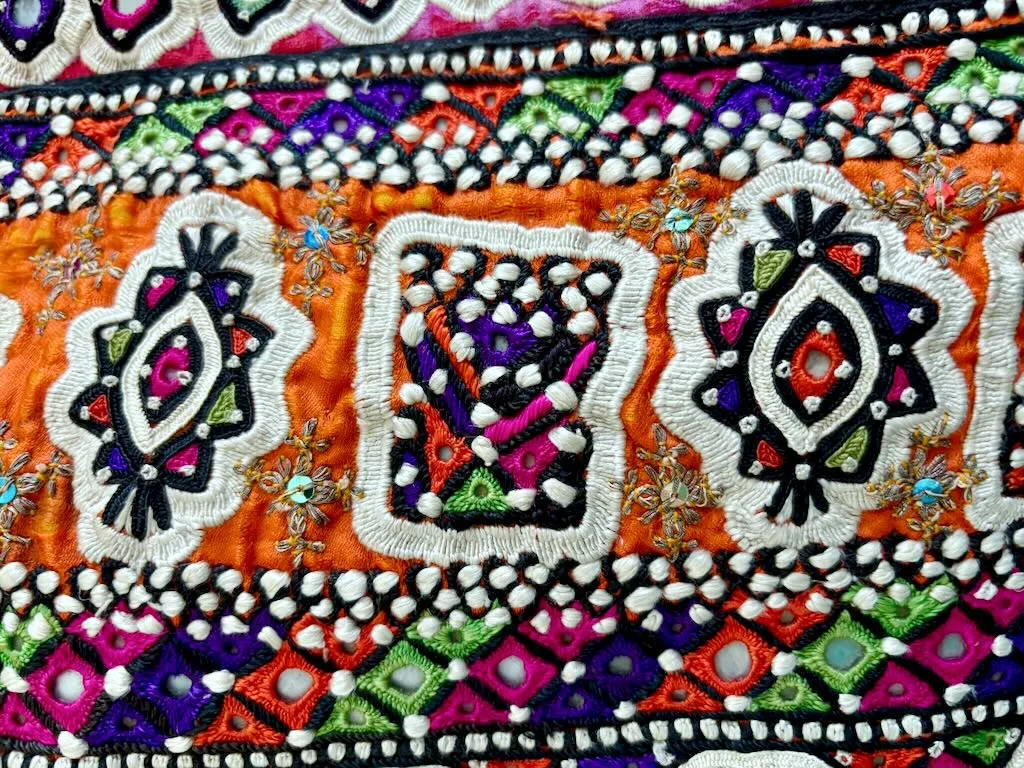
Tiny geometric stitches form intricate borders. Mirrors punctuate larger motifs with flashes of reflected light. Metallic floral sprigs appear against expanses of purple fabric. Meanwhile, intensely colored textile inserts interrupt the dense embroidery and create a sophisticated rhythm across the garment.
The Kurta dress follows a broad, essentially rectangular construction associated with traditional regional clothing rather than modern fitted tailoring. This structure provides a generous surface for the elaborate needlework and decorative panels.
An Exceptional Display of Baluch Needlework
The embroidery forms the heart of this garment.
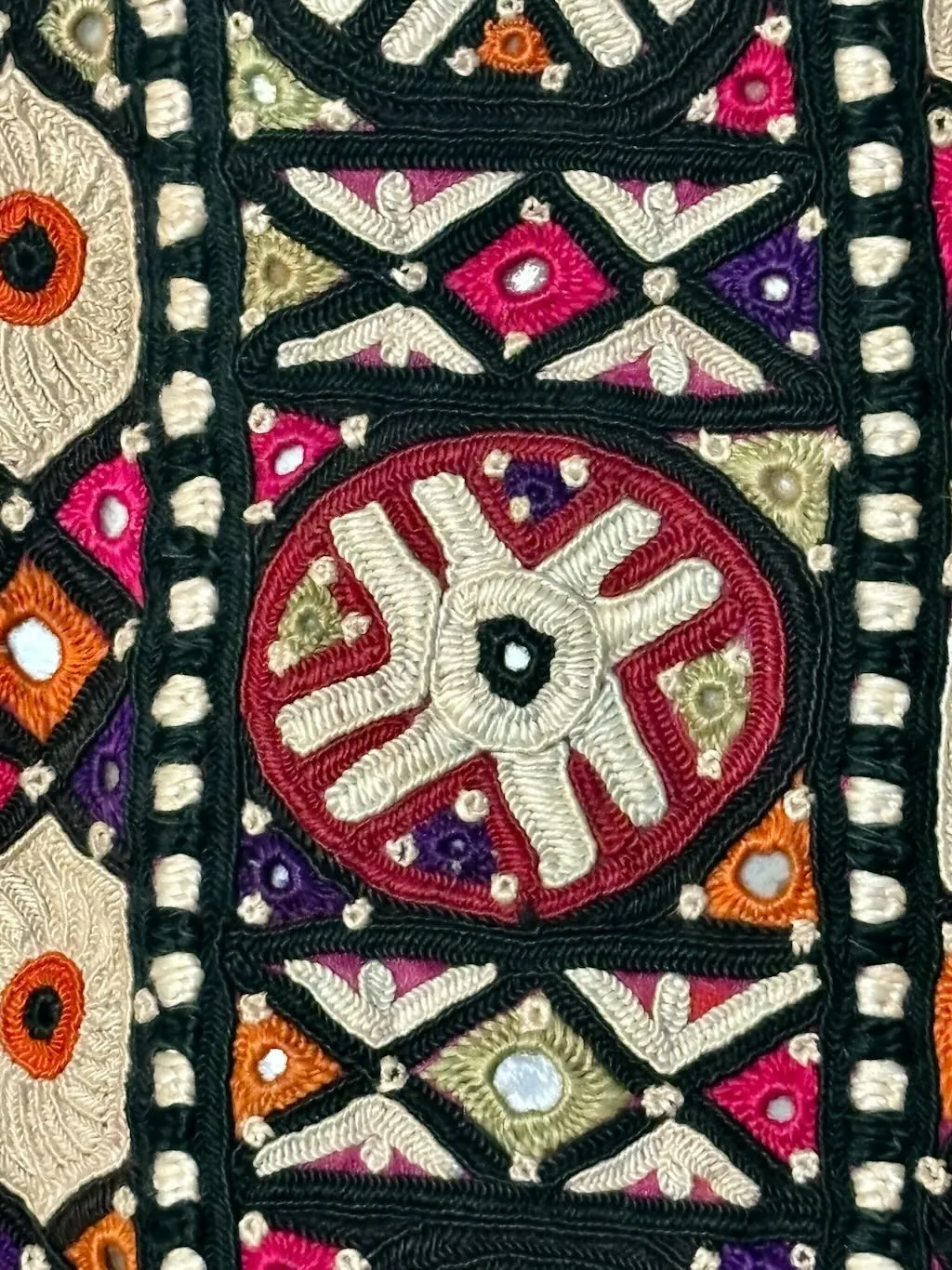
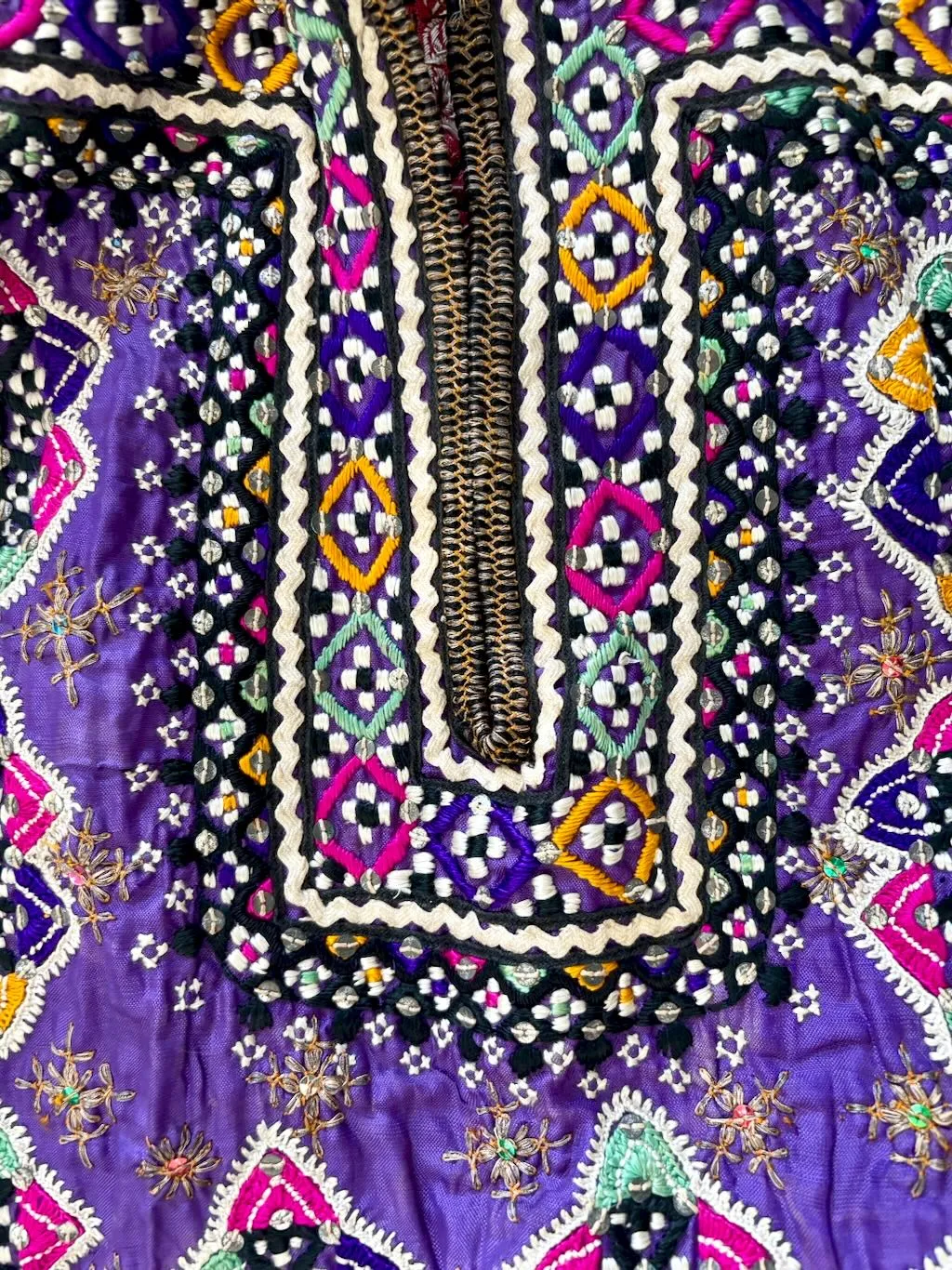
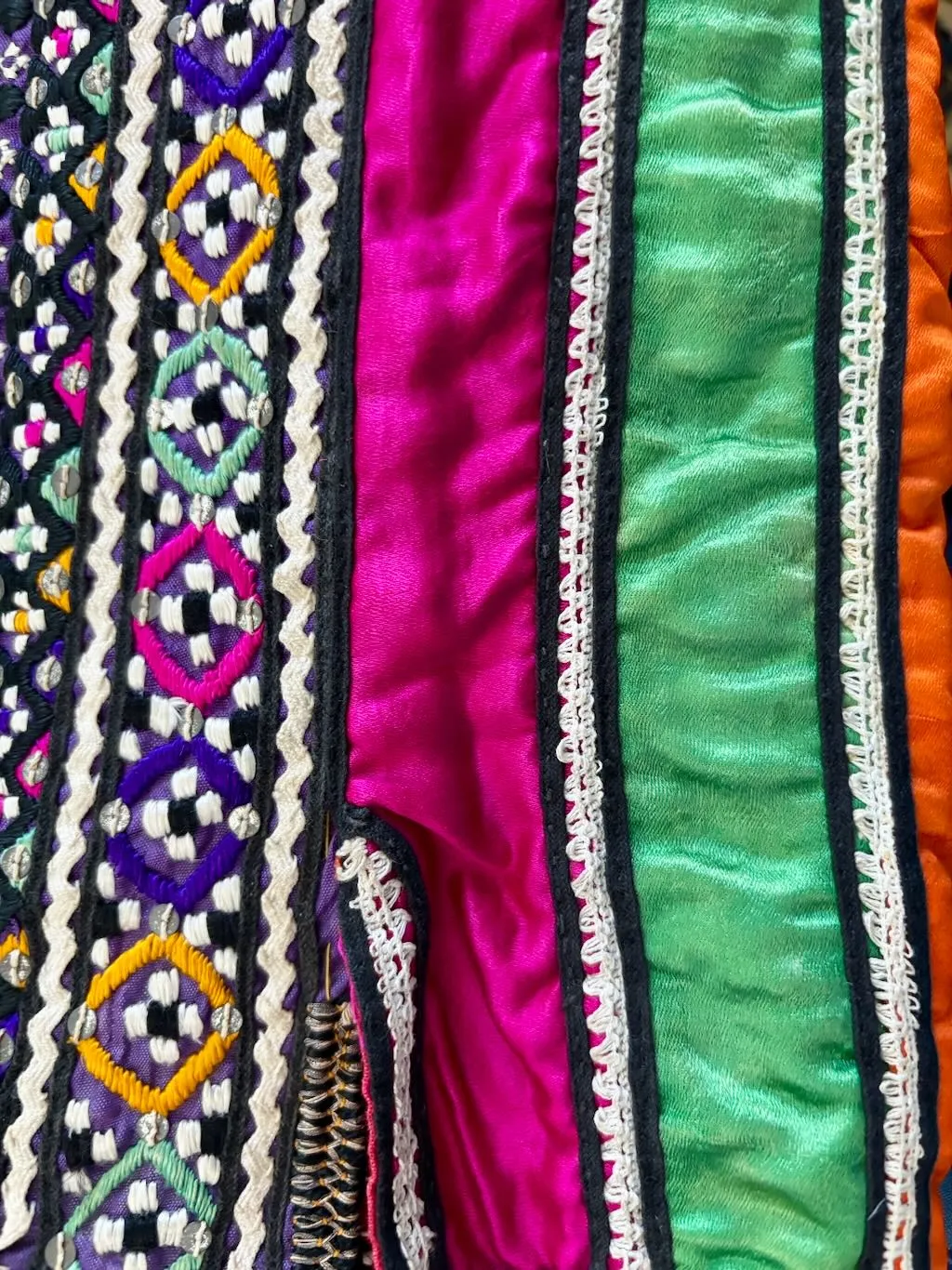
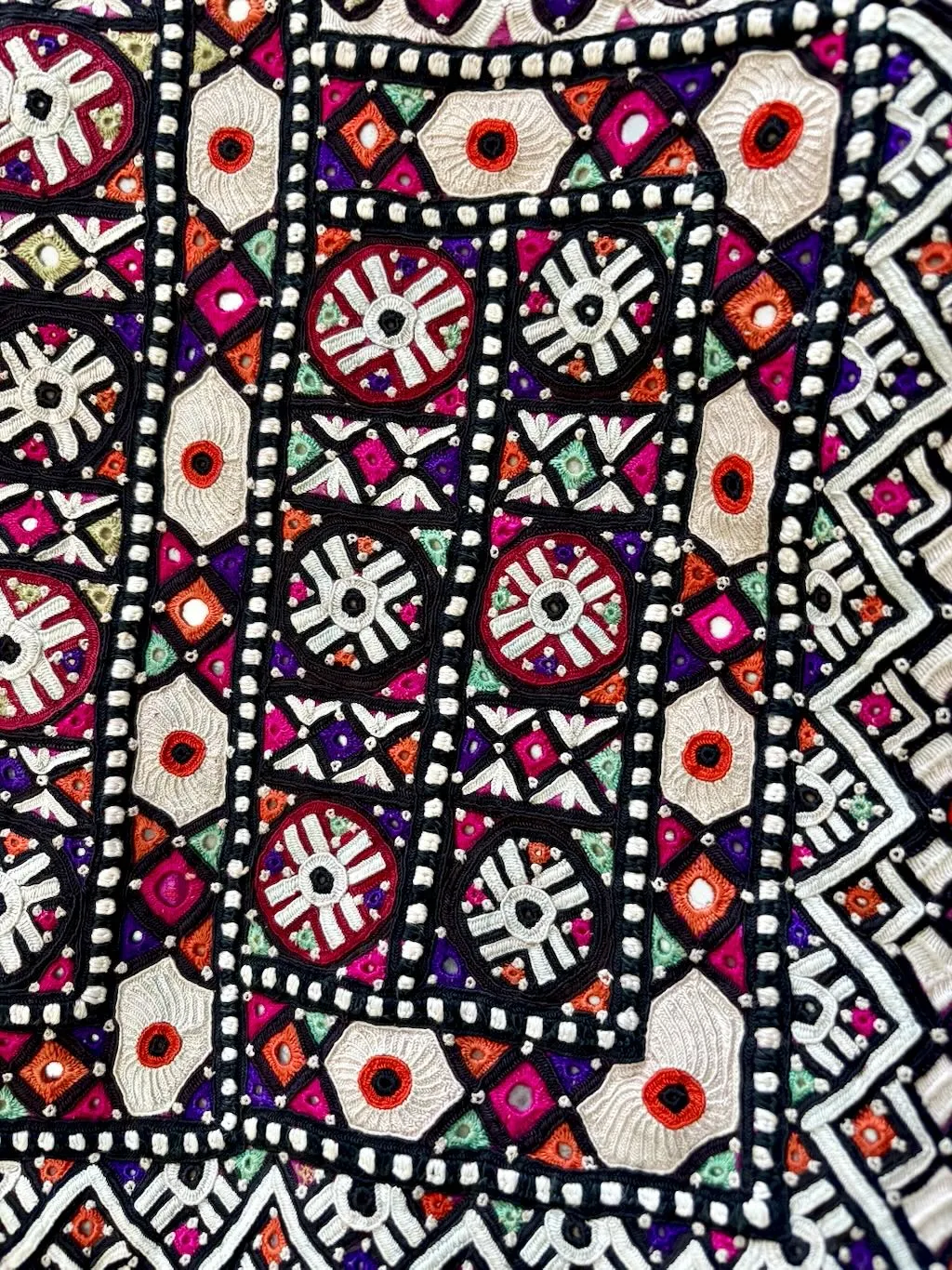
Dense geometric fields combine diamonds, rosettes, stepped forms, radiating motifs, and highly abstracted designs. Strong black outlines organize the composition, while white stitching creates remarkable contrast against the saturated ground colors.
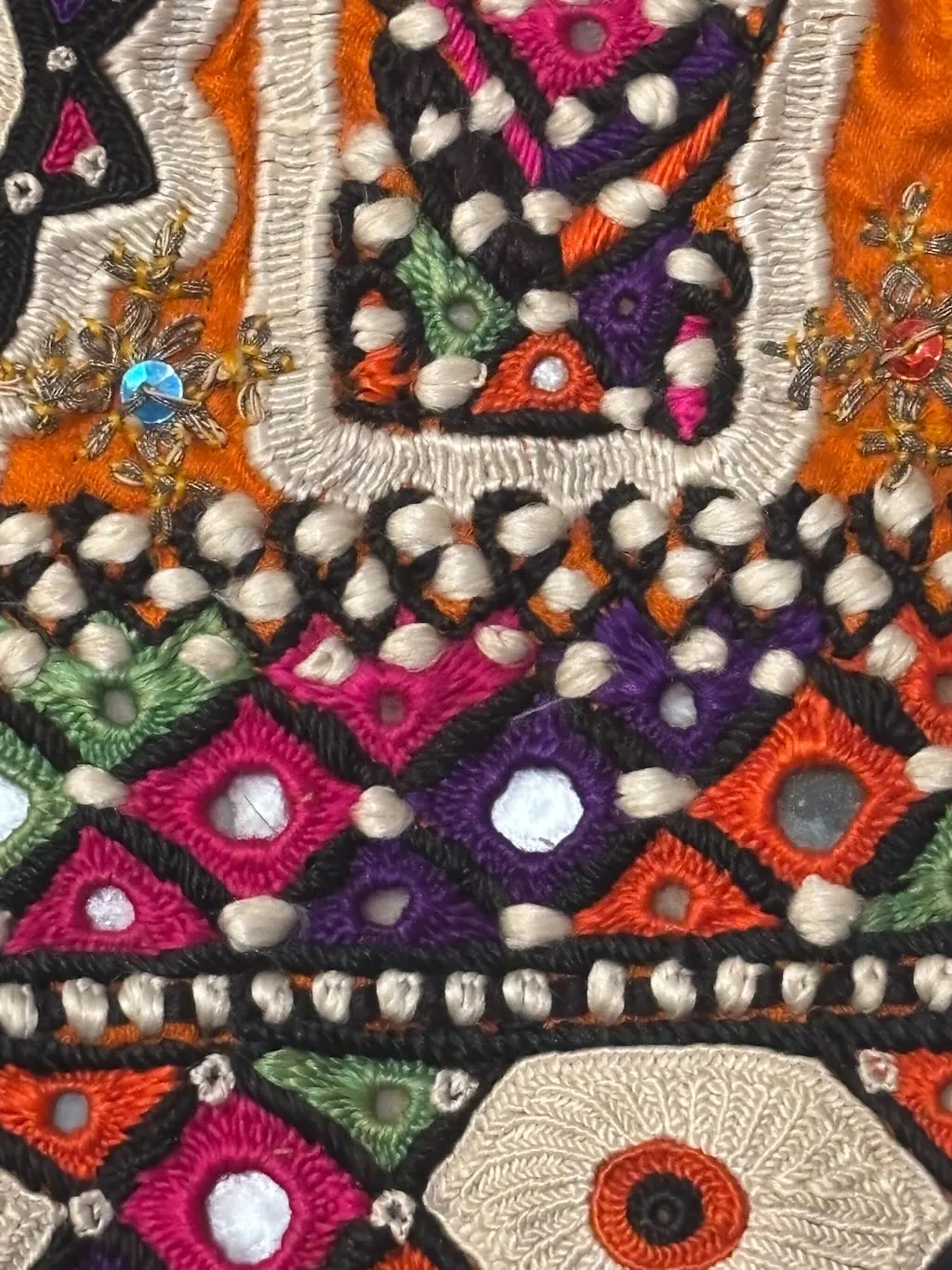
The embroiderer also incorporated small mirrors and reflective elements directly into many of the motifs. As light reaches the garment, these surfaces animate the otherwise precise geometry.
Elsewhere, metallic threads form delicate floral sprigs. Their curving forms provide a striking counterpoint to the strongly geometric needlework surrounding them.
The close-up photographs reveal another important quality. No single decorative technique dominates the dress. Instead, embroidery, mirror work, metallic ornament, and brightly colored textile elements work together as one carefully organized composition.
Traditional Baluch Motifs and Visual Language
Baluch embroidery draws upon an extensive vocabulary of traditional motifs.
Recent academic research into the embroidery of Baluch women’s clothing in Iranian Baluchistan documents numerous named designs derived from geometric, vegetal, animal, human, and everyday forms. Embroiderers often transform these subjects through strong geometric abstraction until their original inspiration becomes difficult for an outside viewer to recognize.
That tradition provides important context for the fascinating motifs throughout this dress.
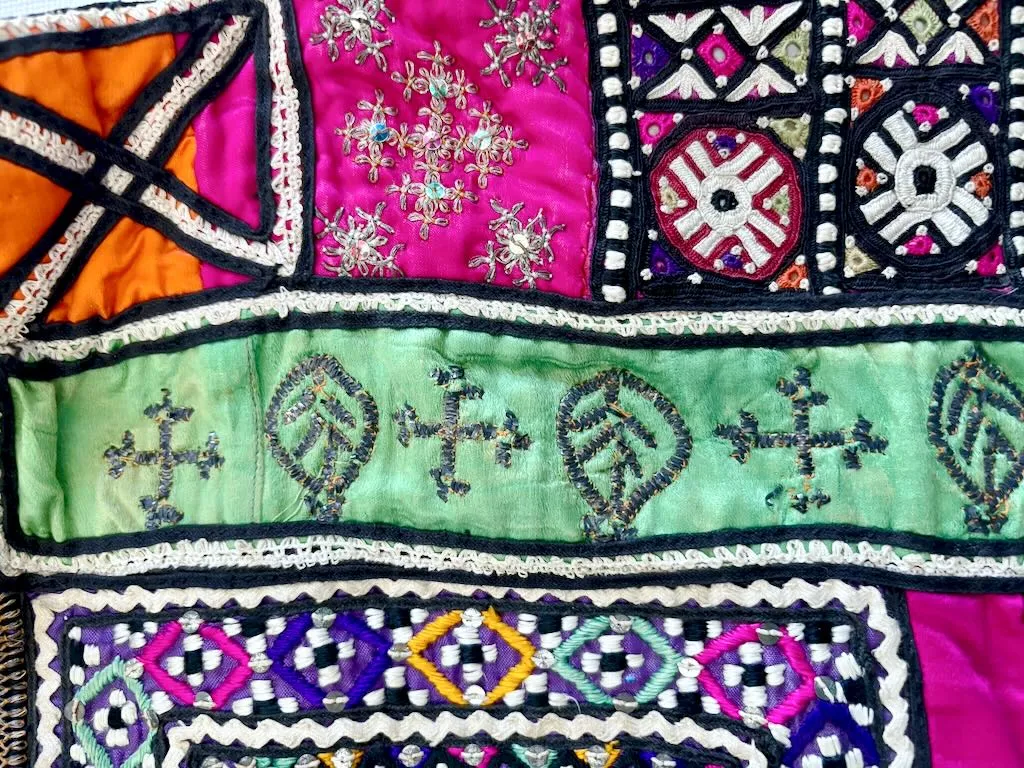
For example, a green band on the back carries alternating highly stylized forms. Some appear vegetal or tree-like, while others develop into striking cruciform geometry. Similar abstraction continues throughout the garment in diamonds, radiating forms, rosettes, and complex compartmentalized patterns.
We do not assign specific traditional names or symbolic meanings to these individual motifs without firm documentation. However, their repetition, abstraction, and geometric organization correspond closely with the rich visual vocabulary documented in Baluch embroidery.
A Garment Built Around Decorated Fields
The structure of the dress contributes as much to its character as the individual stitches.
Rather than shaping fabric closely around the body, its maker constructed a broad, largely rectangular garment. Elaborately worked sections organize the surface into distinct decorative fields.
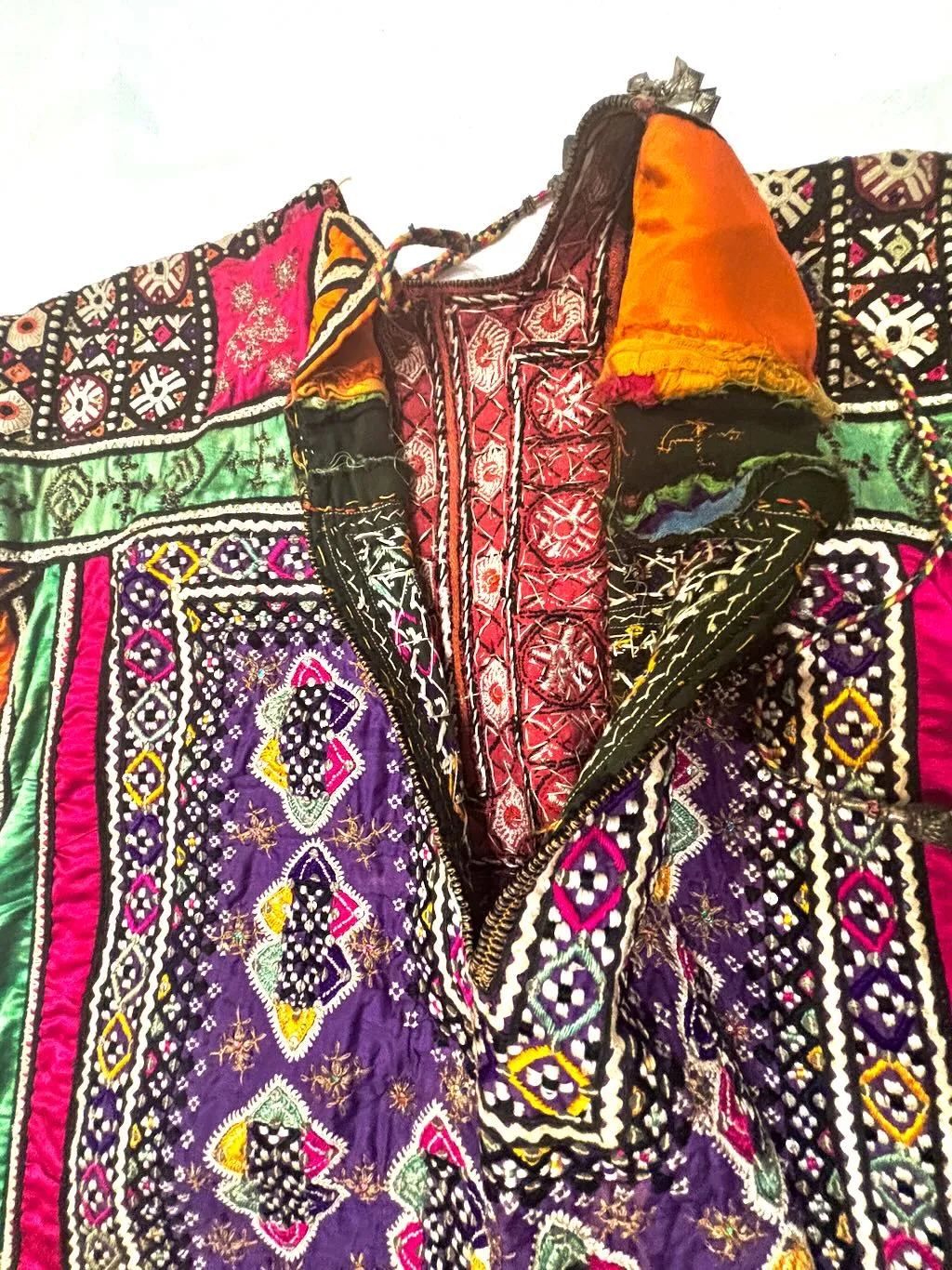
A dense embroidered area surrounds the neckline and extends vertically down the front. Additional embroidery covers the sleeve areas and appears in richly worked bands and panels across the garment.
The back creates a different composition. Large areas of vivid purple textile provide breathing room between embroidered sections. Small metallic floral motifs scatter across portions of this ground, while green, magenta, and orange bands introduce further contrasts.
This relationship between open textile and dense needlework prevents the extensive decoration from becoming visually overwhelming.
For a detailed look at the construction and embroidered sections of traditional Baluch clothing, see our article “How to Understand the Structure of Traditional Baluch Clothing,” which features this actual garment as an illustrated example.
The Reverse Reveals the Handwork
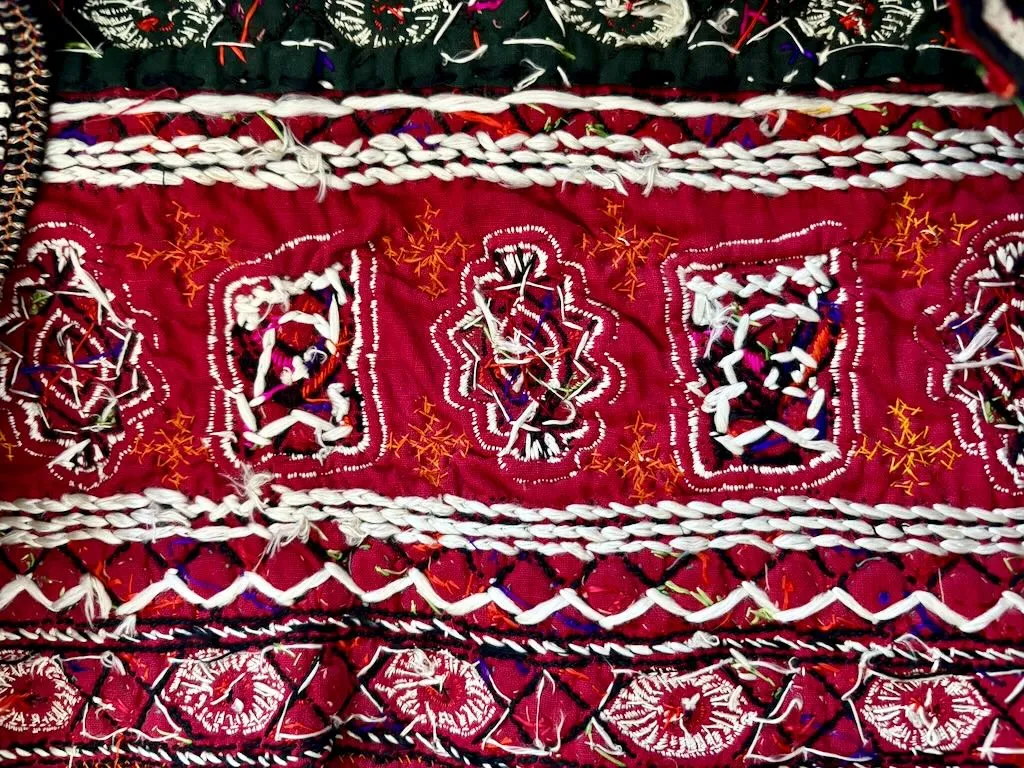
One photograph shows the inside of the dress and provides an unusually revealing view of its construction.
Working threads, knots, carried threads, and the backs of embroidered motifs remain clearly visible. The reverse exposes the physical process behind decoration that appears remarkably controlled from the exterior.
It also reinforces the handmade character of the garment. Small variations in stitching and construction record the work of the embroiderer rather than the uniform repetition associated with industrial production.
From the outside, the eye sees pattern and color. From the inside, it sees the extraordinary labor required to create them.
Iranian Baluchistan and a Wider Textile Tradition
The traditional homeland of the Baluch extends across modern national borders. In Iran, Baluch communities are particularly associated with Sistan and Baluchestan in the southeast, adjoining Pakistan and forming part of a much broader network of cultural exchange.
Consequently, Baluch textile traditions share visual relationships with embroidery found farther east in Pakistan and the Indian subcontinent. Brilliant colors, mirror work, dense geometry, and highly abstracted motifs participate in this wider regional textile vocabulary.
At the same time, Iranian Baluch embroidery developed distinctive regional traditions of its own. Research distinguishes, among other areas, Sarhad in northern Iranian Baluchistan and Makoran farther south, with Iranshahr and Saravan situated between these regions.
Without documentation identifying the original maker or community, we do not assign this dress to a specific Baluch subgroup. Instead, its construction, embroidery, and decorative vocabulary support an attribution to the broader Iranian Baluch tradition of southern and southeastern Iran.
Dating This Antique Baluch Kurta Dress
The precise creation date remains unknown.
However, the dress was acquired from an antique store in Tehran during the 1960s. Therefore, it was already in circulation as an older collectible textile by that time.
Comparable elaborately embroidered Baluch garments in museum collections have received dates within the first half of the 20th century. The Metropolitan Museum of Art, for example, preserves richly embroidered garments catalogued as wedding kurtas and dated 1900–1950.
Those museum examples do not establish the date or original use of this particular garment. However, together with its known acquisition history and physical characteristics, they provide useful context for the estimated c. 1900–1960 date.
Likewise, the elaborate decoration suggests clothing created for an important occasion. We do not identify this example specifically as a wedding dress because its original use remains undocumented.
Remarkably Preserved Color and Detail
Perhaps the most immediately surprising quality of this dress is its freshness.
It has remained protected in a garment bag since its acquisition in the 1960s. As a result, the colors retain extraordinary intensity. Purple, orange, green, magenta, and red remain vibrant, while the contrasting embroidery preserves strong definition.
The mirrors and metallic elements add another dimension. They respond to changing light and give the textile a liveliness that photographs can only partly convey.
Its very good condition also allows the garment to survive as a complete composition rather than simply as a source of antique embroidered fragments.
A Collectible Work of Iranian Baluch Textile Art
This kurta dress deserves consideration as textile art as much as historic clothing.
It survives as a complete garment with its front, back, sleeves, decorated panels, and extensive handwork intact. At the same time, its rectangular construction creates a powerful composition when displayed flat or exhibited on an appropriate textile form.
Collectors can also study its embroidery from both sides. The exterior demonstrates the finished visual language of Baluch needlework, while the interior reveals how the embroiderer constructed that elaborate surface.
Above all, the garment preserves the work of a skilled embroiderer whose identity may be unknown, but whose craftsmanship remains remarkably tangible. Its complex geometry, brilliant color, mirrors, metallic details, and extensive handwork preserve an impressive example of the rich textile traditions associated with Iranian Baluchistan.