


Description
46.5″ Vintage Baluchi Hand-Embroidered Textile Panel from Iran
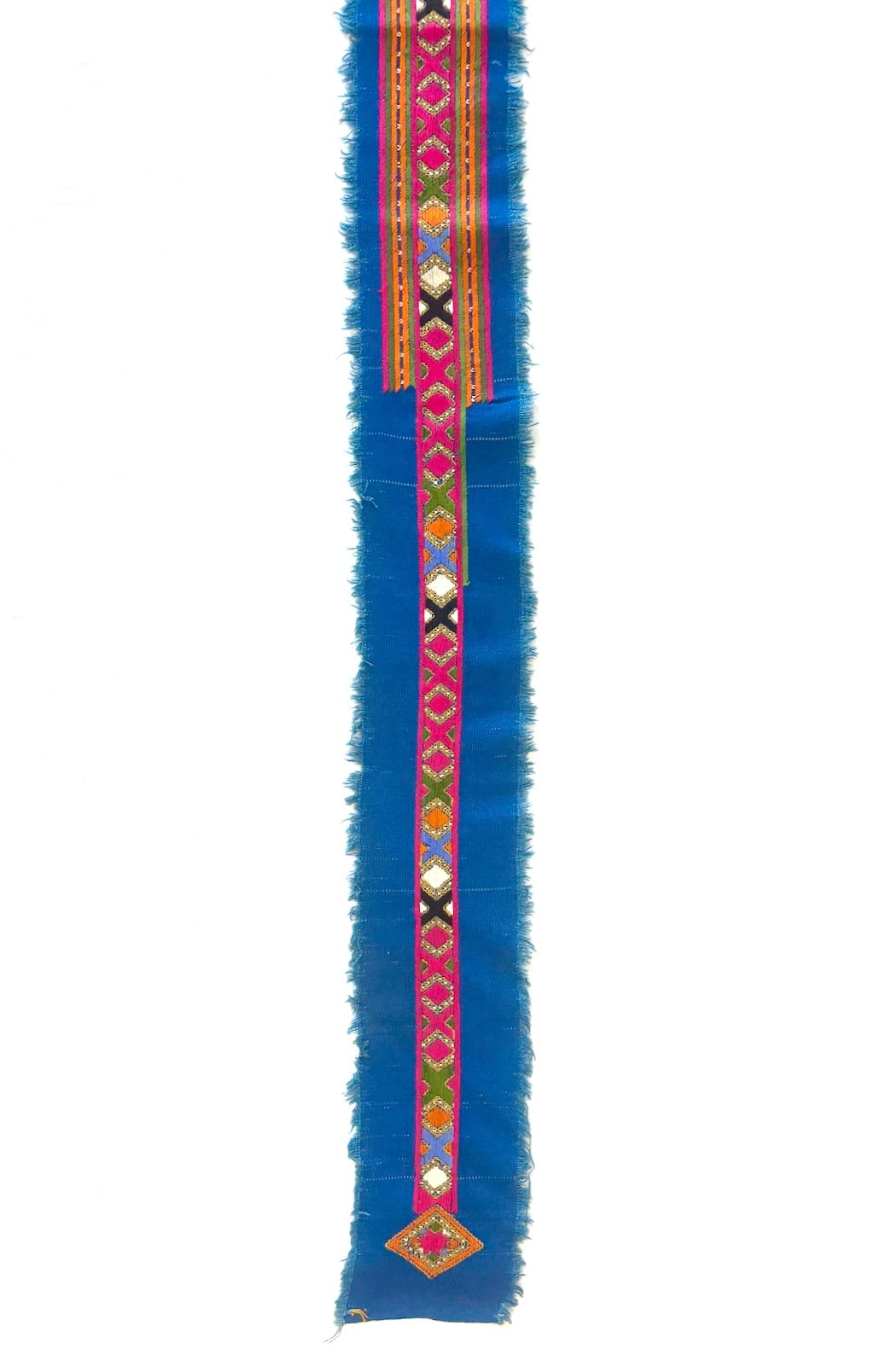
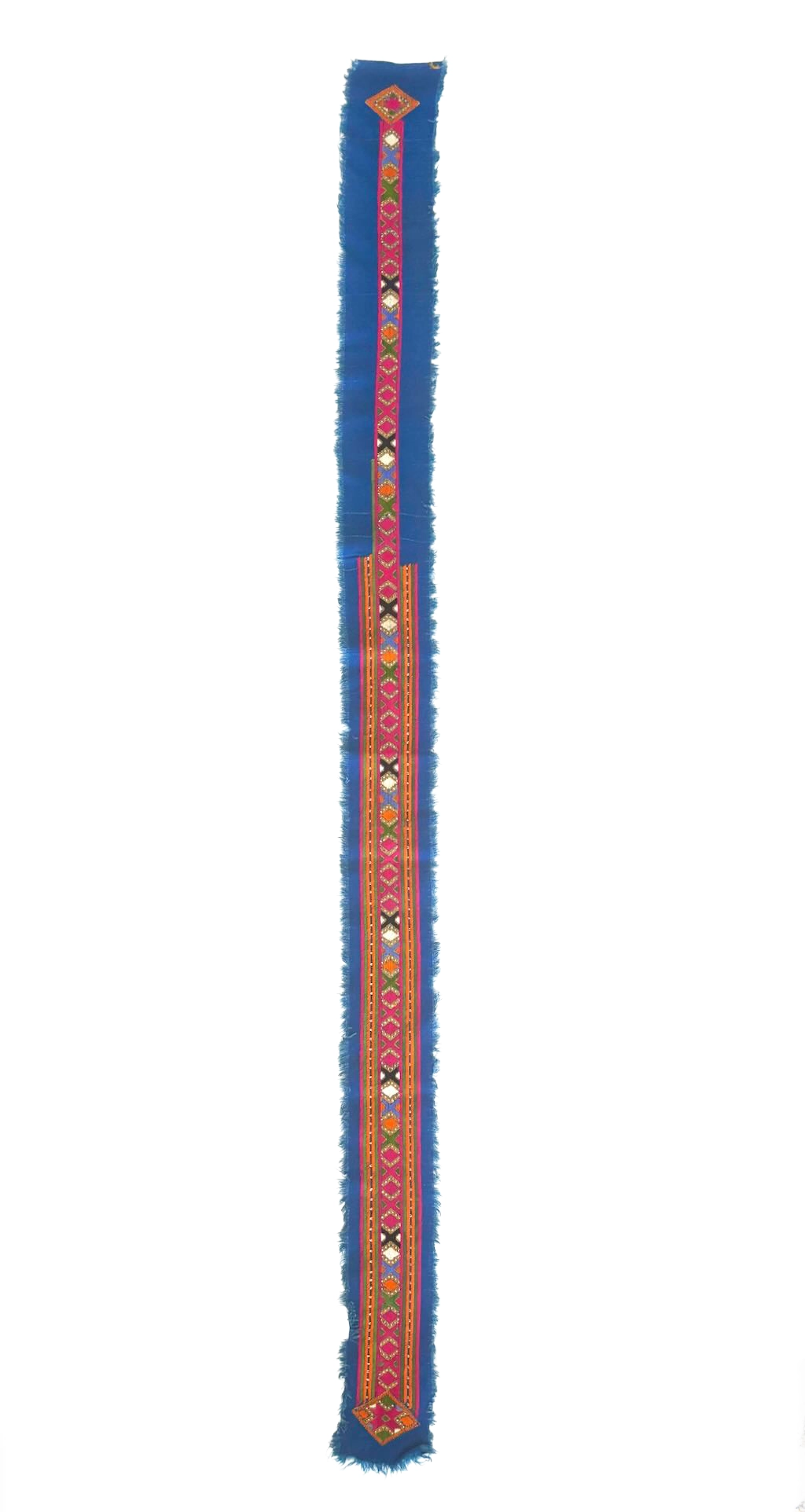
This striking vintage Baluchi embroidered panel combines brilliant color with the precise geometric needlework associated with Sistan and Baluchestan in southeastern Iran. Approximately 45 inches (114.3 cm) of embroidery extends along the narrow blue cotton ground. Its elongated form creates a graceful rhythm and gives the piece a very different character from wider Baluchi panels.
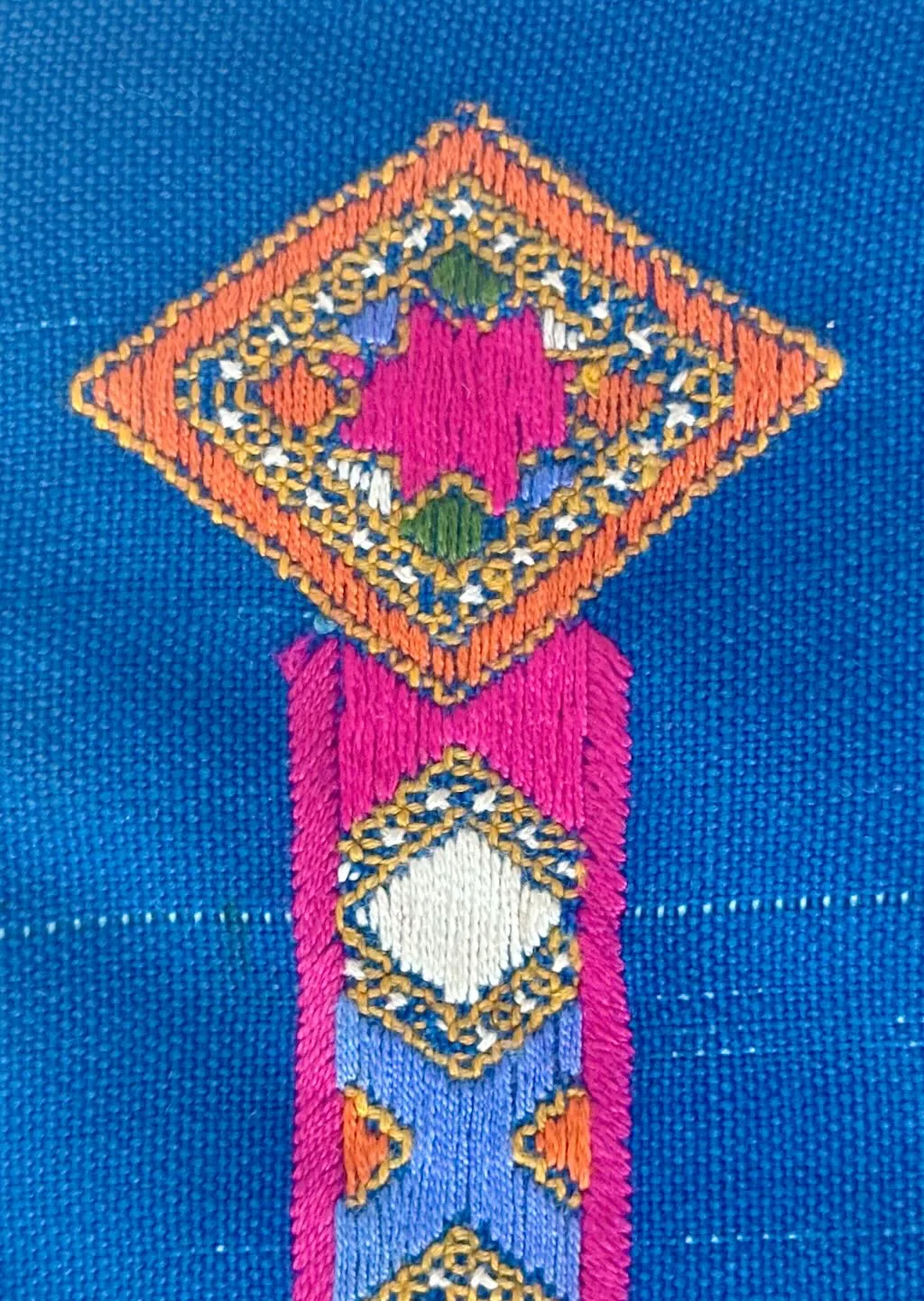
The artisan combined vivid magenta, red, orange, yellow, green, violet, black, and white against the rich blue foundation. Strong contrasts make even the smallest details easy to see. Meanwhile, repeated diamonds, stepped forms, crosses, and angular motifs create continuous movement along the textile.
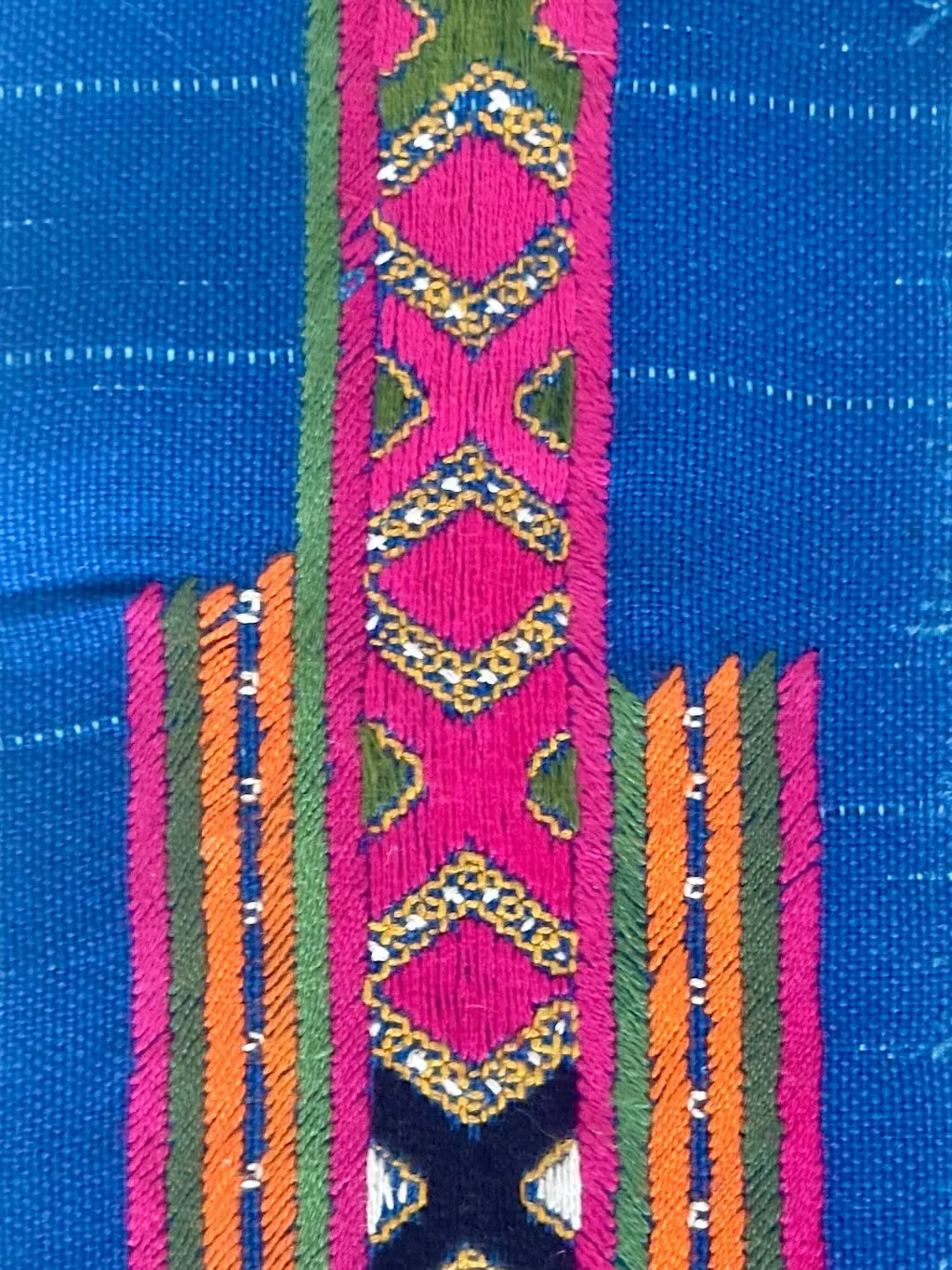
One feature makes this embroidery particularly unusual. For approximately 28.5 inches (72.4 cm), the design reaches approximately 2 inches (5.1 cm) wide. It then changes to a much narrower embroidered band measuring approximately 0.75 inch (1.9 cm) wide. This shift creates an engaging asymmetry and gives the long composition an unexpected visual rhythm.
The panel remains unused and retains the blue foundation fabric surrounding the embroidery. Its original intended purpose remains unknown. Therefore, the textile can be appreciated for its needlework without assigning it to a particular garment or decorative object.
For more information about this distinctive needlework tradition, see our articles “Baluchi Embroidery of Iran: A Remarkable Textile Tradition” and “How to Understand the Structure of Traditional Baluch Clothing.”
Traditional Baluchi Geometric Embroidery
Baluchi embroidery relies on precision. Artisans create complex patterns with carefully counted stitches rather than free-form pictorial designs. As a result, diamonds, stepped shapes, angular borders, and repeating geometric forms often define the compositions.
This panel demonstrates that precision particularly well. Tiny areas of contrasting color sit closely together without obscuring the larger pattern. At close range, individual stitches reveal the intricacy of the handwork. From farther away, those same stitches merge into a strong and remarkably ordered design.
The changing scale adds another dimension. Larger geometric motifs fill the wider section, while the narrow section continues the rhythm at a much smaller scale. Consequently, the eye follows the embroidery naturally along its considerable length.
The reverse also deserves attention. Since the panel remains unused and unlined, both sides remain accessible. The reverse reveals the movement of the threads and offers a direct view of the hand-worked construction.
An Unused Baluchi Embroidered Panel
Baluchi artisans traditionally created embroidered sections for use in clothing and other textiles. Many surviving examples now appear as parts of dresses, yokes, cuffs, sleeves, or other completed pieces.
This example differs because it remains an independent embroidered textile. The blue foundation fabric still surrounds the stitched design, and no later backing or lining conceals the reverse. However, we cannot know what final purpose the artisan originally envisioned for it.
Today, those open possibilities add to its appeal. A collector may preserve the panel as an example of Baluchi textile art. A designer could incorporate it into a bespoke garment, cushion, decorative furnishing, or another carefully considered textile project. Alternatively, mounting the piece would allow its unusual length and changing embroidery width to remain fully visible.
The textile therefore offers considerable versatility without requiring any alteration. It can remain intact as a collectible or become part of a new design that respects the original embroidery.
Bright Color on a Blue Textile Ground
The blue cotton ground gives this panel an especially lively appearance. Intense pinks, oranges, greens, yellows, violet tones, black, and white stand out sharply against it.
Color plays an important role in Baluchi embroidery. Here, the blue ground becomes part of the composition rather than simply supporting it. Small areas of exposed blue separate the geometric motifs and help the warmer colors appear even brighter.
The palette also gives this example a distinctive personality. Its vivid colors and crisp geometry feel remarkably fresh, despite the textile’s mid-20th-century or earlier date.
Baluchi Embroidery and Iranian Fashion
Baluchi needlework gained broader recognition within Iran during the 1960s and 1970s. During this period, designers and cultural advocates increasingly drew inspiration from regional Iranian crafts. Their work brought traditional embroidery into contemporary fashion while encouraging greater appreciation for the artisans who maintained these skills.
Empress Farah Pahlavi became a prominent advocate for Iranian regional craftsmanship. She wore contemporary garments that incorporated traditional Iranian embroidery, bringing greater international visibility to regional textile traditions.
Unused embroidery from this period offers an interesting perspective because the needlework itself remains the focus. Here, the generous length and dramatic change in width demonstrate how effectively Baluchi geometric embroidery can maintain a unified visual rhythm across very different proportions.
An Excellent Example for Textile Collectors
Condition matters greatly when evaluating vintage embroidery. This example retains remarkably fresh color and crisp geometric detail throughout approximately 45 inches (114.3 cm) of needlework.
The blue cotton foundation also remains intact with its unfinished margins. In addition, no later backing or lining hides the reverse. Collectors can therefore examine both the finished surface and the hand-worked construction.
Its long, narrow proportions create another visual quality that still photographs cannot fully convey. When folded or gently draped, the textile develops a natural sense of movement. The photographs show it both extended and folded to illustrate its considerable length and the flow of the embroidery.
Whether kept as a collectible, displayed as textile art, studied for its craftsmanship, or incorporated into a thoughtful design project, this unusual Baluchi embroidered panel offers a vivid example of Iran’s rich needlework traditions.