



Description
Rare Antique Persian Hand-Engraved (Ghalamzani) Metal Vessel with Screw-Top Lid & Hidden Khorshid Motif
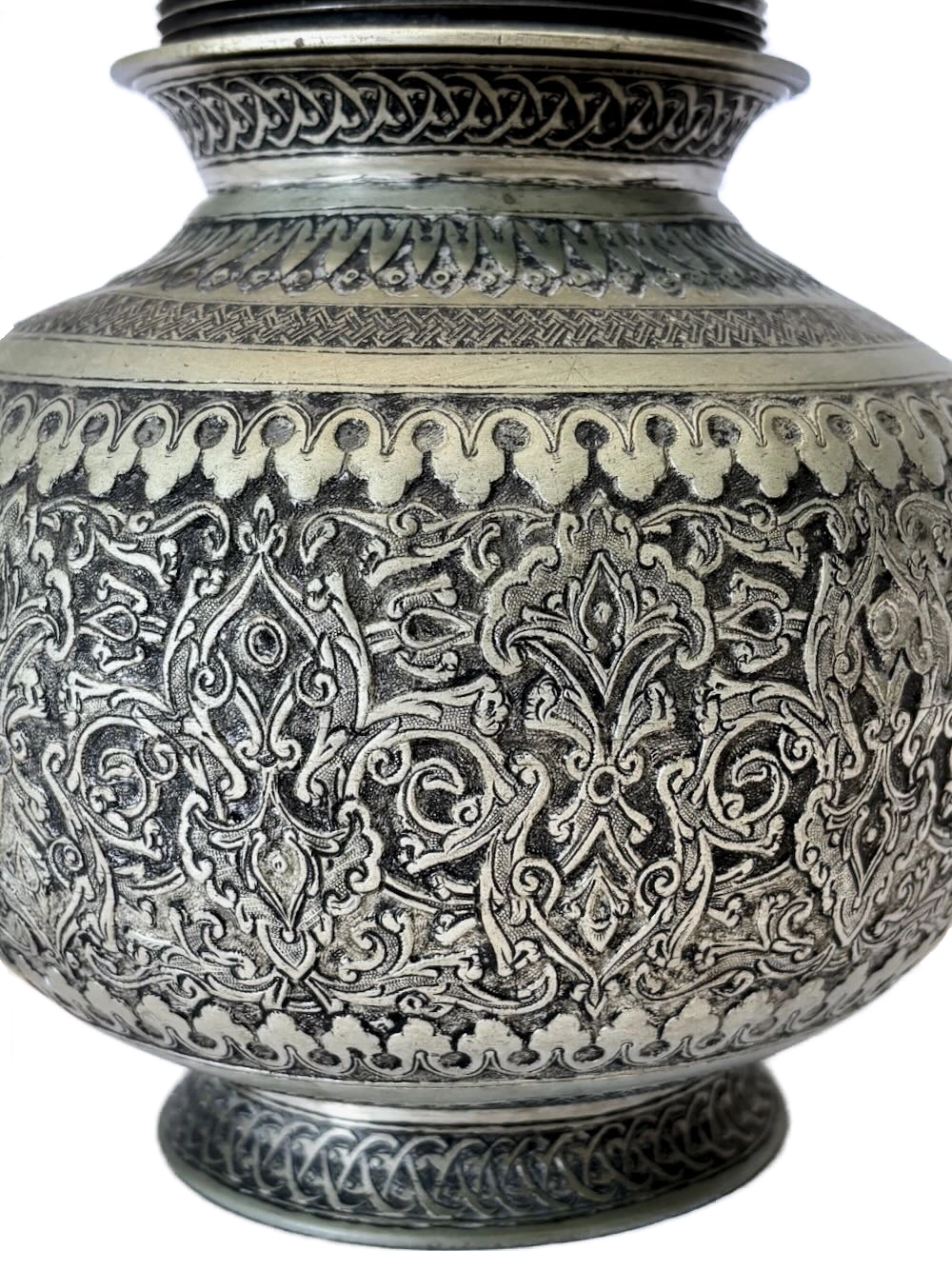
This remarkable antique Persian hand-engraved, Ghalamzani, metal vessel stands apart from most examples of Qajar and early Pahlavi decorative metalwork through both its construction and presence. Heavy, deeply worked, and unusually engineered, the piece combines dense hand-engraved ornament with a substantial screw-thread lid and folding handle, all executed with an impressive level of craftsmanship.
The vessel was acquired from an antique dealer in Iran during the mid-20th century and was originally collected for the same qualities that continue to make it compelling today: its rarity, unusual form, exceptional weight, intricate carving, and the mystery surrounding its original purpose. Even after decades of aging, the piece retains a strong silvery finish with beautiful dark contrast throughout the engraved decoration. It could likely be polished to a brighter surface, though it is being offered in untouched condition with its natural patina preserved.
What immediately distinguishes the piece is the quality of the metalwork itself. The body is thick and substantial, weighing approximately 1195 grams, with deeply cut decoration rather than the lighter repoussé work often encountered on later decorative wares. The screw-thread lid remains smooth and functional, a detail that required precise metalworking skill and careful fitting.
The engraved decoration covers nearly every visible surface, combining scrolling arabesques, geometric interlace bands, floral motifs, and textured recessed grounds executed in the Persian Ghalamzani tradition. The density and consistency of the carving give the vessel an architectural quality, almost resembling carved stone or wood rather than metal.
An Unusual and Rare Form
Persian engraved metal vessels are well known, yet examples combining this particular form, construction, and level of ornamentation appear to be uncommon. The heavy screw-top mechanism alone is unusual, especially when combined with the folding carrying handle and deeply carved body.
The interior construction visible beneath the lid reveals multiple riveted components and layered assembly, offering insight into the complexity of its manufacture. Wear within the threaded areas hints at a warmer-toned underlying alloy beneath the silvery exterior surface, suggesting either silvered, tinned, or white-metal finishing over a heavier cast base metal.
Rather than appearing as a lightweight decorative object, the vessel has the unmistakable feel of a serious hand-crafted work intended to last generations.
Khorshid Khanom — The Hidden Lady Sun
One of the most fascinating details of the vessel is concealed inside the base: a finely engraved Khorshid, or Persian sun-face motif, hidden from view until the vessel is opened.
The image belongs to the long Persian artistic tradition of Khorshid Khanoom, literally “Lady Sun,” a motif deeply rooted in Iranian mythology, folklore, and visual culture. The radiant female-faced sun has ancient origins connected to pre-Islamic Persian beliefs, including associations with Anahita, goddess of fertility and water, and Mithra, linked to light, cosmic order, and renewal.
During the Qajar period, the motif became especially popular throughout Persian decorative arts, appearing in paintings, palace tiles, enamelwork, textiles, and metal objects. The image symbolized beauty, protection, prosperity, feminine strength, and rebirth. Closely associated with spring and renewal, it also carried strong connections to Nowruz, the Persian New Year.
What makes this vessel especially intriguing is that the Khorshid motif is not displayed prominently on the exterior. Instead, it appears hidden within the base, almost as a private symbolic detail revealed only upon opening the vessel. The face itself is exceptionally expressive and finely engraved, surrounded by sharply radiating solar lines that remain remarkably crisp.
This concealed placement transforms the motif into something more intimate and unexpected — a discovery element within the object itself rather than merely decorative surface ornament.
Craftsmanship and Surface Detail
Close examination reveals the extraordinary level of handwork throughout the vessel. The engraved grounds are densely textured to create contrast against the raised ornament, while the geometric borders display carefully repeated punchwork and interlacing motifs characteristic of Persian metal engraving traditions.
The screw-thread construction is equally impressive. The threads are thick, deeply cut, and still align securely after decades of use and aging. This precision adds a mechanical sophistication rarely seen in more common decorative containers of the period.
The folding handle integrates naturally into the overall design and reinforces the sense that this was an object made with both visual presence and structural durability in mind.
Condition
The vessel remains in very good antique condition with age-related wear consistent with its history and material. Surface oxidation, patina, and areas of darkening are present throughout and contribute significantly to the character and visual depth of the engraving. The screw-top mechanism functions well and threads securely.
The piece is offered exactly as found and has not been aggressively polished, preserving the aged surface and accumulated character acquired over decades.