
Description
Wedgwood Black Basalt Egyptian Sphinx with Terracotta Relief, 1978
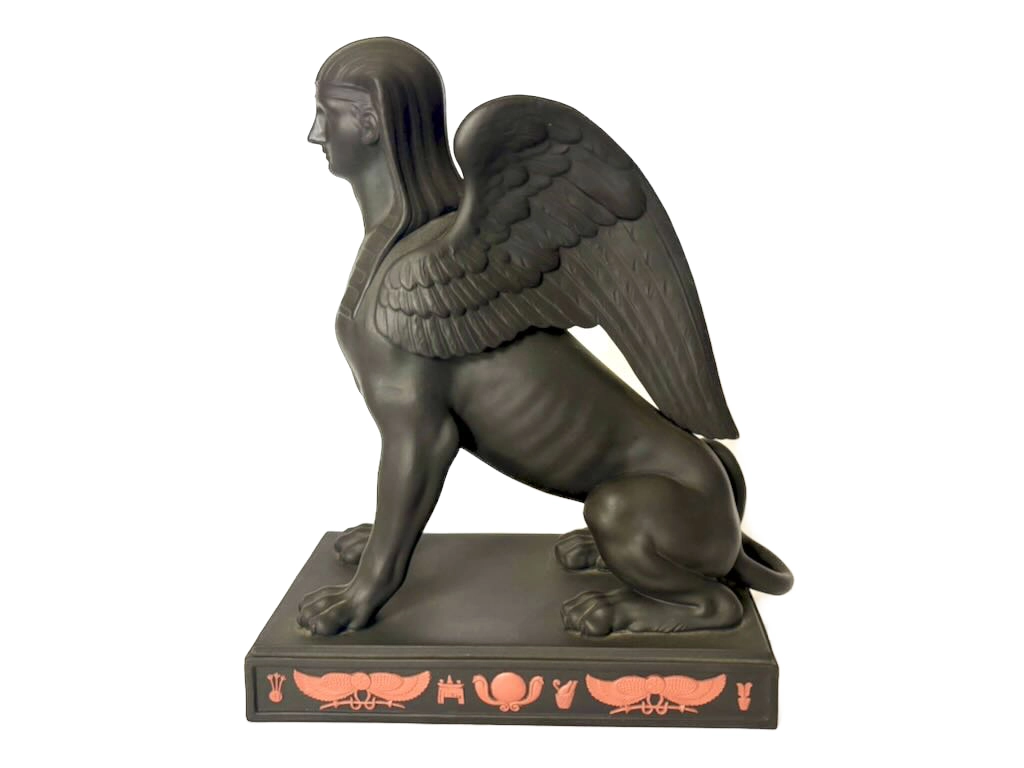
An impressive example of Wedgwood’s Egyptian Revival decorative sculpture, this magnificent seated Wedgwood Black Basalt Egyptian Sphinx combines the dramatic character of black basalt with the warmth of terracotta-colored Egyptian ornament. Produced in England in 1978, the sculpture belongs to Wedgwood’s celebrated Egyptian Collection, which revisited the imagery and artistic traditions of ancient Egypt through the company’s distinctive ceramic craftsmanship.
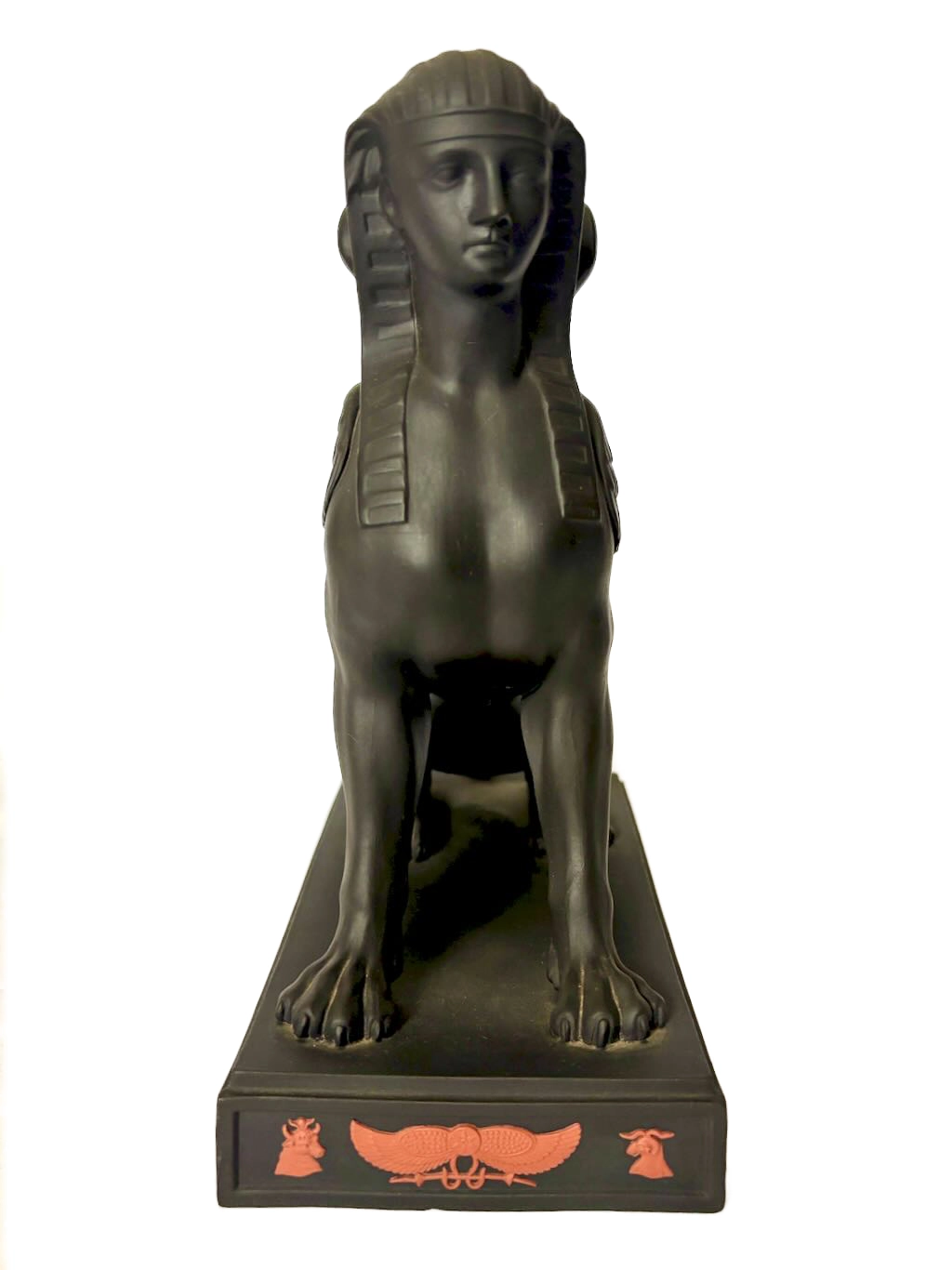
The sphinx rises majestically from a rectangular plinth, its finely modeled human head crowned with an Egyptian-style headdress. The powerful body of a lion supports a pair of elaborately feathered wings that curve upward from the shoulders and sweep gracefully toward the hindquarters.
The figure’s expression is serene and contemplative, contrasting with the muscular strength of the animal body. Carefully articulated paws, delicately modeled facial features, and individually defined feathers contribute to the sculpture’s remarkable presence.
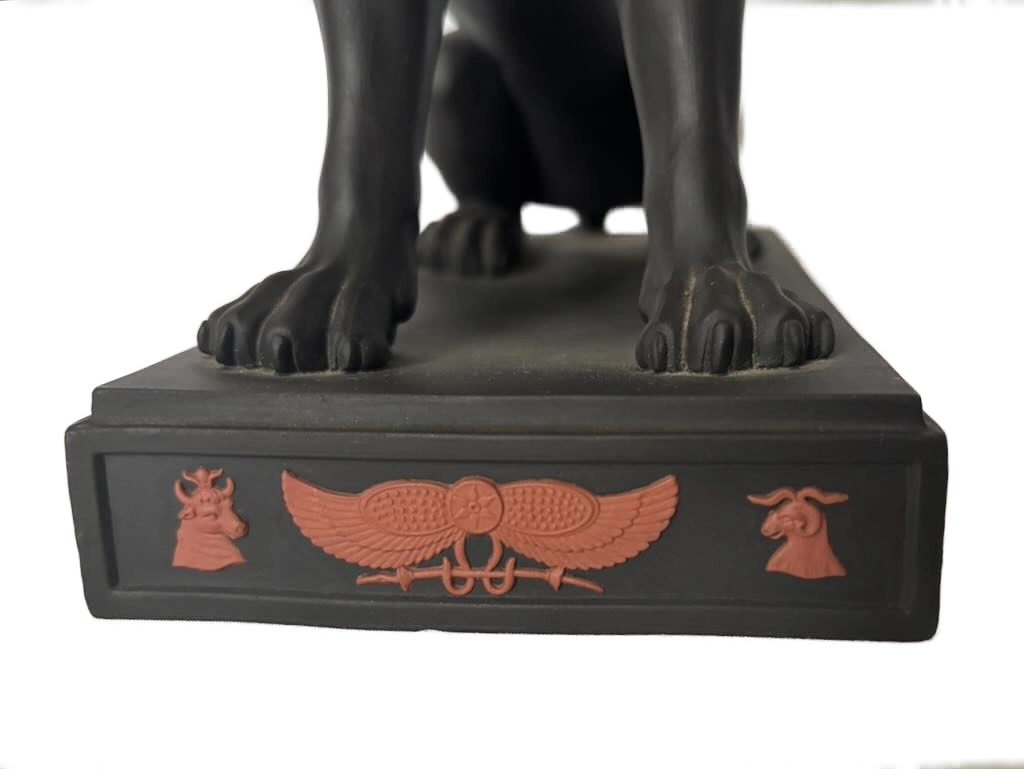
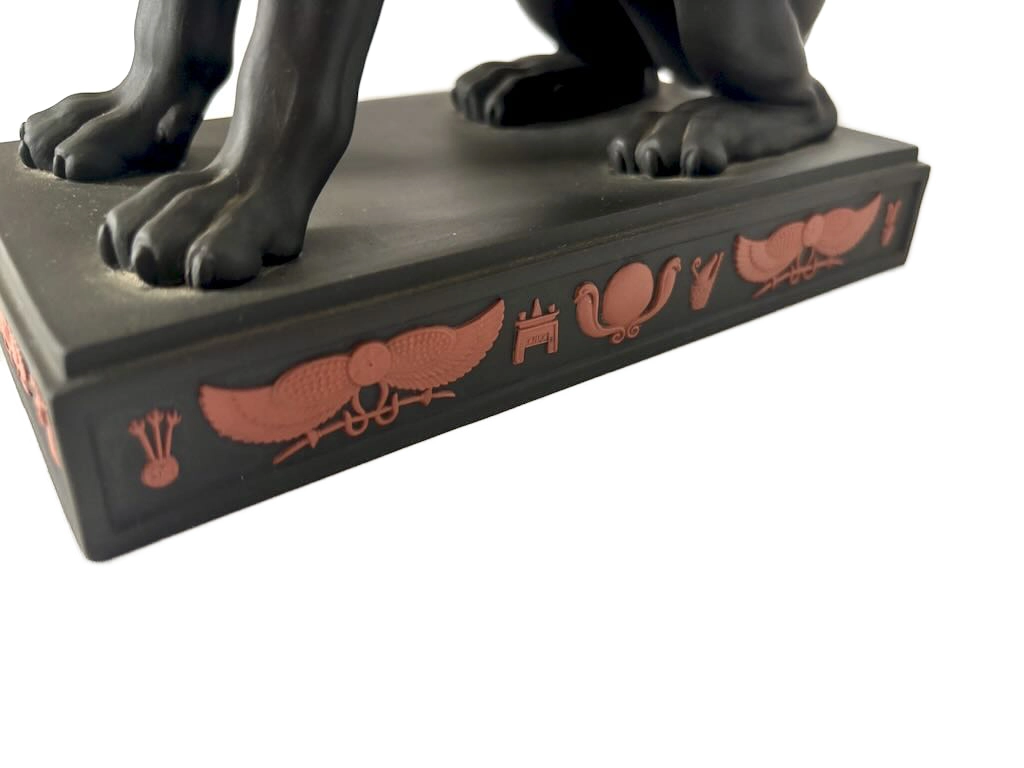
Along the sides of the plinth, applied terracotta-colored reliefs introduce a rich vocabulary of Egyptian-inspired symbols. Their warm, earthy tone provides a striking contrast against the deep, velvety black of the basalt, creating an effect that is both dramatic and sophisticated.
At approximately nine inches high and eight inches long, this is a substantial decorative sculpture rather than a small ornamental figurine. Its architectural proportions and richly symbolic decoration make it especially suited to display on a mantelpiece, console, library shelf, or within a carefully curated collection of Wedgwood and Egyptian Revival objects.
Wedgwood’s Egyptian Collection of 1978
Wedgwood’s fascination with ancient civilizations reaches back to the eighteenth century, when Josiah Wedgwood explored the artistic possibilities of classical forms and archaeological ornament.
The company’s 1978 Egyptian Collection renewed this interest during a period of considerable enthusiasm for ancient Egyptian art. The international fascination surrounding the treasures of Tutankhamun, particularly the celebrated exhibitions of the 1970s, encouraged renewed appreciation for Egyptian imagery in the decorative arts.
Wedgwood responded with a collection that combined ancient Egyptian motifs with the restrained elegance of its established ceramic traditions. Black basalt, terracotta-colored reliefs, and selected gilded decorations appeared across an assortment of ornamental objects, including plaques, boxes, vessels, and sculptural figures.
This seated sphinx is among the collection’s most commanding forms. Unlike smaller pieces that incorporate Egyptian imagery as surface decoration, the sphinx transforms the ancient subject into a fully realized three-dimensional sculpture.
The combination of sculptural modeling and applied relief demonstrates Wedgwood’s ability to reinterpret historical ornament while retaining its distinctive approach to form, proportion, and craftsmanship.
This piece forms part of the Wedgwood Egyptian Collection introduced in 1978, a series documented in the original Wedgwood Egyptian Collection brochure.
The Sphinx: Guardian, Strength, and Royal Authority
The sphinx occupies an important place in the artistic traditions of ancient Egypt. Combining the strength of a lion with the intelligence and authority of a human figure, it became a powerful symbol of protection, kingship, and sacred guardianship.
Egyptian sphinxes frequently appeared near temples, royal monuments, and ceremonial approaches, where their imposing forms conveyed both divine protection and royal power.
Wedgwood’s interpretation retains these essential characteristics while introducing an elaborate pair of feathered wings, creating a hybrid form that also recalls winged sphinxes found in the artistic traditions of the ancient Near East and later European decorative arts.
The human head wears a stylized Egyptian headdress, its long, patterned sections falling along the shoulders. The sculptor has given the face a calm, almost introspective expression, emphasizing dignity rather than aggression.
The lion’s body displays carefully modeled anatomical details, from the powerful forelegs and broad paws to the muscular hindquarters and curling tail.
The wings introduce a sense of upward movement, their overlapping feathers providing texture and visual rhythm. Together, these elements create a sculpture that balances monumentality with refined decorative detail.
Egyptian Symbols in Terracotta Relief
The rectangular plinth carries a series of Egyptian-inspired motifs rendered in contrasting terracotta-colored relief.
Most prominent are the winged solar emblems, whose outstretched wings create a striking horizontal composition against the dark basalt background.
In ancient Egyptian art, the winged sun disk was associated with divine protection and royal authority. It frequently appeared above temple entrances and in religious and ceremonial decoration.
The winged emblems on this sculpture recall that protective symbolism, although Wedgwood has adapted their forms into an ornamental arrangement suited to the rectangular base.
Other motifs include stylized animal heads, lotus-like floral elements, and decorative forms inspired by ancient Egyptian iconography.
The lotus held particular importance in Egyptian symbolism, representing renewal, regeneration, and the daily emergence of life. Its graceful form became a recurring decorative element in Egyptian architecture and objects.
The terracotta-colored reliefs wrap around the plinth, encouraging the viewer to appreciate the sculpture from several angles. Their precise arrangement creates a decorative border that complements the sphinx without competing with its sculptural presence.
Black Basalt and the Legacy of Josiah Wedgwood
Black basalt is one of Wedgwood’s most celebrated ceramic materials.
Developed and refined during the eighteenth century under Josiah Wedgwood, this dense, fine-grained black stoneware became particularly admired for its smooth surface, rich color, and suitability for finely modeled decorative objects.
Unlike glazed black ceramics, Wedgwood black basalt possesses a distinctive matte or softly lustrous surface that gives sculptural forms unusual clarity and depth.
Josiah Wedgwood used black basalt for vases, busts, portrait medallions, and decorative figures inspired by classical antiquity. Its ability to reproduce delicate modeling made it especially suitable for the neoclassical taste that flourished during the Georgian period.
Egyptian subjects also formed part of Wedgwood’s early artistic repertoire. The company produced sphinxes and other Egyptian-inspired forms during the late eighteenth century, reflecting the period’s growing interest in ancient civilizations.
The 1978 sphinx therefore represents more than a revival of Egyptian imagery. It also reconnects with an important chapter in Wedgwood’s own artistic history.
The deep black body emphasizes the sculpture’s silhouette, while the terracotta ornament introduces color without diminishing the elegance of the basalt.
This harmonious combination of materials and decoration gives the piece its distinctive character.
A Sculptural Statement for Collectors
The sphinx has an unusually commanding presence for a ceramic decorative object.
Its upright posture, monumental wings, and strong rectangular base create a composition that recalls architectural sculpture. The restrained black surface allows light to reveal the subtle modeling of the face, body, and feathers.
The contrasting Egyptian reliefs add a second level of interest, inviting closer examination of the symbolic motifs around the base.
For collectors of Wedgwood, the piece represents an ambitious sculptural expression of the company’s Egyptian Revival work. For admirers of Egyptian art and decorative history, it offers an elegant twentieth-century interpretation of an ancient and enduring subject.
Its form also complements interiors that combine classical architecture, historical decorative arts, and carefully selected sculptural objects.
Date, Markings, and Condition
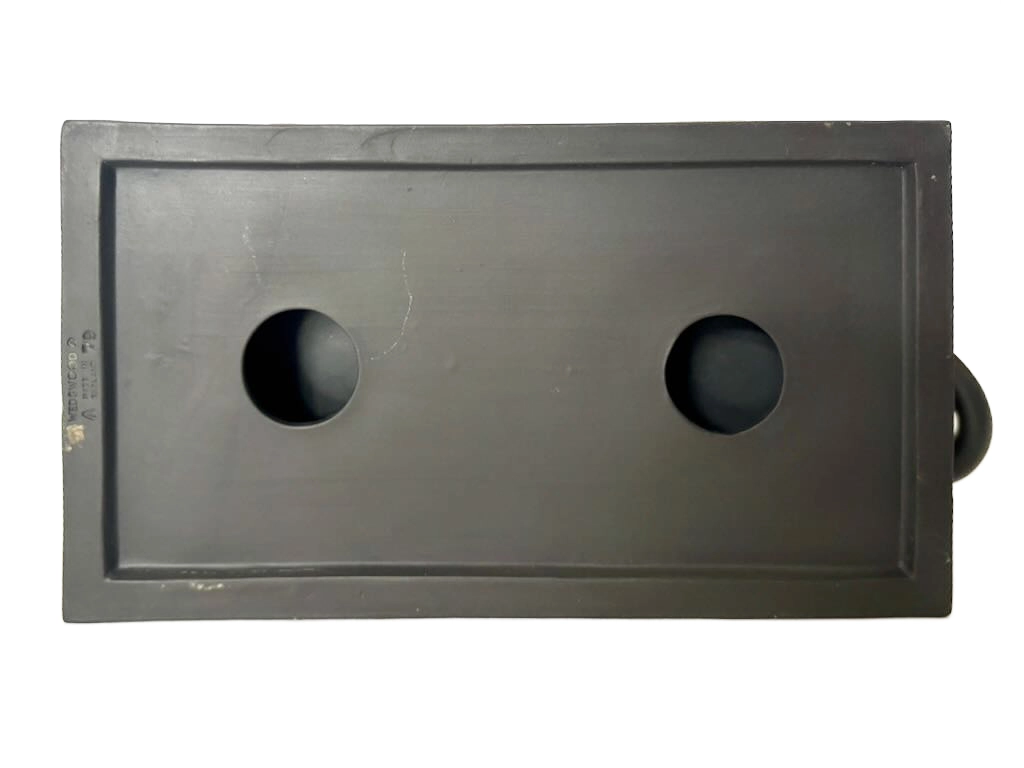
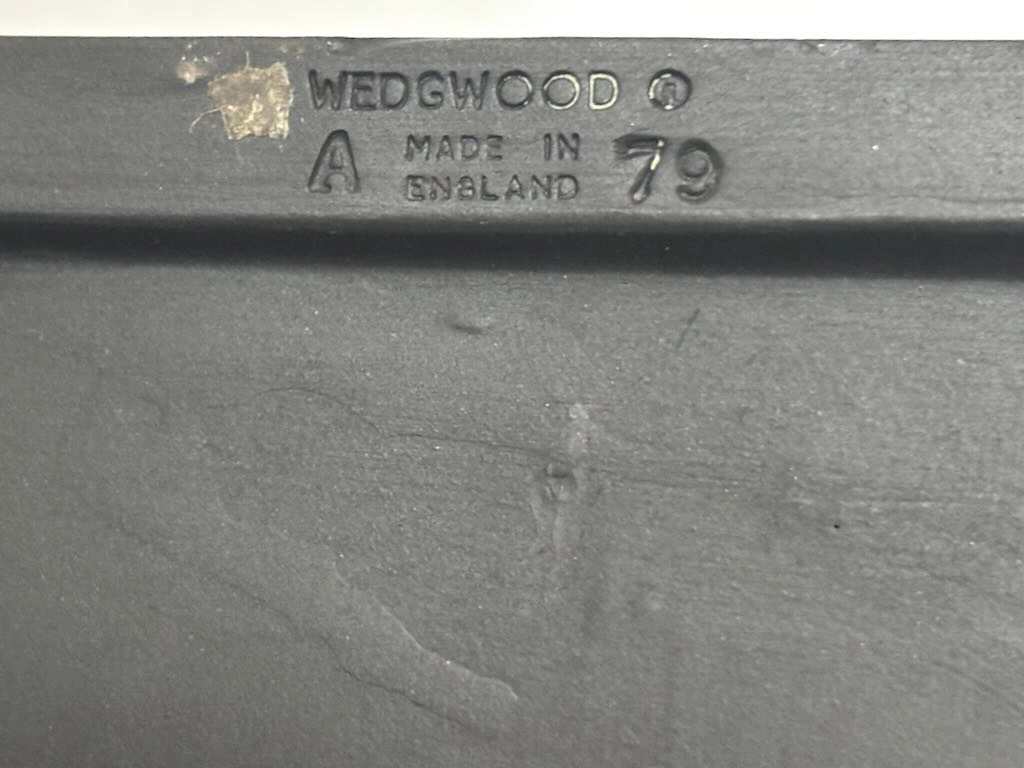
The underside carries the impressed WEDGWOOD name and registered trademark symbol, together with MADE IN ENGLAND, the letter A, and the number 78.
The number 78 is consistent with the 1978 production date associated with Wedgwood’s Egyptian Collection.
The sculpture remains in good vintage condition, with no reported chips, cracks, or repairs. The black basalt retains its characteristic surface, and the terracotta-colored relief decoration remains an important visual feature of the piece.
Some accumulated dust and remnants of earthquake putty remain from previous display and storage. These areas may benefit from careful cleaning appropriate for unglazed ceramic surfaces.
Acquired in Los Angeles during the 1990s, this sculpture has remained in the Bernardi Family Collection for more than three decades.
With its impressive scale, distinguished Wedgwood craftsmanship, and richly detailed Egyptian Revival design, this 1978 black basalt sphinx is a remarkable decorative sculpture for the discerning collector.