
Description
Wedgwood 3cm Ankhesenamun Black Basalt Pendant Necklace Boxed
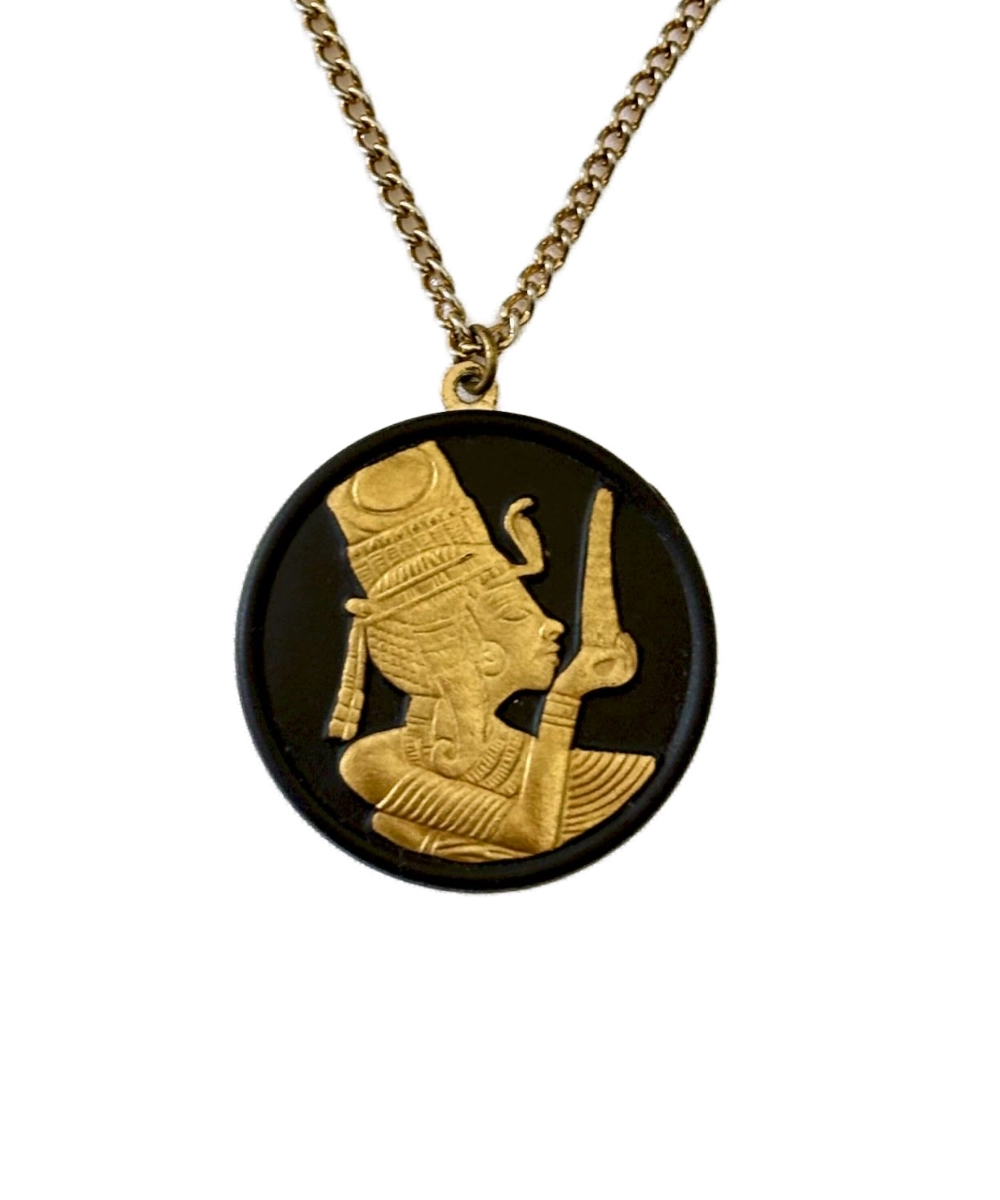
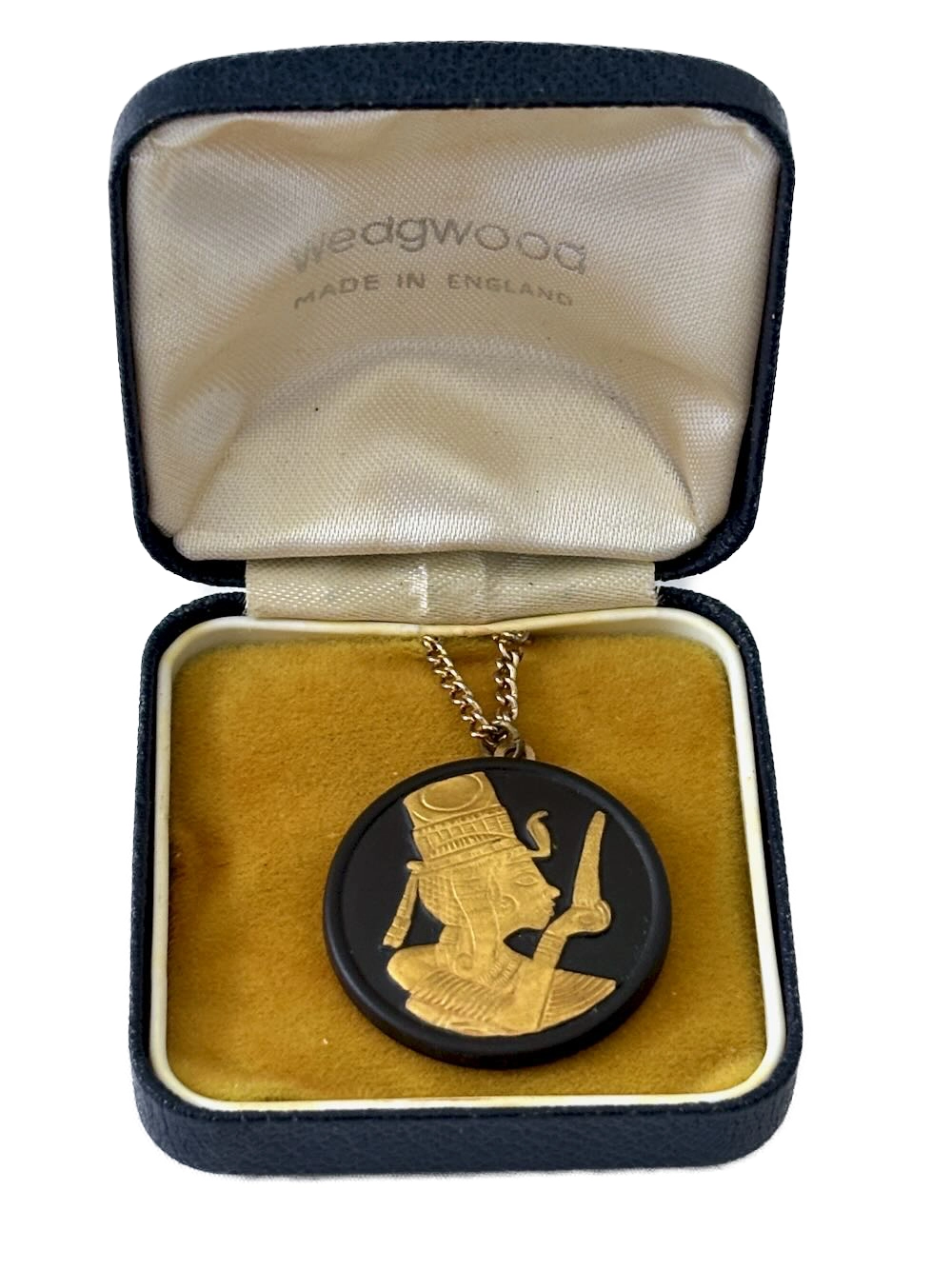
This delicate Wedgwood Egyptian Revival pendant necklace features a finely modeled gilt portrait of Ankhesenamun against a smooth matte black basalt ground. Smaller and more understated than the larger medallion versions produced during the same period, this 3 cm pendant reflects a more intimate interpretation of Wedgwood’s late twentieth century Egyptian jewellery designs while retaining the elegant contrast and sculptural detail that define the series.
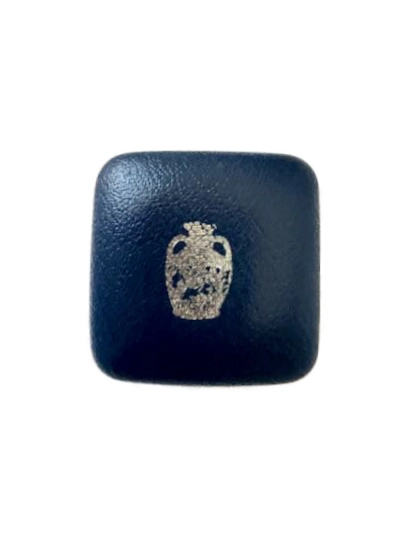
The circular basalt pendant measures approximately 3 cm (about 1.2 inches) in diameter and hangs from its original gold-plated chain measuring approximately 18 inches (45.7 cm) long. The necklace remains accompanied by its original Wedgwood fitted presentation box.
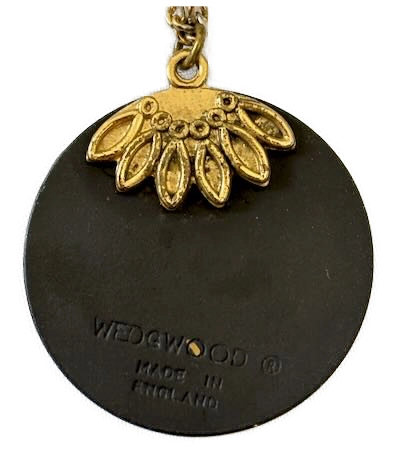
The reverse is impressed:
WEDGWOOD ® MADE IN ENGLAND
The piece appears preserved in unused vintage condition with clean matte surfaces, crisp relief detail, and well-retained gilt decoration.
The broader history surrounding these Wedgwood Egyptian Revival jewellery pieces, including original brochure material discussing black basalt and jasper jewellery production, is explored further in our accompanying article on Wedgwood Jasper Jewellery in the Remarkable Egyptian Revival Era.
Egyptian Revival Jewellery in a More Delicate Scale
While many Egyptian Revival necklaces from the late 1970s embraced dramatic oversized medallions, this smaller 3 cm version feels more refined and versatile. The proportions allow the pendant to function easily as everyday jewellery while still preserving the unmistakable visual language of ancient Egyptian revival design.
The shorter 18-inch chain also creates a more traditional pendant placement, allowing the portrait to sit naturally at the neckline rather than hanging as a large statement medallion.
Despite its smaller size, the relief remains sharply detailed. Ankhesenamun’s stylized headdress, profile, collar, and lotus-form element retain impressive clarity against the deep black basalt surface.
Wedgwood Black Basalt and Egyptian Design
Wedgwood’s use of black basalt gave these Egyptian-themed pendants a distinctive appearance that separated them from ordinary costume jewellery of the era. Originally developed by Josiah Wedgwood during the eighteenth century, black basalt is a dense unglazed stoneware valued for its smooth finish and exceptional ability to capture fine relief modeling.
The material suited Egyptian Revival subjects particularly well. The dark matte surface creates dramatic contrast against the gold decoration while emphasizing the clean linear qualities associated with ancient Egyptian art.
Rather than attempting literal archaeological reproductions, Wedgwood adapted Egyptian imagery into highly stylized wearable decorative objects rooted in the company’s longstanding ceramic traditions.
Ankhesenamun and the Romantic Vision of Ancient Egypt
During the late twentieth century resurgence of Egyptomania, designers frequently drew inspiration from ancient Egyptian queens and royal imagery. Figures such as Ankhesenamun became associated with elegance, mystery, and idealized beauty within fashion and decorative arts.
This pendant reflects that interpretation beautifully. The portrait possesses a graceful and almost graphic simplicity that recalls both ancient wall reliefs and the streamlined elegance of Art Deco revival design.
Even at this smaller scale, the composition remains visually strong and immediately recognizable as part of the broader Egyptian Revival movement that influenced jewellery and interiors throughout the 1970s and early 1980s.