
Description
Wedgwood 4cm Tutankhamun Black Basalt Pendant Necklace Boxed
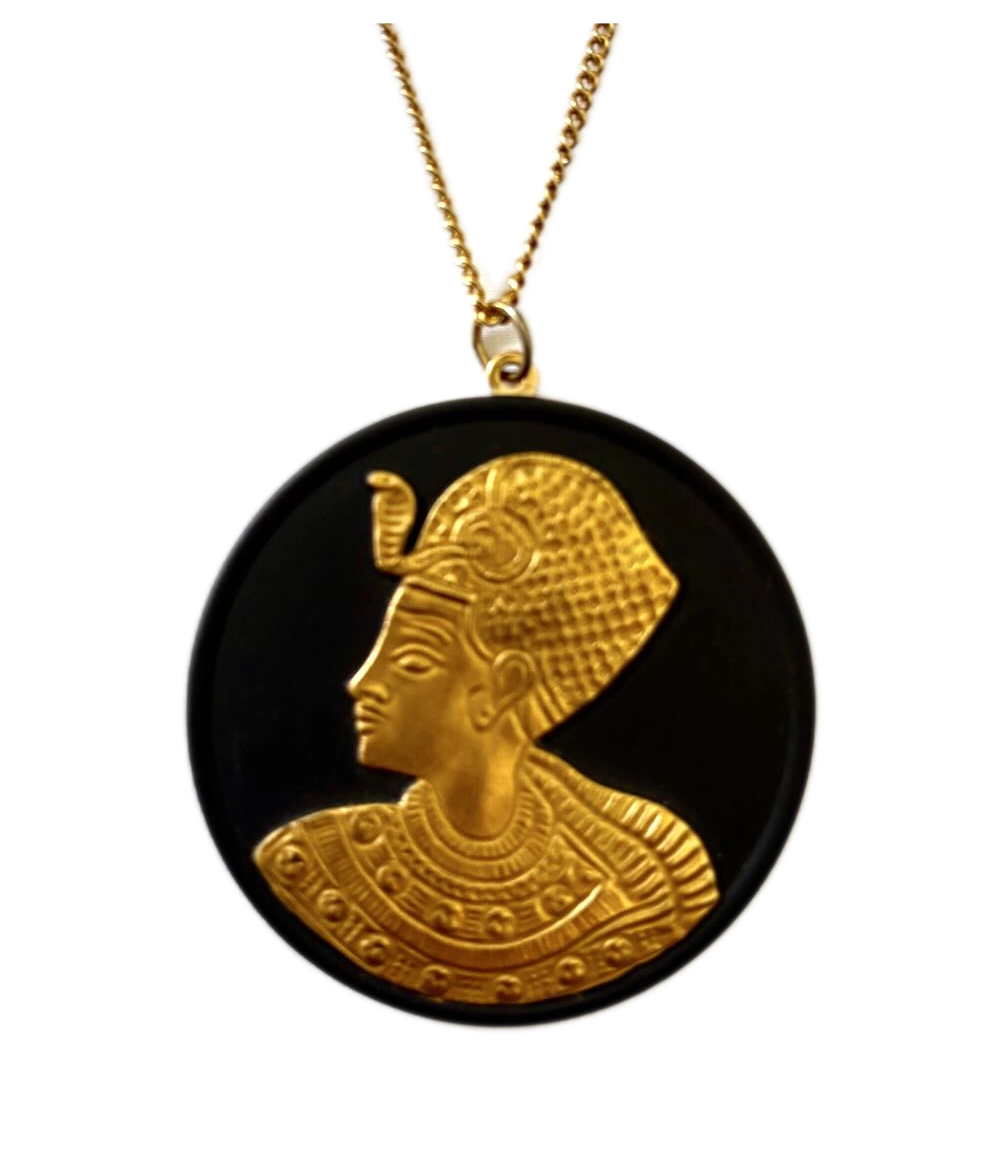
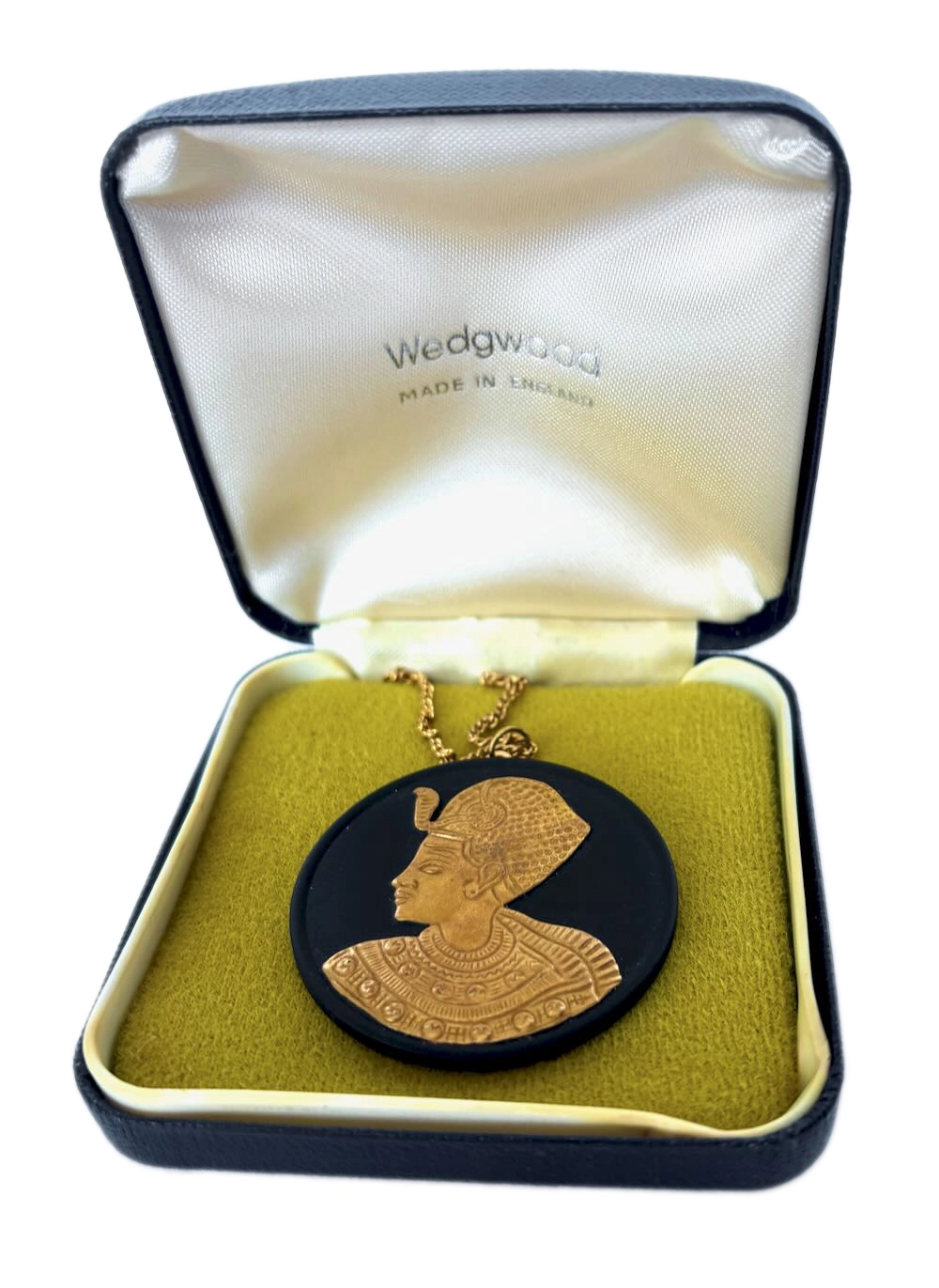
This vintage Wedgwood Egyptian Revival necklace features a finely detailed black basalt pendant portraying Tutankhamun in raised gilt relief against a smooth matte black ground. Smaller and more refined in scale than the dramatic 7 cm medallion versions produced during the same period, this example offers a more wearable interpretation of Wedgwood’s Egyptian jewellery designs while still retaining the bold visual contrast that made the collection so distinctive.
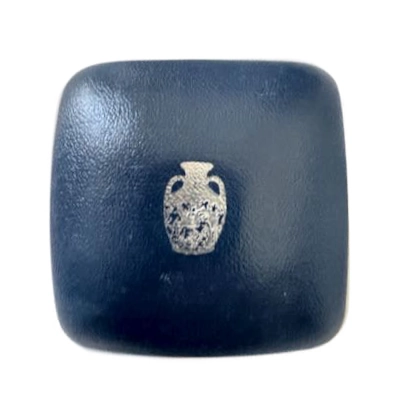
The circular pendant measures approximately 4 cm (about 1.6 inches) in diameter and hangs from its original gilt or gold-plated chain measuring approximately 16 inches (40.6 cm) long. The necklace remains housed in its original Wedgwood presentation box.
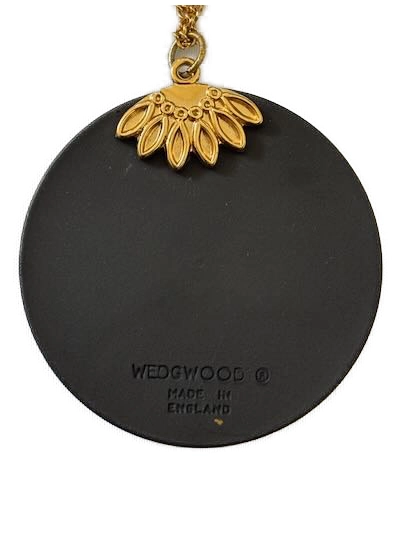
The reverse is impressed:
WEDGWOOD ®
MADE IN
ENGLAND
The piece appears preserved in unused vintage condition with clean matte basalt surfaces and well-retained gilt decoration.
The broader history behind Wedgwood’s Egyptian Revival jewellery, including original company brochure material discussing black basalt and jasper jewellery production, is explored further in our accompanying article on Wedgwood Jasper Jewellery in the Remarkable Egyptian Revival Era.
A Smaller and More Wearable Egyptian Revival Pendant
Unlike the larger statement medallions produced by Wedgwood during the late twentieth century Egyptomania movement, this 4 cm version has a more intimate scale suited to everyday wear while still preserving the sculptural qualities of black basalt and gilt relief.
The reduced size also gives greater emphasis to the precision of the portrait itself. Tutankhamun’s stylized headdress, collar, and profile remain sharply defined despite the smaller dimensions, demonstrating the crisp modeling qualities for which Wedgwood basalt became known.
The shorter 16-inch chain creates a more classic pendant proportion than the longer chains associated with oversized 1970s medallions, giving the necklace a cleaner and more versatile appearance.
Black Basalt and Wedgwood Craftsmanship
Wedgwood’s use of black basalt connects these Egyptian pendants directly to one of the company’s most historically important ceramic bodies. Developed during the eighteenth century by Josiah Wedgwood, black basalt is a dense unglazed stoneware valued for its smooth surface, durability, and ability to capture fine relief detail.
The material proved especially effective for Egyptian Revival subjects because the deep matte black surface created a striking contrast against gold ornament while echoing the dramatic visual character associated with ancient Egyptian decorative arts.
Rather than producing imitation archaeological jewellery, Wedgwood adapted Egyptian imagery into a distinctly British decorative arts tradition rooted in ceramic craftsmanship and neoclassical design.
Tutankhamun and Twentieth Century Egyptomania
The image of Tutankhamun became one of the defining symbols of twentieth century Egyptomania following the discovery of his tomb in 1922 and the internationally touring exhibitions of his treasures during the 1970s.
Fashion designers, cosmetic companies, jewellers, and decorative arts manufacturers all embraced Egyptian-inspired motifs during this period. Wedgwood’s interpretation distilled those influences into highly graphic wearable forms that combined archaeological inspiration with modern styling.
Even in this smaller format, the pendant retains strong visual identity and remains immediately recognizable as part of the Egyptian Revival movement that shaped so much late twentieth century design.