
Turkmen embroidery is one of the most recognizable textile traditions of Central Asia. For centuries, Turkmen women decorated clothing, household furnishings, horse trappings, and ceremonial objects with richly embroidered geometric motifs that reflected tribal identity, social status, and cultural heritage. Although Turkmen embroidery shares historical connections with neighboring Persian, Uzbek, and Afghan needlework traditions, it developed a distinctive visual language that remains immediately identifiable today.
The art flourished among the nomadic and semi-nomadic Turkmen tribes who inhabited the vast regions stretching across present-day Turkmenistan, northeastern Iran, northern Afghanistan, and parts of Central Asia. Embroidery formed an essential part of daily life and played a central role in marriage customs, family traditions, and tribal identity. Many embroidered textiles served as treasured possessions passed from one generation to the next.
Today, antique Turkmen embroideries are highly valued by collectors for their bold geometric patterns, vibrant colors, and close connection to the cultural history of the Turkmen people.
The Origins of Turkmen Embroidery
The roots of Turkmen embroidery extend deep into the history of the Turkic tribes of Central Asia. For centuries, these communities traveled along the great trade routes of the Silk Road, where they exchanged ideas, materials, and artistic influences with neighboring cultures.
Despite these interactions, Turkmen embroidery retained a distinctive tribal character. Designs developed within specific tribal groups, including the Tekke, Yomud, Ersari, Salor, and Saryk. Each tribe cultivated its own artistic traditions, often producing motifs and compositions that could be recognized by other Turkmen communities.
Embroidery became especially important because many Turkmen groups lived in portable felt dwellings and owned relatively few permanent possessions. Clothing, bags, and ceremonial textiles therefore became important expressions of wealth, skill, and cultural identity. Women learned embroidery at an early age and spent years mastering the techniques required to create the elaborate pieces needed for household use and marriage dowries.
Why Embroidery Was Important in Turkmen Society
Turkmen embroidery served purposes far beyond decoration. A young woman traditionally prepared embroidered textiles as part of her dowry. These pieces demonstrated her skill, patience, and suitability for marriage. Families often devoted considerable time and resources to producing embroidered garments and ceremonial textiles for important life events.
Embroidery also communicated tribal affiliation. Certain patterns, color combinations, and design arrangements were associated with particular Turkmen groups. In many cases, an experienced observer could identify the tribal origin of a garment or textile by studying its decorative motifs. Many embroidered objects were believed to provide protection. Geometric designs, stylized forms, and symbolic motifs often carried associations with fertility, prosperity, health, and spiritual well-being. These meanings helped transform practical objects into powerful cultural symbols.
Characteristics of Turkmen Embroidery
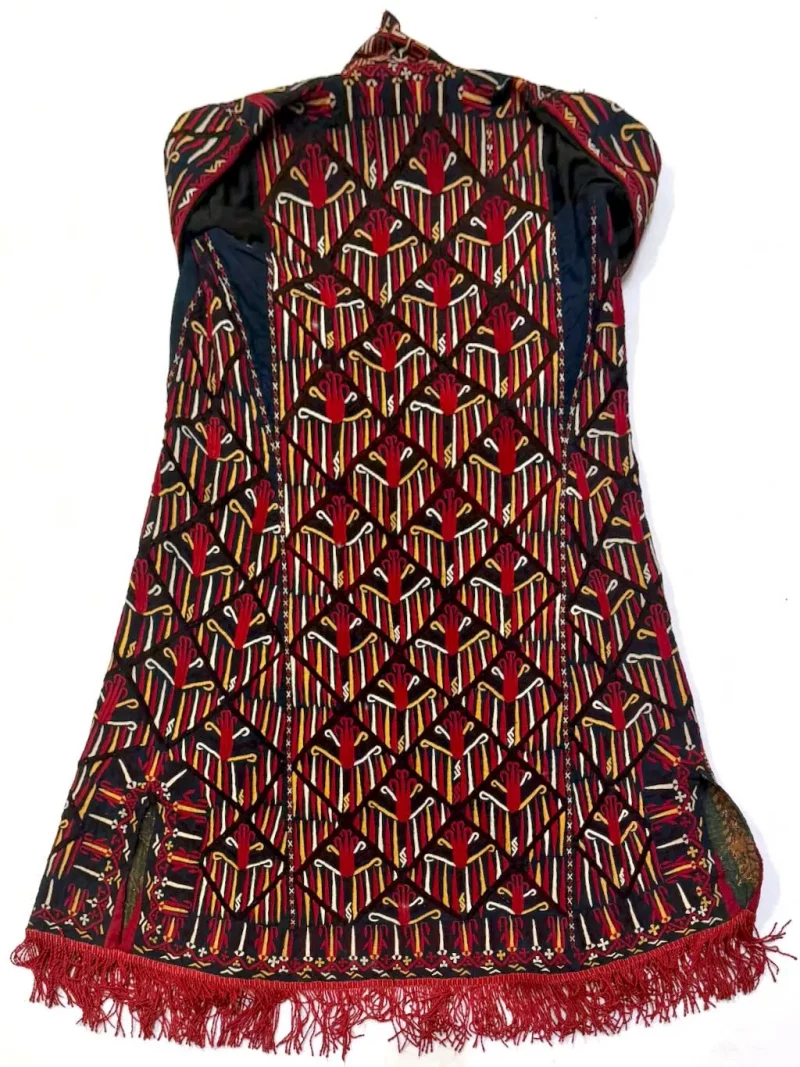
Turkmen embroidery differs significantly from the flowing floral traditions found in many neighboring cultures. The most distinctive characteristic is its strong geometric structure. Designs frequently consist of repeating angular forms arranged in carefully balanced compositions. Diamonds, stepped motifs, hooked forms, octagons, and stylized medallions appear regularly throughout the tradition.
Color also plays an important role. Deep reds dominate many antique examples and reflect the broader color palette found in Turkmen carpets and textiles. Embroiderers often accent these rich backgrounds with white, yellow, blue, orange, or black threads. The designs emphasize symmetry and repetition rather than naturalistic representation. Although artists may have drawn inspiration from plants, animals, or protective symbols, they transformed these elements into highly stylized geometric forms. Together, these features create a visual language that remains bold, structured, and immediately recognizable.
Traditional Materials Used in Turkmen Embroidery
The materials used in Turkmen embroidery varied according to region, availability, and purpose. Women commonly embroidered on handwoven cotton fabrics, although silk and wool were also used for special pieces. Wealthier families sometimes incorporated imported fabrics obtained through trade networks extending across Central Asia and Persia.
Silk thread was particularly prized. Its strength, sheen, and ability to hold vivid colors made it ideal for creating elaborate decorative work. Natural dyes produced many of the traditional colors seen in older examples. Metallic threads occasionally appeared on ceremonial garments and prestigious textiles, although they were generally less common than in Persian luxury embroidery traditions such as Sermeh-Duzi. The durability of these materials helped many antique pieces survive for generations despite frequent use.
Common Stitches and Techniques
Turkmen embroiderers employed a variety of stitching methods depending on the desired effect. Satin stitch frequently appears in traditional garments and ceremonial textiles. This stitch creates smooth, solid areas of color that allow geometric patterns to stand out clearly against the background fabric.
Chain stitch also appears in some regional traditions, particularly where cultural interaction with neighboring embroidery centers occurred. Couching techniques were sometimes used when working with thicker decorative threads. These methods allowed embroiderers to create bold outlines and striking geometric details. The emphasis was generally on producing strong visual impact rather than delicate surface texture. As a result, many Turkmen embroideries display dense, highly structured compositions that remain visually powerful even from a distance.
Turkmen Embroidery on Traditional Clothing
Clothing provided one of the most important surfaces for embroidery.
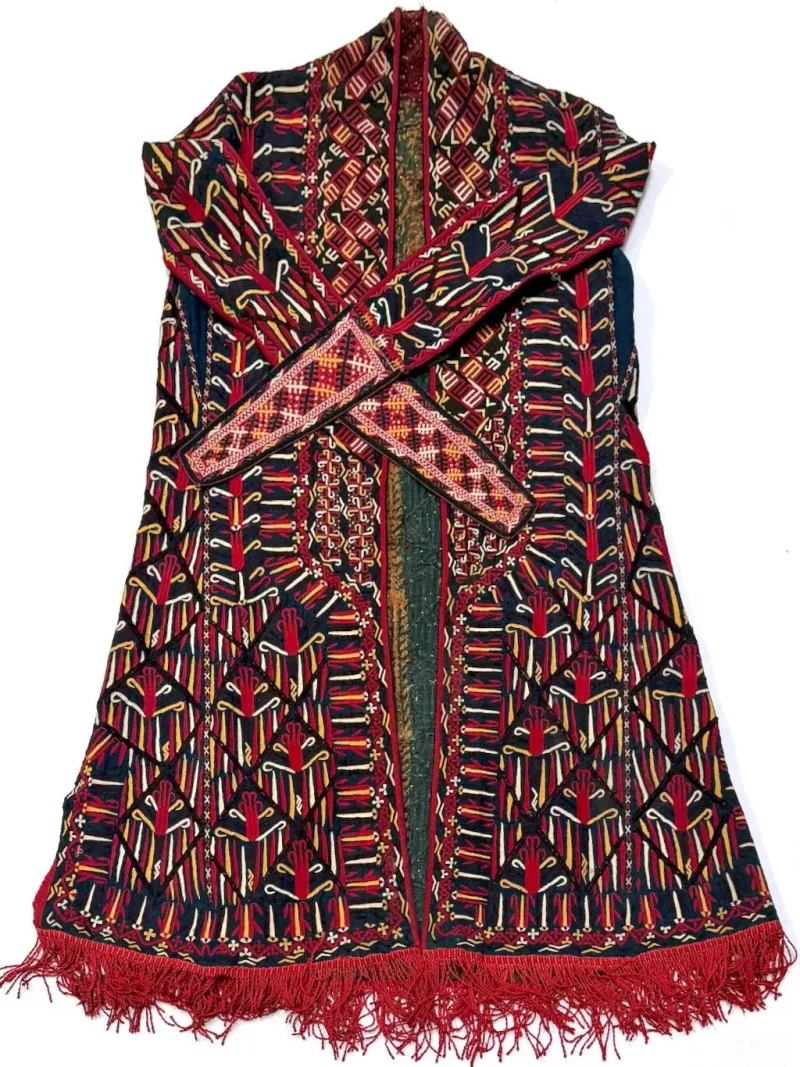
Women’s dresses often featured embroidered panels positioned on the chest, sleeves, cuffs, and collars. These decorative elements transformed practical garments into important markers of cultural identity. Robes, jackets, and ceremonial garments could also receive elaborate embroidered ornamentation. Wedding clothing frequently displayed particularly intricate work intended to showcase the skill of the maker.
Head coverings formed another important category. Embroidered caps, veils, and headdresses often incorporated patterns associated with specific tribal traditions. Children’s garments sometimes featured protective motifs believed to guard against misfortune and illness. Because clothing played such a visible role in daily life, embroidery became one of the primary ways Turkmen women expressed artistic creativity.
Household and Ceremonial Textiles
Embroidery extended far beyond clothing. Turkmen households used embroidered textiles for storage bags, tent decorations, coverings, and ceremonial furnishings. Many of these objects accompanied families during seasonal migrations and therefore became closely associated with domestic life.
Wedding textiles occupied a particularly important position. Families invested substantial effort in creating embroidered dowry items that would accompany a bride into her new household. Horse trappings also received decorative treatment. Among nomadic peoples, horses represented wealth, mobility, and prestige. Embroidered ornaments enhanced the appearance of these valuable animals during celebrations and ceremonies. The wide variety of embroidered objects demonstrates the central role textile arts played in Turkmen culture.
Tekke Bridal Robes and Ceremonial Dress
Among the Turkmen tribes, the Tekke became particularly renowned for their richly embroidered bridal robes and ceremonial garments. Known as chyrpy, these sleeveless over-robes were worn on important occasions and often formed part of a woman’s ceremonial attire. Many examples feature dense embroidery covering much of the surface, with stylized tulip motifs, geometric bands, crosses, and hooked designs arranged in highly structured compositions. Tekke embroiderers employed several techniques, including the characteristic kesdi lacing stitch, together with chain and stem stitches. Many of the finest surviving examples date from the late nineteenth and early twentieth centuries and are now preserved in museum collections. Their exceptional workmanship and distinctive tribal designs make Tekke bridal robes among the most celebrated textiles of the Turkmen world.
Regional and Tribal Variations
Although certain characteristics unite Turkmen embroidery as a whole, regional differences remain significant. The Tekke tribe became famous for highly refined designs and exceptional craftsmanship. Their textiles often display carefully balanced geometric arrangements and sophisticated use of color.
Yomud embroidery frequently exhibits distinctive motif structures and compositional preferences that differ from those of the Tekke.Ersari and Salor traditions developed their own recognizable decorative vocabulary, contributing to the remarkable diversity found within Turkmen textile arts. These tribal distinctions parallel the well-known differences found among Turkmen carpet designs. In both cases, artistic traditions helped preserve cultural identity across generations.
Turkmen Embroidery and Persian Connections
Turkmen communities have lived in northeastern Iran for centuries, particularly in regions bordering modern Turkmenistan. As a result, Turkmen embroidery forms part of the broader textile heritage of Iran. Historical interactions between Turkmen tribes and Persian communities encouraged exchanges of materials, techniques, and artistic ideas.
Despite these connections, Turkmen embroidery retained its distinctive tribal character. The geometric emphasis of Turkmen work contrasts strongly with the floral traditions associated with many Persian embroidery styles. This balance between cultural exchange and artistic independence makes Turkmen embroidery an important subject within the wider study of Iranian and Central Asian textile arts.
Collecting Antique Turkmen Embroidery
Collectors value antique Turkmen embroideries for both their artistic merit and cultural significance. Original examples often display hand-spun materials, natural dyes, and exceptional workmanship. Signs of age and use can provide valuable evidence of authenticity and historical context.
Provenance, tribal attribution, condition, and rarity all influence desirability. Garments, ceremonial textiles, and well-preserved embroidered panels are particularly sought after. Because many pieces were created for family use rather than commercial sale, surviving examples offer unique insights into the daily lives and traditions of Turkmen communities. Collectors often appreciate these textiles alongside Turkmen carpets, jewelry, and tribal artifacts, creating a broader picture of Turkmen material culture.
The Enduring Legacy of Turkmen Embroidery
Turkmen embroidery represents far more than decorative needlework. It preserves centuries of tribal history, artistic expression, and cultural identity. Through carefully stitched geometric patterns, generations of Turkmen women recorded traditions that connected families, communities, and tribes across Central Asia.
Today, antique embroidered garments and textiles continue to attract scholars, collectors, and textile enthusiasts who admire their craftsmanship and symbolism. Whether displayed in museums, preserved in private collections, or studied as part of the broader history of textile arts, these remarkable works remain powerful reminders of a rich cultural heritage that has endured for centuries. For anyone interested in the embroidery traditions of Iran and Central Asia, Turkmen embroidery offers a fascinating example of how textile arts can preserve identity, history, and artistic achievement across generations.