
Description
Antique Bohemian Crystal Claret Jug with Diamond Cut Body and Gilt Enamel Grapevine Decoration, Late 19th Century
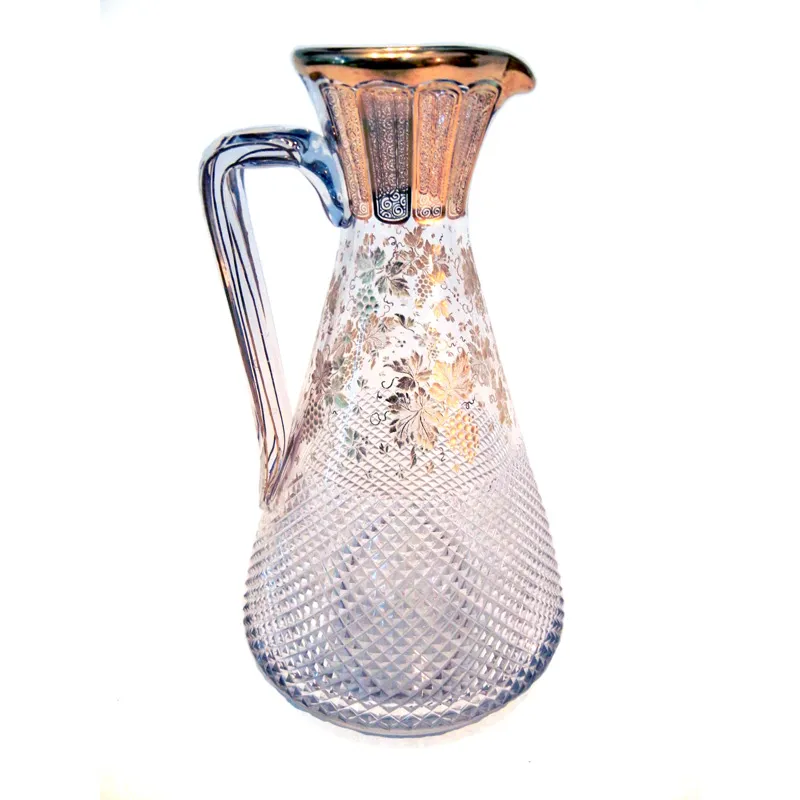
This is a finely made gilt Bohemian crystal claret jug dating to the late 19th century, a period when European glasshouses pushed both cutting and surface decoration to a high level of control. Pieces like this were not purely functional. They were designed to sit on the table with presence—handled, used, and noticed.
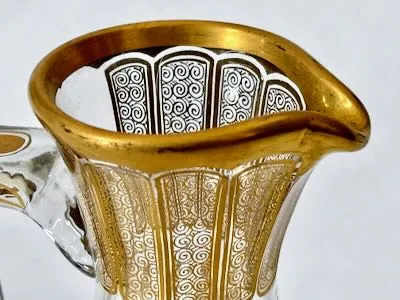
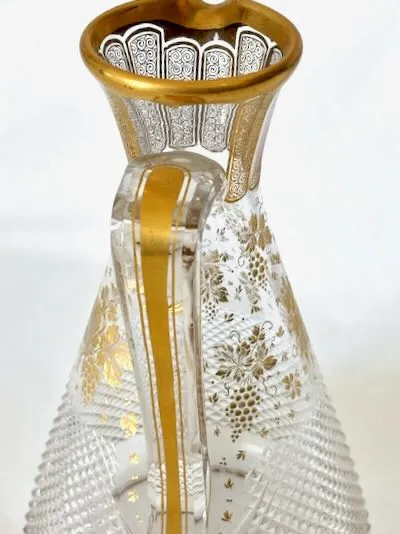
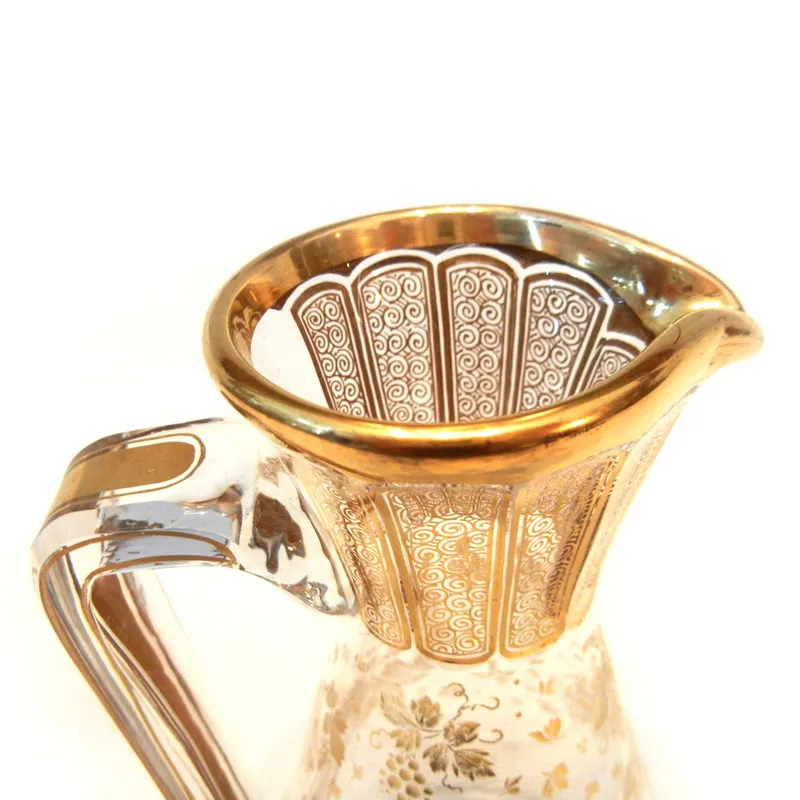
The form is deliberate. A wide base anchors the piece before rising into a tapering body and opening into a flared, trumpet-shaped neck. The proportions feel measured rather than exaggerated, giving the jug a stable and architectural profile that reflects careful design rather than improvisation.
What defines the piece, however, is the relationship between cutting and gilding.
Structure and Light: The Diamond Cut Body
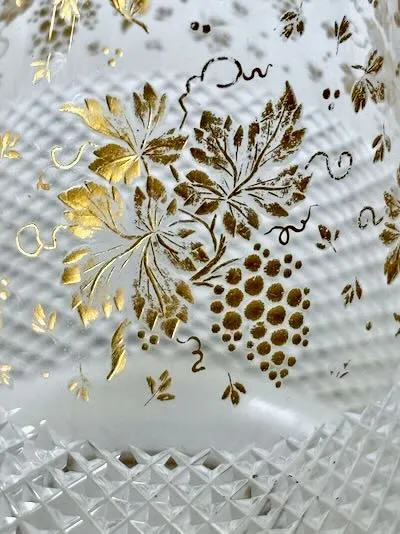
The lower body is worked in a dense diamond-point pattern, cut deep enough to break the surface into a field of small, reflective facets. Light does not pass through cleanly. It fractures, shifts, and returns at different angles, giving the surface a sense of movement.
This is not a superficial pattern. The cutting has been carried out with consistency across the form, requiring both precision and control. The effect is structural as much as decorative—it shapes how the object interacts with light rather than simply covering it.
Gilded Ornament and the Language of Wine
Above the cut body, the surface transitions into hand-applied gilding. The decoration is not scattered. It is organized.
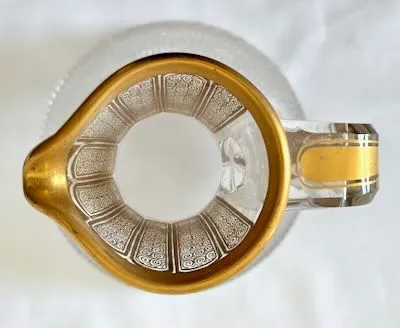
Panels around the neck hold tightly composed scrollwork, each section framed and contained. Below, a grapevine motif unfolds across the upper body—clusters, leaves, and tendrils arranged with a rhythm that echoes natural growth without becoming overly literal.
The choice of grapes is not incidental. In 19th century European decorative arts, the grapevine carries clear associations with wine, hospitality, and cultivated life. Its placement here reinforces the object’s purpose while elevating it beyond simple utility.
The gilding has been kiln-fired into the surface. It now carries a softened tone, with light wear that reflects age rather than damage.
Form, Function, and Finish
The handle is applied and integrated into the body rather than treated as an afterthought. It provides a solid grip while maintaining continuity with the overall silhouette. A line of gold along its length ties it visually to the rest of the decoration.
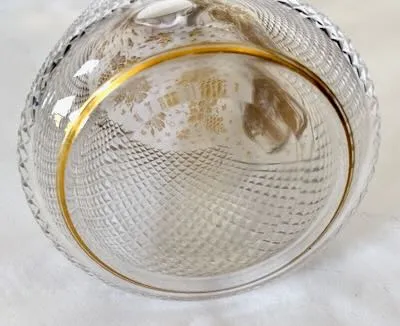
The base is fully polished and smooth, without pontil roughness. This level of finishing reflects a workshop standard that extended beyond visible surfaces.
The piece remains unmarked, which is not unusual for Bohemian glass of this period. Many high-quality works were produced for export without signature, relying instead on workmanship to define their value.
Presence as an Object
Originally intended for serving claret or wine, the jug still functions as designed. At the same time, it holds its own as a display piece.
What gives it presence is not a single element, but the balance between them. The weight of the base, the geometry of the cutting, and the controlled application of gilding all work together. Nothing dominates. The piece resolves as a whole.