
Description
A Hand-Enameled Pink Opaline Ruffled Bowl in the Victorian Tradition
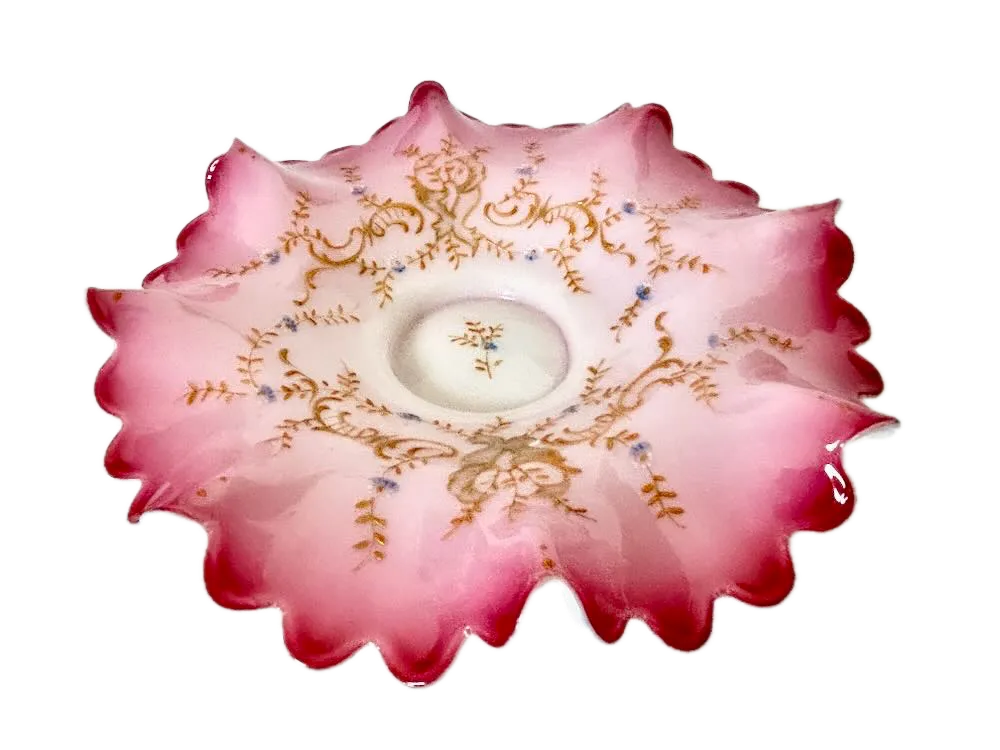
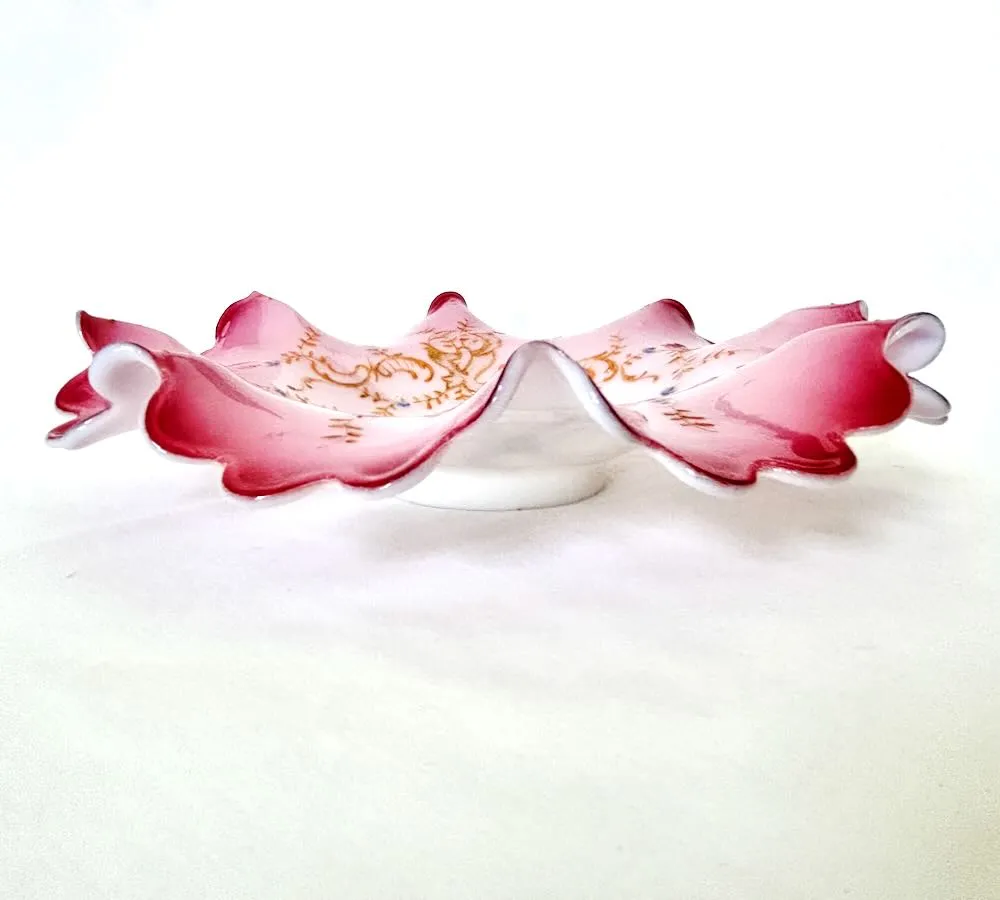
This pink opaline ruffled bowl reflects the decorative style associated with late 19th-century European glass, often described as a Victorian bride’s bowl, bridal bowl, or bridal basket in collector terminology. The piece stands as a low compote or tazza, with an integral foot rather than a separate metal stand, yet it aligns closely with the aesthetic and purpose of those traditional forms.
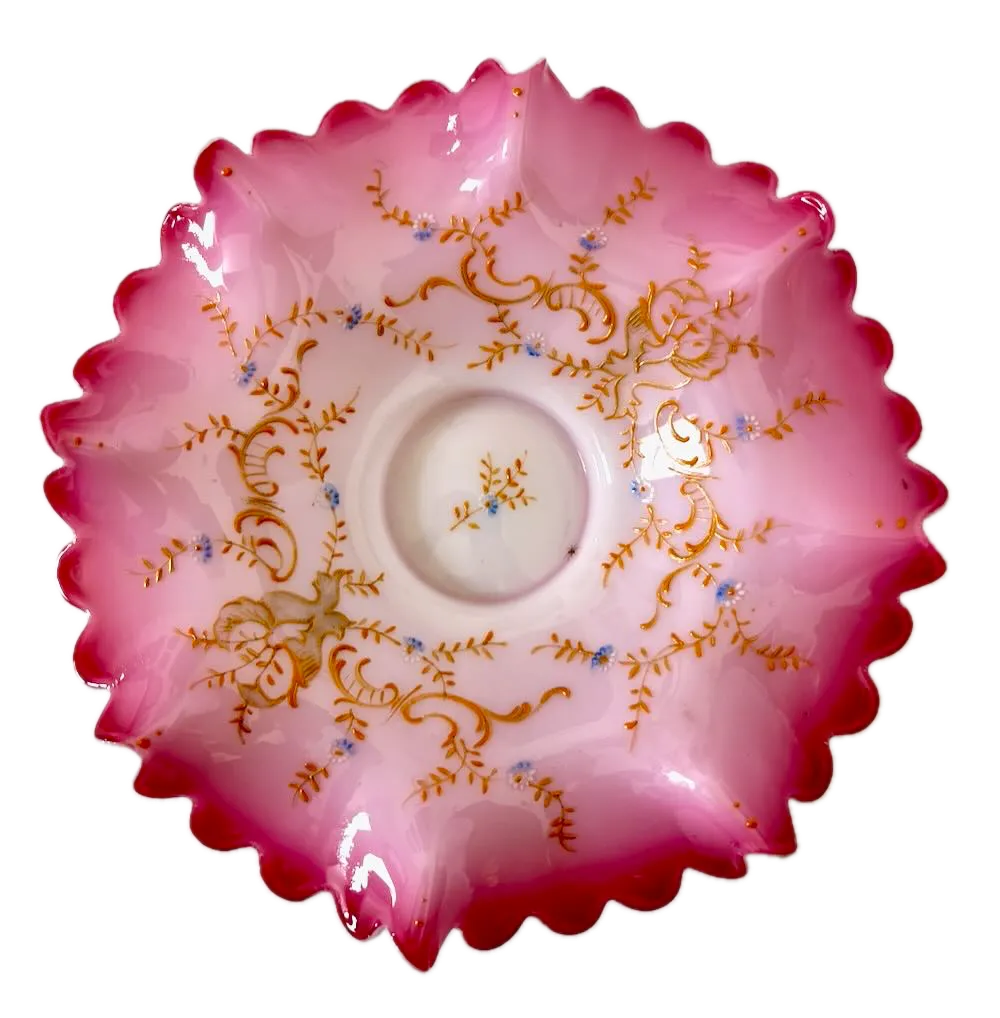
The softly cased glass transitions from a milky white interior to a deep pink rim, creating a luminous effect that changes with the light. This shading gives the bowl a sense of depth while maintaining the delicate character typical of opaline glass.
Gilt Enamel Decoration and Floral Detail
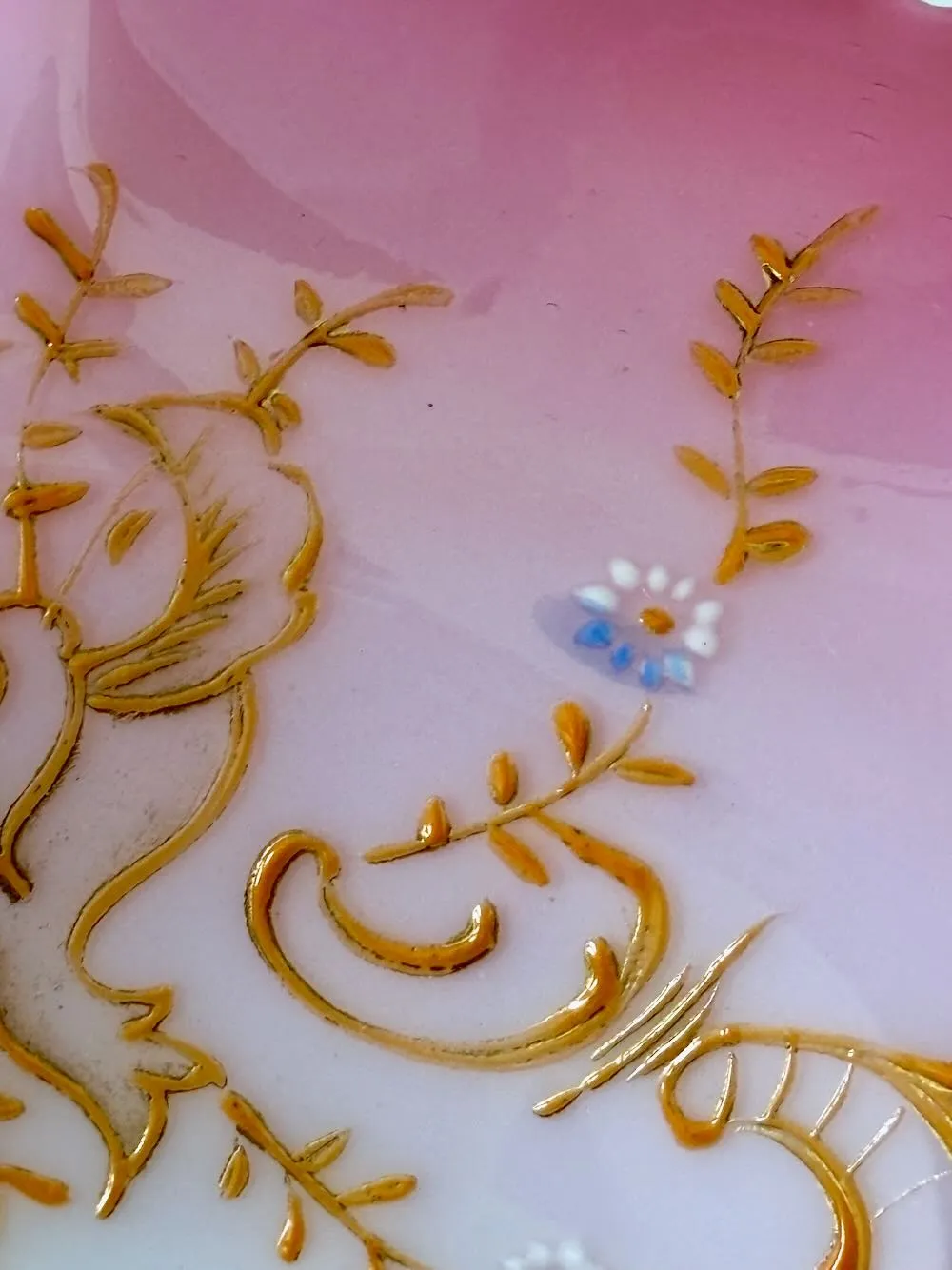
The interior features finely applied gold enamel scrollwork arranged in a flowing, symmetrical pattern. Small enamel flowers in blue and white punctuate the design, adding contrast and refinement without overwhelming the composition.
The gilding shows a slightly raised quality, indicating hand-applied enamel rather than flat decoration. This level of detail suggests careful workshop production and contributes to the overall elegance of the piece.
Ruffled Form and Decorative Function
The wide, crimped rim forms a rhythmic, almost petal-like edge that defines the silhouette. At just under 10 inches in diameter, the bowl offers a broad surface while remaining relatively low in height, making it suitable as a centerpiece, serving dish, or cabinet display piece.
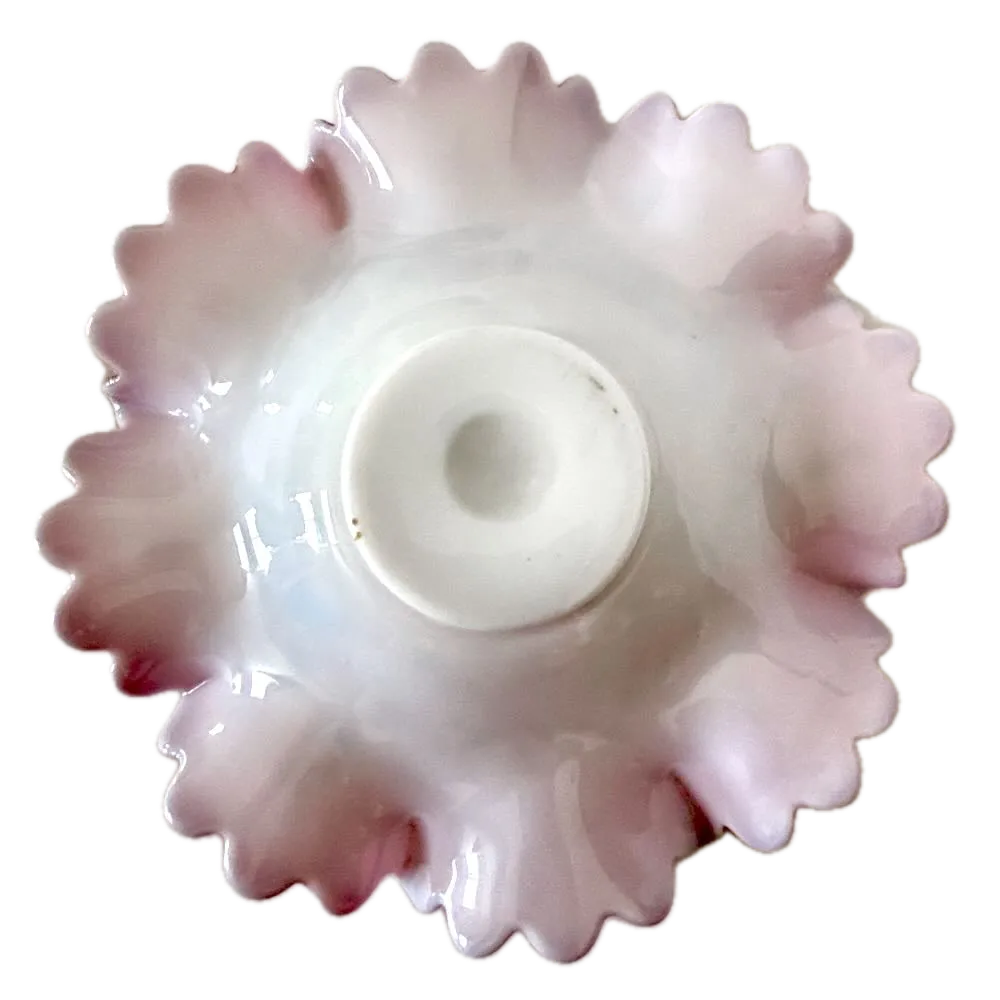
Although examples of this style often appear with silver-plated stands, the bowl itself forms a complete object. The integral foot provides stability while preserving the lightness of the design.
Opaline Glass and European Influence
Opaline glass gained popularity in the 19th century for its soft translucence and ability to carry enamel decoration. Pieces like this were produced across France and Bohemia, where workshops refined techniques for casing, coloring, and embellishment.
Without a maker’s mark, attribution remains stylistic. The combination of pink opaline, ruffled form, and fine enamel work places this piece comfortably within that European decorative tradition.
A Decorative Piece with Lasting Appeal
This bowl bridges function and ornament. It works equally well as a display object or as part of a table setting, where its color and detailing can stand out without dominating the arrangement.
Collectors often associate pieces of this type with the broader Victorian decorative arts movement, where craftsmanship, surface detail, and color played a central role in domestic interiors.