

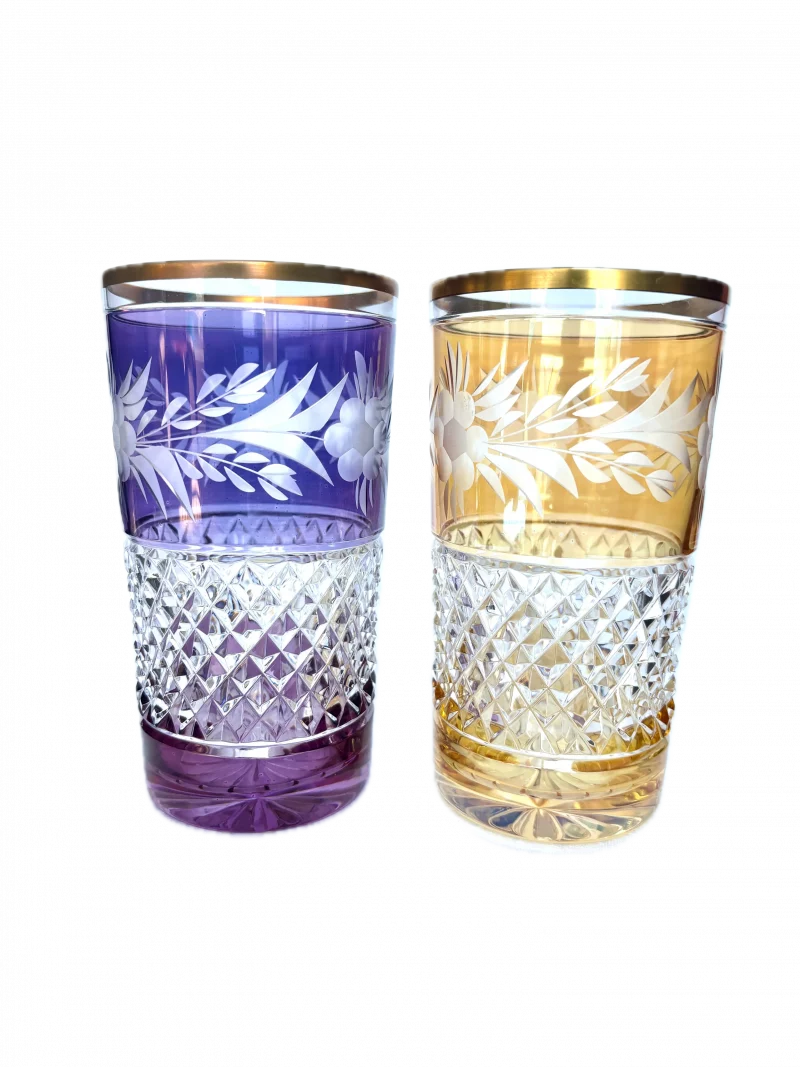
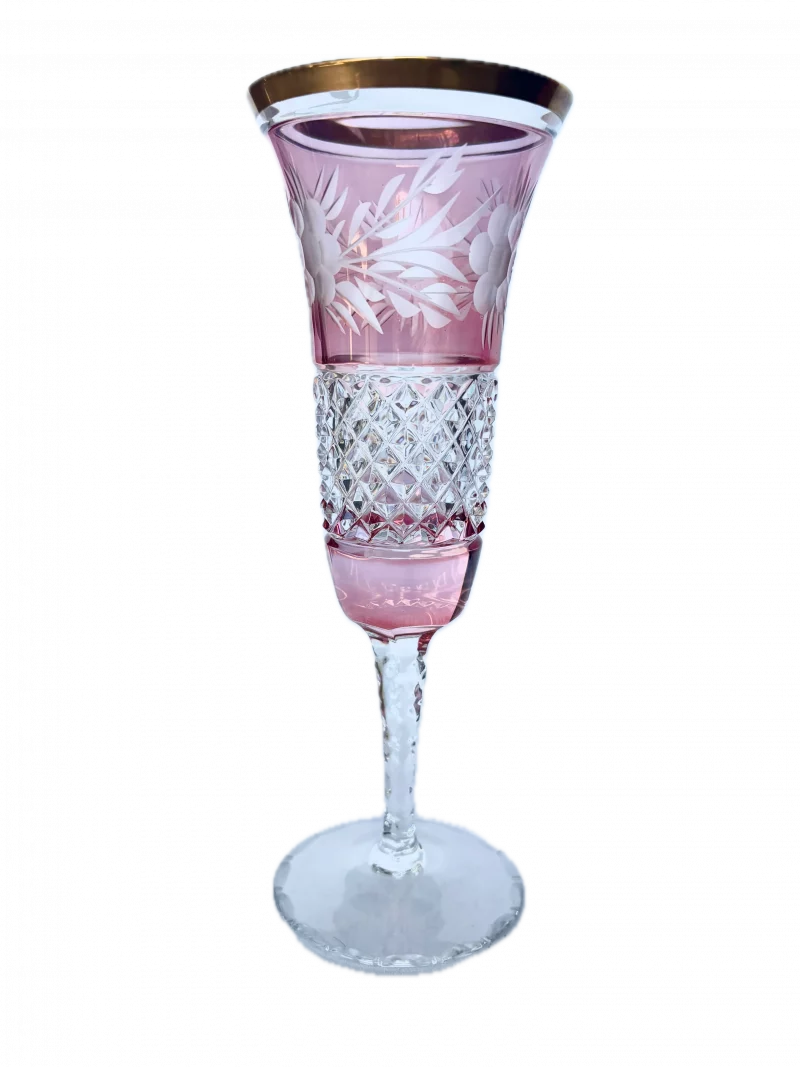
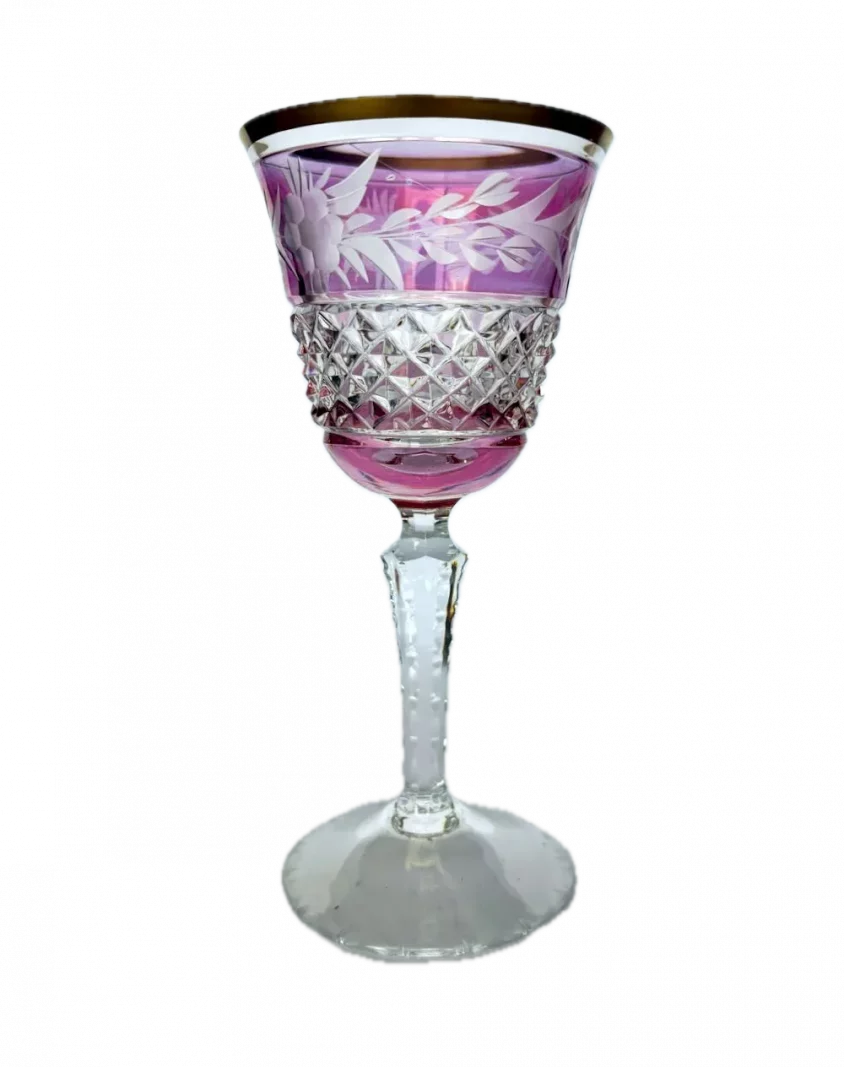
Marchioness crystal stands out as one of the most recognizable imported glass patterns from the mid-20th century. At first glance, it draws attention through rich color and sharp cutting. Look closer, and it reveals something more complex—a pattern shaped not by a single factory, but by a network of European craftsmen working for the American market.
To understand Marchioness, look beyond the surface. Focus on how craftsmen made it, how Ebeling & Reuss positioned it, and why collectors continue to seek it today.
What Marchioness Crystal Really Is
Marchioness is not a factory name. It is a branded pattern used by Ebeling & Reuss, a company known for importing European ceramics and crystal and presenting them under its own identity.
This distinction matters. Unlike patterns tied to a specific maker, Marchioness reflects a broader system. Ebeling & Reuss sourced glass from European workshops, coordinated production, and introduced the finished pieces to the American market through wholesale catalogs, showrooms, and a national sales network.
A Pattern Designed for Its Time
Marchioness emerged during a period when American consumers developed a strong appetite for European crystal. In the decades after World War II, imported glassware carried a sense of refinement and aspiration. People wanted objects that felt elevated, decorative, and distinctly different from everyday tableware.
Color played a central role. Deep jewel tones—ruby, sapphire, emerald, and amber—created visual richness. When paired with gold rims and intricate cutting, these colors transformed simple glassware into something more expressive.
Ebeling & Reuss understood this demand. Rather than offer plain, uniform sets, the company introduced patterns like Marchioness that emphasized variation and visual impact. Mixed-color groupings allowed each piece to stand on its own while still forming a cohesive set.
How Marchioness Glass Was Made
Marchioness pieces reflect traditional European glassmaking techniques, especially those associated with Bohemian and West German production.
Each piece begins with a clear crystal base. A layer of colored glass is applied over it. Craftsmen then cut through the outer layer using rotating wheels, revealing the clear crystal beneath. This process—known as cut-to-clear—creates sharp contrast and depth.
The upper section of the glass typically carries the colored overlay. Here, you see floral or medallion-style cutting, often described as “flower cut.” Below this, the glass transitions into clear crystal with precise geometric patterns, usually diamond or crosshatch designs.
The stems and bases show careful shaping and balance. Many pieces include a gold rim, which adds warmth and reinforces the sense of refinement.
Although no single factory has been definitively identified, the style aligns closely with mid-century production in Bohemia and West Germany. Some surviving pieces carry “Western Germany” labels, while others reflect techniques strongly associated with Czech glassmaking traditions.
The Importance of Color
Color defines the Marchioness pattern as much as the cutting itself. The line appears in a range of jewel tones, including amethyst, sapphire, emerald, ruby, cranberry, topaz, and softer rose variations.
These colors do not appear with equal frequency today. Some show up regularly, while others surface less often. This variation likely reflects differences in production runs, material cost, and consumer demand at the time.
The softer rose tones, for example, tend to appear less frequently than standard ruby or amethyst. Topaz and cranberry pieces often stand out within mixed sets as well. These differences create subtle hierarchies within the pattern, which collectors begin to recognize over time.
Color variation also supports the idea that Marchioness came from multiple workshops rather than a single production line. Each run could shift slightly in tone, intensity, or execution.
Forms and How the Pattern Was Sold
Marchioness was not limited to one type of glass. It appeared across a wide range of forms, including highballs, goblets, champagne flutes, cordials, and decanters. This range suggests that the pattern was designed as a complete offering rather than a single product.
Ebeling & Reuss operated as a distributor, not a manufacturer. The company focused on creating coordinated lines that retailers could present as full collections. Mixed-color sets, in particular, offered visual impact and helped differentiate these pieces from more uniform glassware.
Most pieces originally carried paper or foil labels rather than permanent marks. Over time, many of those labels disappeared, which makes identification more challenging today. However, the combination of color, cutting, and form allows experienced collectors to recognize the pattern even without markings.
Why Marchioness Still Attracts Collectors
Marchioness occupies a unique position in the world of collectible glass. It does not carry the name of a single famous factory, yet it reflects a high level of craftsmanship. It was produced for a commercial market, yet it retains techniques rooted in traditional European glassmaking.
That combination gives it lasting appeal.
Collectors often focus on how the pieces interact as a group. Mixed-color sets create a layered visual effect that changes with light and placement. The interplay between color and clear crystal adds depth that feels both decorative and structural.
At the same time, the lack of a single factory attribution adds a sense of discovery. Each piece connects to a broader network of production and distribution rather than a single origin story.
A Pattern Defined by More Than Its Maker
Marchioness tells a story that goes beyond design. It reflects how objects moved across borders, how companies shaped collections, and how craftsmanship adapted to new markets.
Ebeling & Reuss did not simply sell glass. The company curated it, organized it, and presented it in a way that resonated with American buyers. That process shaped the identity of the pattern as much as the cutting itself.
Today, that history remains visible in every piece. The color, the form, and the variation all point back to a system built on collaboration between designers, craftsmen, and distributors.
Why This Pattern Still Matters Today
Marchioness continues to resonate because it balances beauty with complexity. It offers color without excess, detail without heaviness, and variation without losing cohesion.
Each piece reflects both tradition and adaptation. It carries the influence of European glassmaking while responding to the tastes of a different market and time.
For collectors, that balance creates lasting interest. For anyone drawn to design and craftsmanship, it offers something even more valuable—a deeper understanding of how objects come into being and why they endure.