


Description
Extraordinary 15-Foot Baluchi Embroidered Textile from Iran
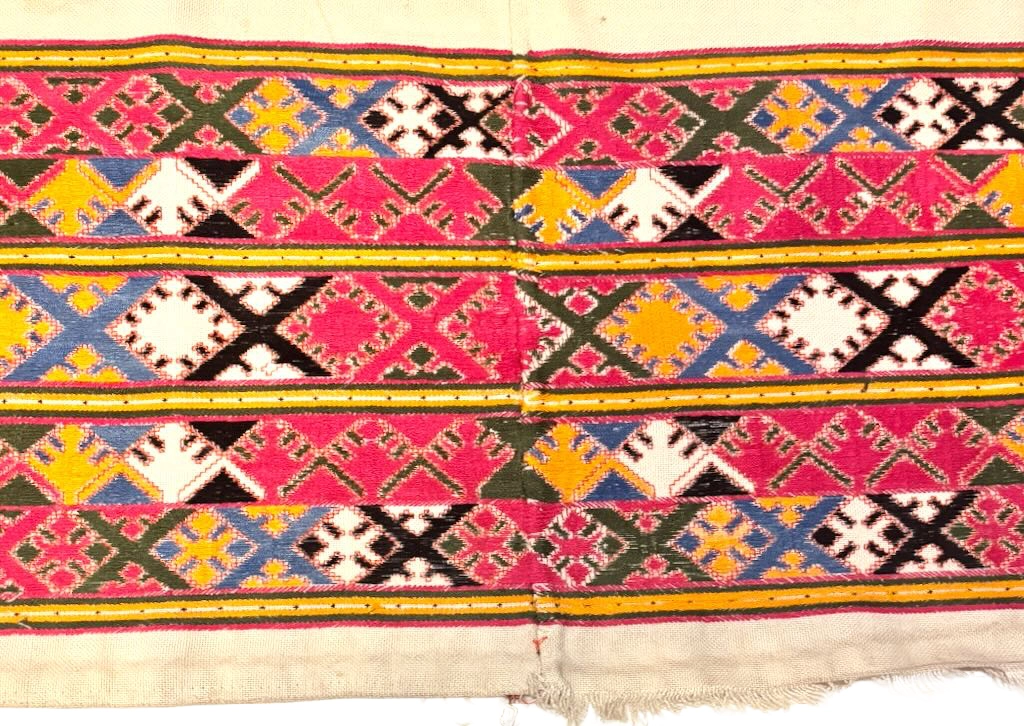
This remarkable vintage Baluchi embroidered textile stretches approximately 188 inches (477.5 cm), or an extraordinary 15 feet 8 inches, in length. Dense geometric embroidery covers a field approximately 7.75 inches (19.7 cm) wide and continues practically from one end of the textile to the other. Its exceptional scale and abundance of handwork give this piece a commanding presence.
The artisan arranged the embroidery in several long parallel bands. Narrow orange and golden-yellow borders separate the broader geometric fields and create a strong linear rhythm. Within them, vivid magenta, orange, blue, olive green, black, cream, and white form an intricate succession of diamonds, crosses, stepped shapes, and angular motifs.
Despite the extraordinary length, the pattern never feels monotonous. Colors and geometric forms shift repeatedly along the bands. As a result, the eye continues to discover subtle variations within the larger composition.
The creamy-white cotton foundation provides a quiet contrast to the intensely colored embroidery. It also remains visible along both sides of the embroidered field. The combination gives the textile a particularly graphic appearance and clearly defines the remarkable amount of needlework.
For more information about this distinctive needlework tradition, see our articles “Baluchi Embroidery of Iran: A Remarkable Textile Tradition” and “How to Understand the Structure of Traditional Baluch Clothing.”
An Exceptional Scale of Baluchi Embroidery
At approximately 188 inches long, this textile represents an unusually extensive example of Baluchi hand embroidery. The embroidered field alone measures approximately 7.75 inches across and runs nearly the entire length.
Creating such a large amount of closely worked geometric embroidery required tremendous patience and precision. Rather than relying on a single broad motif, the artisan divided the composition into parallel bands. Each band develops its own sequence of forms while remaining visually connected to the whole.
The narrow borders play an important role in that organization. Orange and golden-yellow lines frame the broader bands and keep the complex geometry clearly defined. Small dark stitches add another level of detail within these borders.
Seen from a distance, the textile creates a bold field of color and repetition. Viewed closely, individual stitches and small changes within the motifs reveal the hand of the artisan.
Traditional Baluchi Geometric Needlework
Baluchi embroidery builds complex ornament through carefully structured geometric stitching. Diamonds, crosses, stepped forms, angular shapes, and repeating borders create patterns that can continue across surprisingly large areas without losing their visual order.
This textile demonstrates that approach on an impressive scale. Magenta dominates much of the composition, while blue, orange, olive green, black, and cream interrupt the larger fields with contrasting geometric forms. The colors alternate throughout the length and prevent the repeated structure from becoming static.
The reverse offers an equally fascinating view. Because the textile remains unused and unlined, the hand-worked construction remains fully accessible. The lighter reverse reveals how the artisan carried and changed threads to build the dense patterns visible on the front.
For textile collectors, this exposed construction provides an opportunity to appreciate not only the finished design but also the considerable work behind it.
The Joined Construction
A secure seam near the center joins two exceptionally long embroidered sections. Rather than interrupting the design without consideration, the maker carefully aligned the parallel bands and geometric patterns across the join.
Small variations remain visible, as one would expect in a hand-worked tribal textile. However, the effort to maintain the visual continuity of the embroidery is clear. The seam therefore forms an interesting part of the textile’s construction rather than detracting from its overall composition.
The join also helps us understand how the artisan managed such an unusually long piece. Both the front and reverse photographs document this feature clearly.
Vivid Color on a Creamy-White Ground
The color is one of this textile’s greatest strengths. Saturated magenta creates the dominant visual impression, while brilliant orange and muted blue introduce strong contrasts. Olive green, black, cream, and white add further definition.
The creamy-white cotton ground provides breathing space around the dense embroidery. Consequently, the embroidered bands remain visually distinct even though they contain an extraordinary amount of detail.
The palette also gives the embroidery a surprisingly contemporary quality. Its bold geometry and combinations of pink, orange, blue, green, black, and cream could easily inspire modern fashion or interior design, yet the handwork remains firmly rooted in the Baluchi embroidery tradition of southeastern Iran.
Baluchi Embroidery and Iranian Fashion
Baluchi needlework gained broader recognition within Iran during the 1960s and 1970s. Designers and cultural advocates increasingly drew attention to regional Iranian crafts and incorporated traditional embroidery into contemporary fashion.
Empress Farah Pahlavi became a prominent advocate for Iranian regional craftsmanship. She wore contemporary garments that incorporated traditional Iranian embroidery, helping introduce these textile traditions to a wider international audience.
Unused embroidered textiles from this period offer an especially interesting perspective. They preserve the needlework before a later maker permanently determined its final application. This example remains unused, allowing its extraordinary length, broad embroidered field, and hand-worked construction to remain fully visible.
A Rare Opportunity for Textile Collectors and Designers
The remarkable length gives this textile possibilities that smaller Baluchi embroidered panels simply cannot offer. A collector could preserve it intact as an extensive example of Baluchi textile art. Its long format could also create a dramatic display when mounted or arranged to reveal the repeated bands.
For a designer, the approximately 188-inch length offers considerable creative flexibility. The embroidery could inspire a bespoke garment, decorative furnishing, cushions, or another carefully considered textile project. Alternatively, keeping the textile complete would preserve the full impact of its exceptional scale.
The embroidery itself remains in excellent condition. Its colors retain their intensity, and the geometric details remain crisp across the extensive stitched surface. The creamy-white foundation fabric shows some surface dust and age-related soiling, especially on the reverse and exposed margins. These areas remain visible in the photographs.
Above all, this textile impresses through the sheer extent of its handwork. Nearly 16 feet of richly colored Baluchi embroidery survives as one unused textile, offering a striking example of the skill, patience, and geometric imagination behind this Iranian needlework tradition.