
Description
Vintage Japanese Pink Jasperware Oval Dishes with Cherub Reliefs
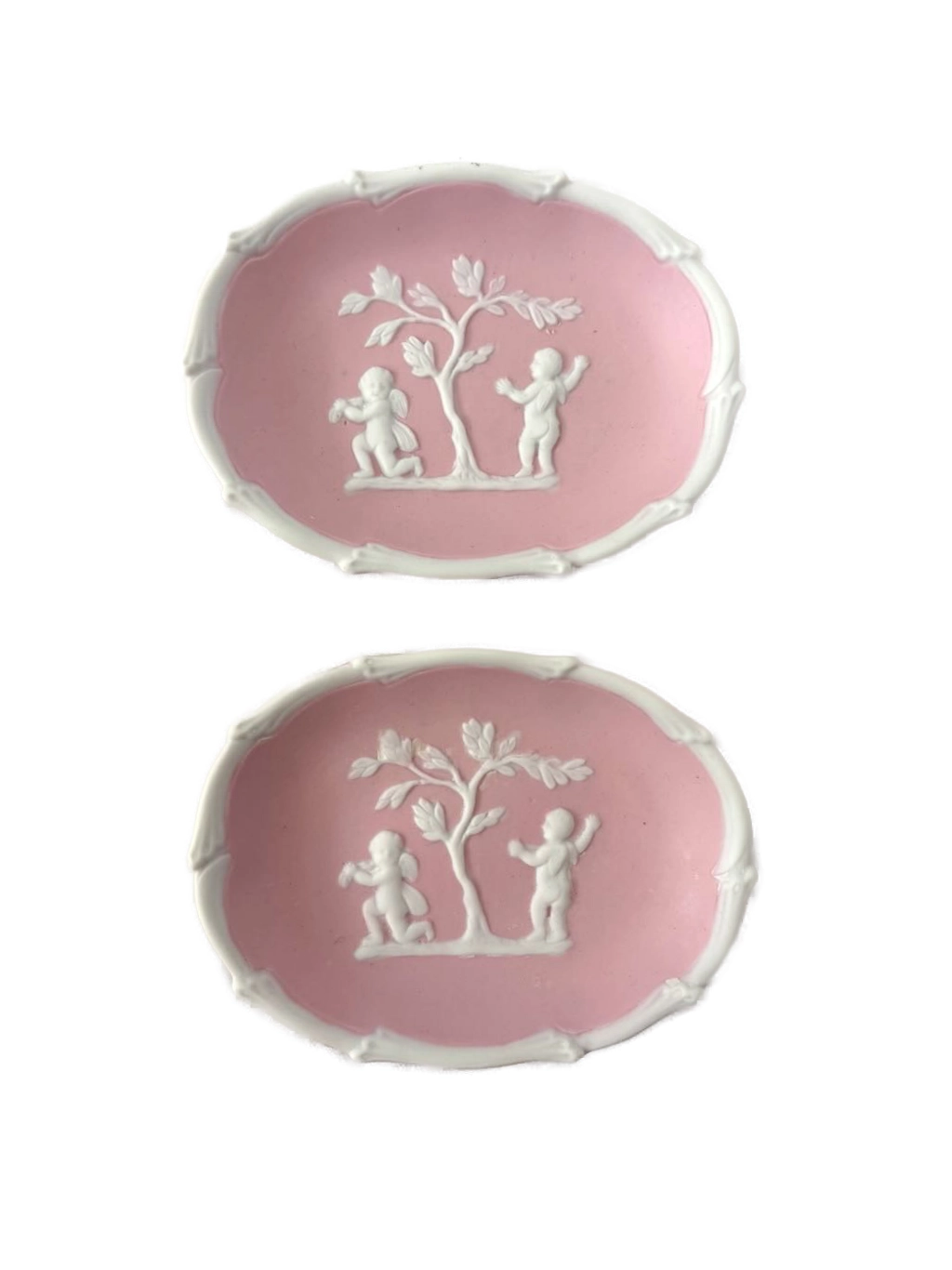
This charming pair of vintage Japanese pink jasperware-style dishes features delicate white neoclassical relief decoration against a soft, dusty rose background. Each oval dish depicts two playful winged putti beneath the branches of a small tree, surrounded by an elegant border of raised white scrollwork.
The matching dishes combine graceful proportions with the refined decorative character traditionally associated with jasperware. Their matte pink surfaces provide a gentle contrast to the sculptural white figures, creating an attractive interplay of color, texture, and relief.
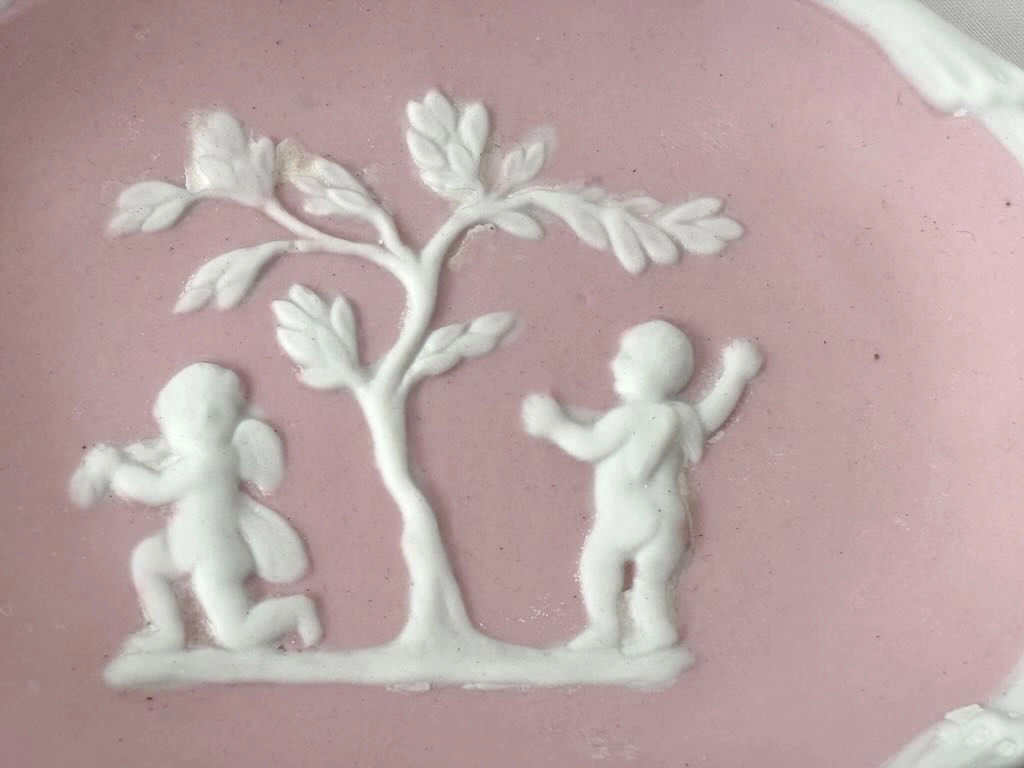
The central composition features a slender tree with spreading branches and carefully modeled leaves. Two winged children stand on either side, their animated gestures suggesting a playful encounter in a pastoral setting. A decorative border follows the oval outline of each dish. Its flowing curves and stylized terminals frame the central scene while complementing the organic shapes of the tree and figures.
Although relatively small, these dishes have considerable decorative appeal. Their matching designs make them particularly attractive as a pair, whether displayed together on a shelf, dressing table, or within a collection of neoclassical ceramics.
The Neoclassical Tradition of Jasperware
The decorative style of these dishes draws inspiration from jasperware, the distinctive ceramic material developed by Josiah Wedgwood in eighteenth-century England.
Introduced during the 1770s, Wedgwood’s jasperware became celebrated for its matte colored surfaces and contrasting white applied reliefs. The designs frequently featured classical figures, mythological subjects, ornamental foliage, and scenes inspired by ancient Greek and Roman art.
The popularity of neoclassicism encouraged artists and manufacturers to explore the decorative possibilities of classical imagery. Winged putti, graceful figures, scrolling borders, and delicate botanical motifs became familiar elements in European ceramics and decorative objects.
The characteristic combination of colored ceramic bodies and white relief decoration proved particularly influential. Over time, manufacturers outside England adopted similar techniques and visual styles, creating their own interpretations of the neoclassical tradition. These Japanese dishes reflect that broader influence. Their soft pink color, white figural decoration, and ornamental borders recall traditional jasperware while retaining the character of twentieth-century decorative ceramics.
Two Winged Putti Beneath a Tree
The central relief depicts two winged putti positioned on either side of a small tree, creating a balanced and charming pastoral composition. The figure on the left stands with one leg raised and its arms extended, appearing to hold a small object. The putto on the right faces inward with both arms lifted, introducing a playful sense of movement.
Between them, a slender tree rises from a narrow strip of ground. Its branches extend outward, carrying clusters of carefully modeled leaves that form a natural canopy above the figures.
In classical and neoclassical decorative art, putti frequently appear in scenes associated with love, innocence, playfulness, and the pleasures of nature. Their lively gestures and youthful forms became popular decorative subjects in sculpture, painting, and ceramics.
Although the precise meaning of this particular scene remains unidentified, the composition evokes the lighthearted pastoral imagery characteristic of European neoclassical ornament. The raised white decoration stands out beautifully against the pink background, allowing the small figures and delicate foliage to remain clearly defined.
Japanese Interpretations of European Decorative Ceramics
During the twentieth century, Japanese ceramic manufacturers produced a wide variety of decorative objects for both domestic and international markets.
Alongside traditional Japanese designs, many workshops explored European-inspired forms and ornament. Classical figures, floral reliefs, ornamental borders, and decorative accessories became part of the extensive range of ceramics produced for export.
Jasperware-style pieces offered an appealing interpretation of the European neoclassical tradition, combining colored ceramic surfaces with contrasting raised decoration.
These dishes were acquired in Los Angeles during the 1980s and identified as Japanese decorative ceramics. Although they bear no visible manufacturer’s mark, their acquisition history places them within the broader tradition of vintage Japanese jasperware-style wares. Their exact manufacturer and production date remain unknown.
Elegant Oval Form and Decorative Versatility
Each dish measures approximately 4¾ inches long and 3½ inches wide, making the pair suitable for display in a variety of settings. Their softly rounded oval shapes and delicate white borders give them a refined appearance, while the matching figural designs create a sense of harmony when displayed together.
They would make attractive accents on a dressing table, bedside table, mantelpiece, or display shelf. Their compact proportions also make them suitable for presenting small jewelry or other lightweight keepsakes.
The dusty rose and white palette complements traditional interiors, romantic decorative styles, and collections of vintage neoclassical ceramics. Displayed alongside other jasperware-style objects, the dishes contribute both visual continuity and an appealing variation in classical imagery.
Condition and Provenance
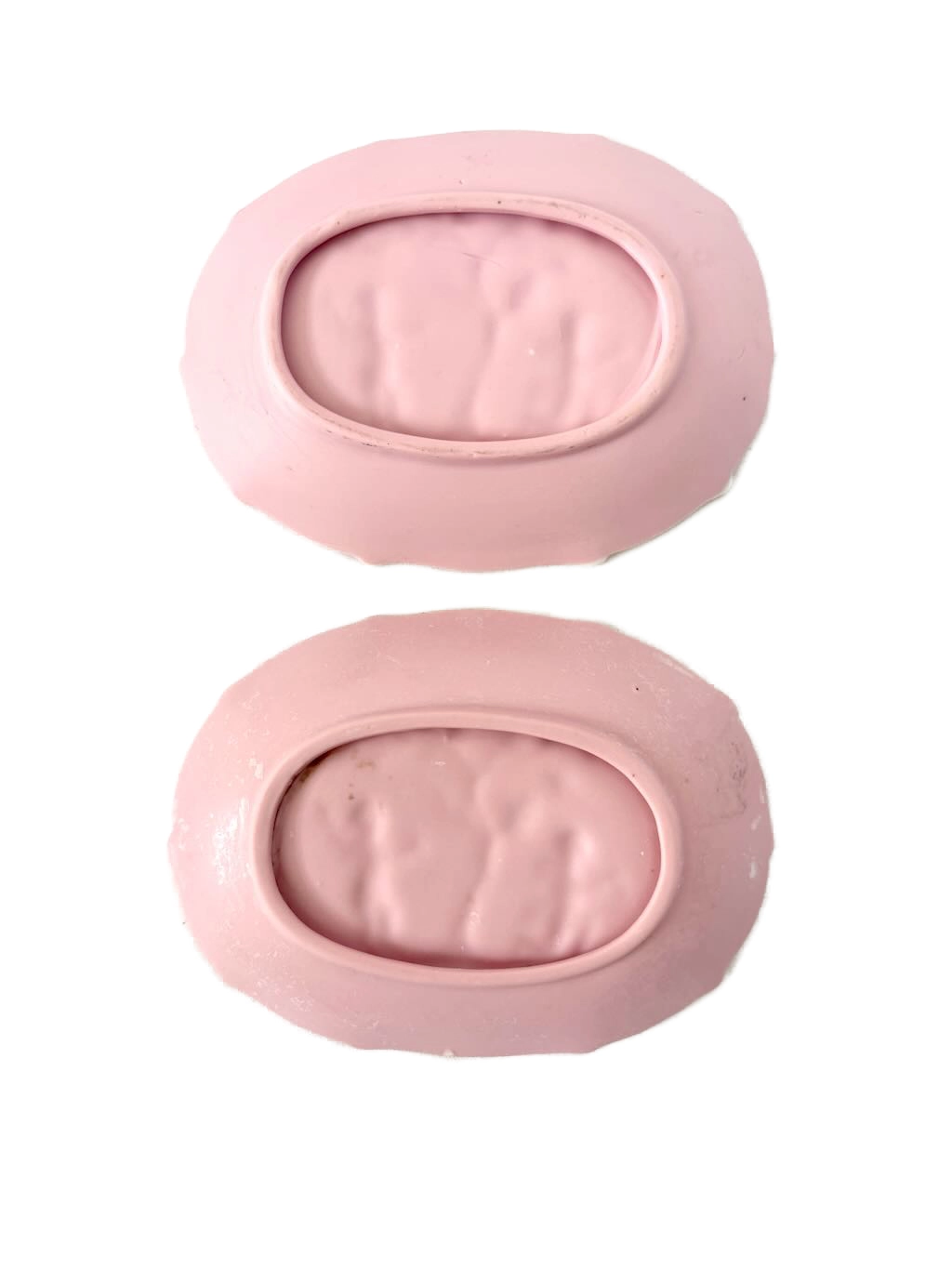
Both dishes remain in good vintage condition. The raised white figures, trees, and ornamental borders retain their decorative detail. The undersides show some surface marks and possible residue consistent with age and storage. These areas may benefit from gentle cleaning. Please examine the photographs carefully for their overall condition and appearance.
Acquired in Los Angeles during the 1980s, the matching dishes have remained in the Bernardi Family Collection for approximately four decades.
Their charming pastoral imagery, matching design, and soft pink coloration make them an appealing pair for collectors of vintage Japanese decorative ceramics and neoclassical jasperware-style objects.