
Description
Antique Persian Qalamdan with Fine Floral Embroidery
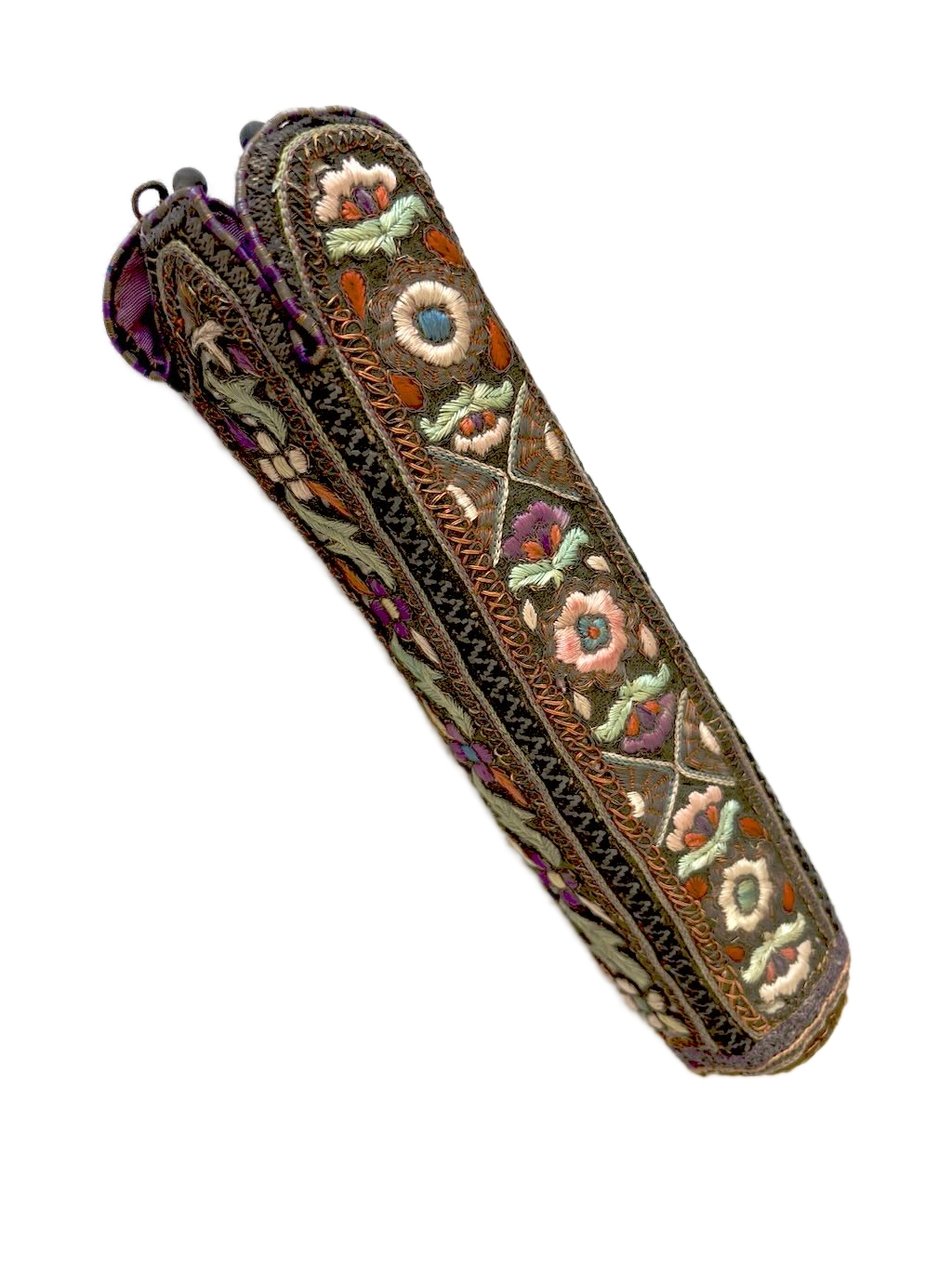
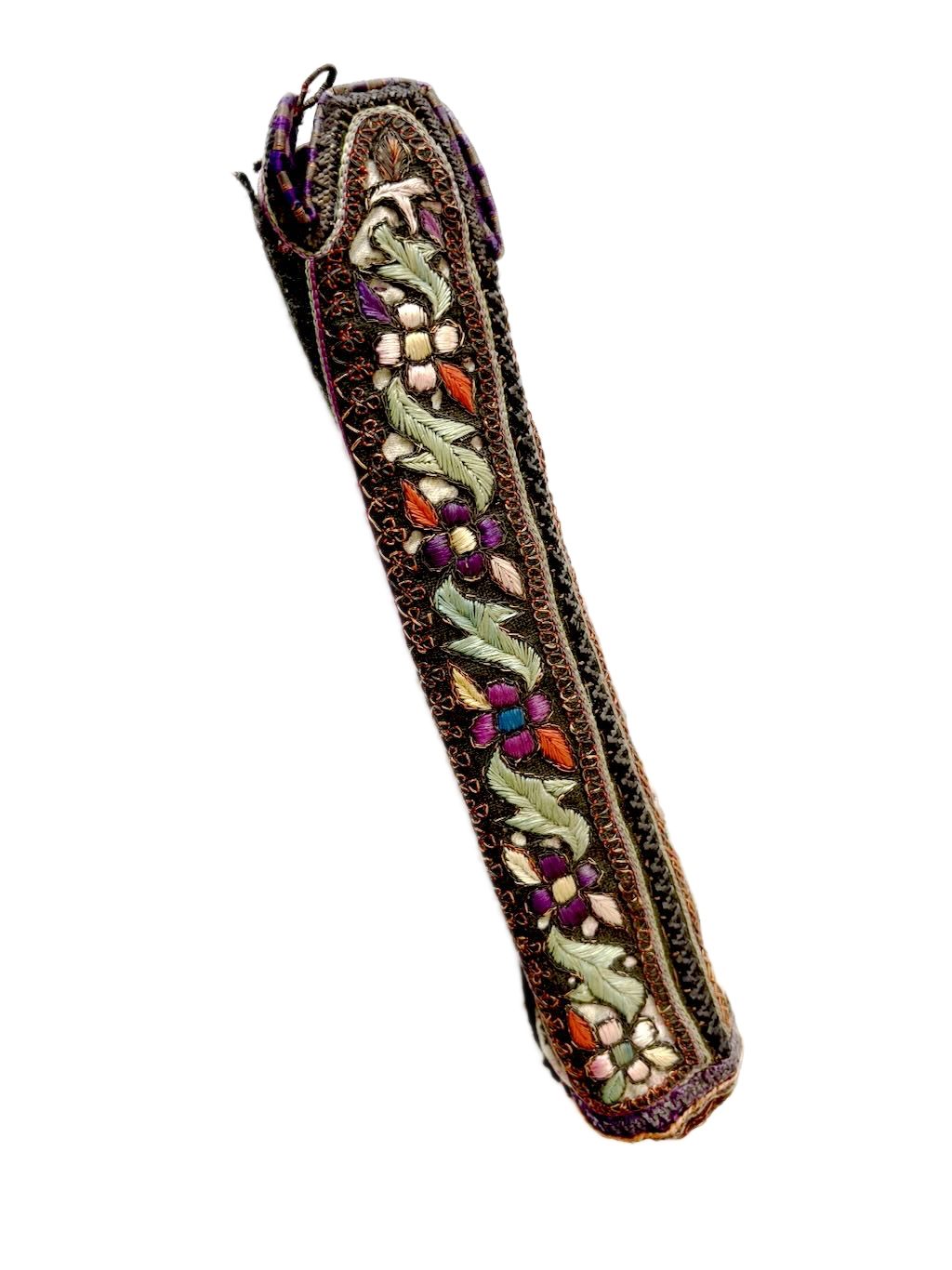
This Antique Persian Qalamdan is an unusual textile-covered example of the traditional Persian pen case. Rather than the painted lacquer and papier-mâché most often associated with qalamdans, this case features elaborate hand embroidery worked in lustrous colored silk and metallic threads.
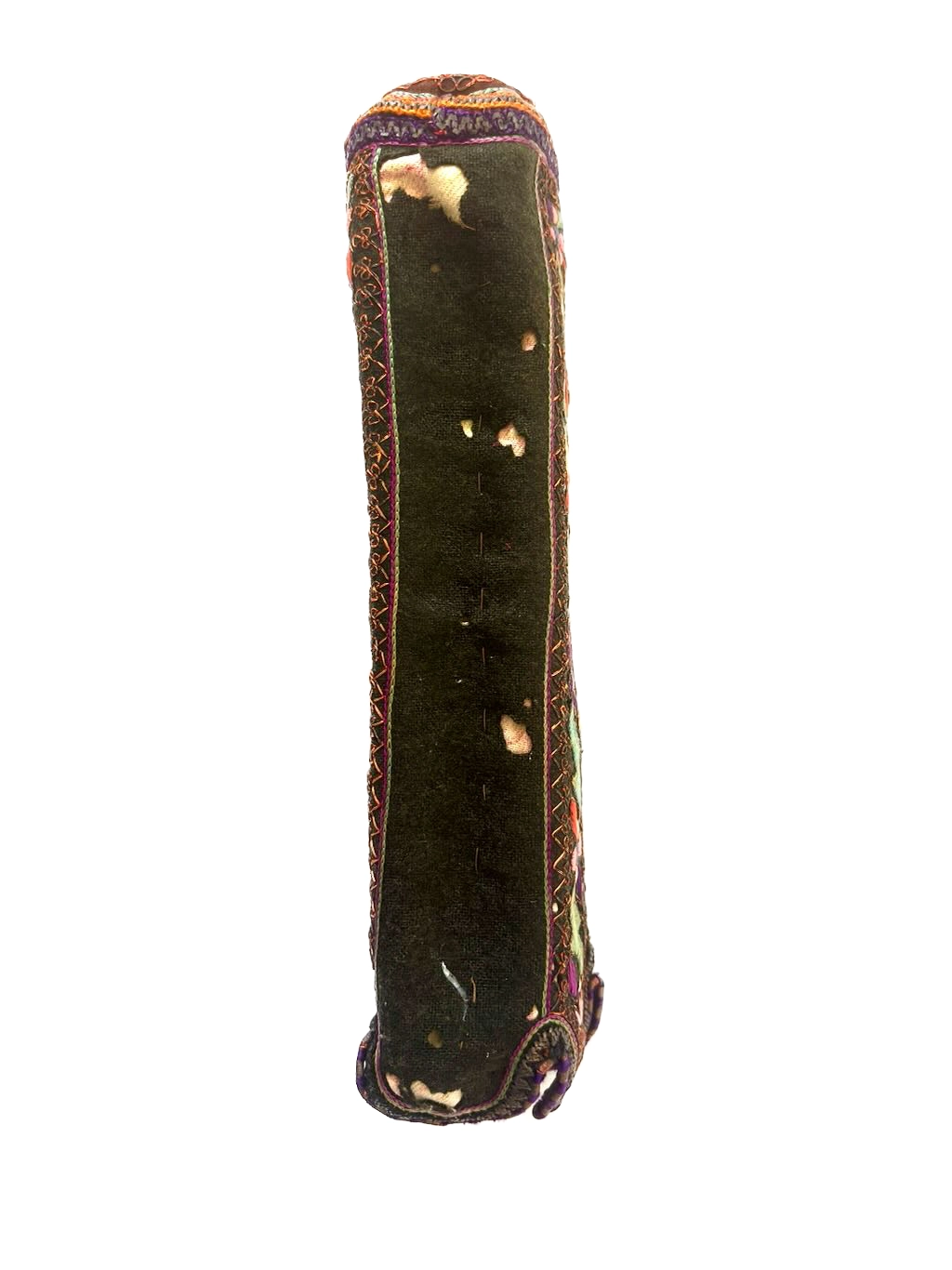
The long, narrow form follows the practical proportions associated with cases made to hold reed pens and writing implements. However, its extraordinary textile decoration transforms this functional object into a highly decorative piece of Persian needlework.
Rich floral compositions cover the sides and ends. Shades of purple, pink, pale green, cream, orange, yellow and blue stand dramatically against dark textile grounds. The varying embroidery techniques give the flowers and foliage considerable texture and dimension.
Fine Silk and Metallic-Thread Embroidery
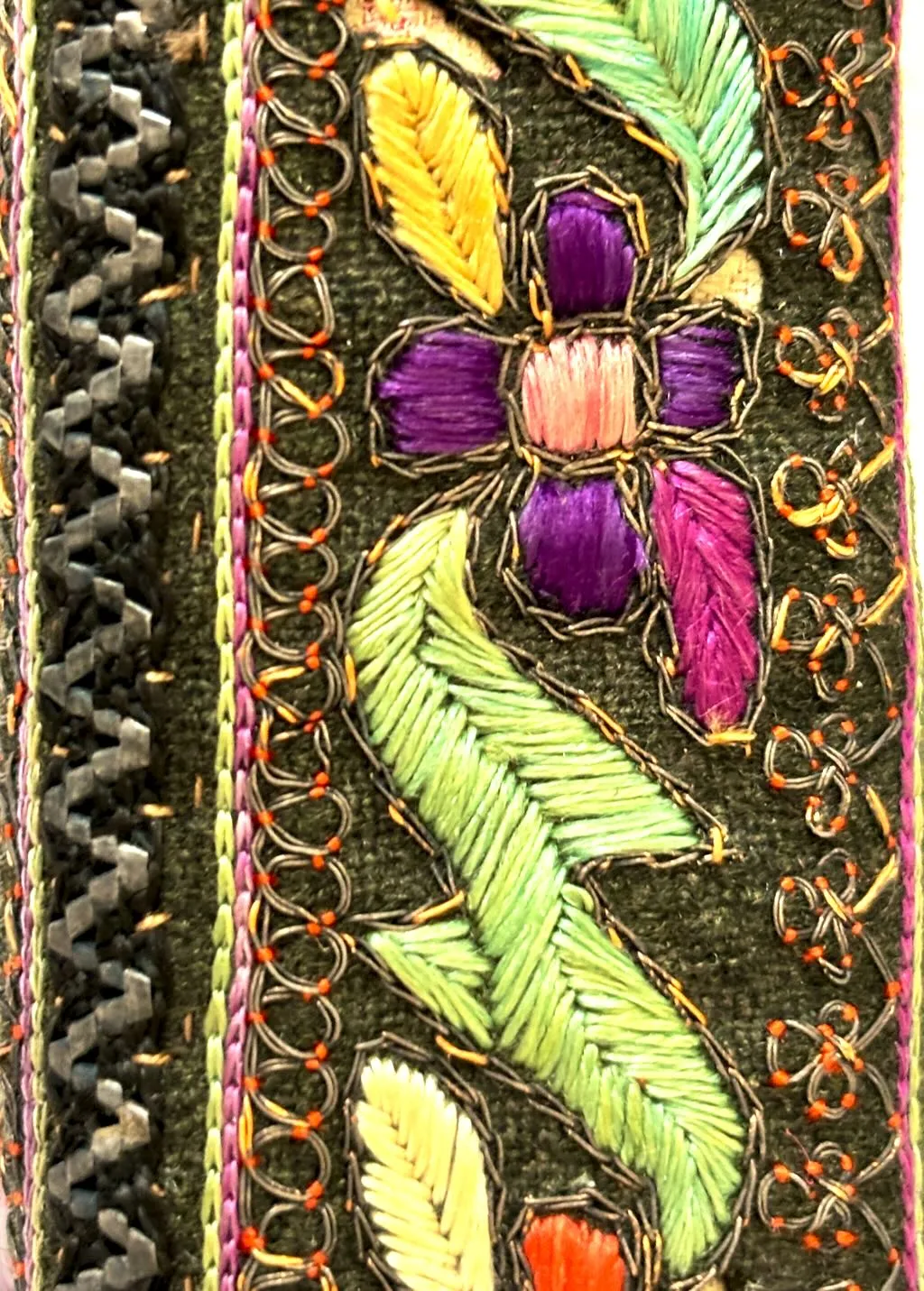
The Antique Persian Qalamdan displays mixed embroidery techniques rather than one confidently identifiable regional stitch tradition. Dense silk stitches form colorful flowers, petals and leaves. Several leaves show carefully angled stitching that follows their shape and creates a feathered, almost herringbone effect.
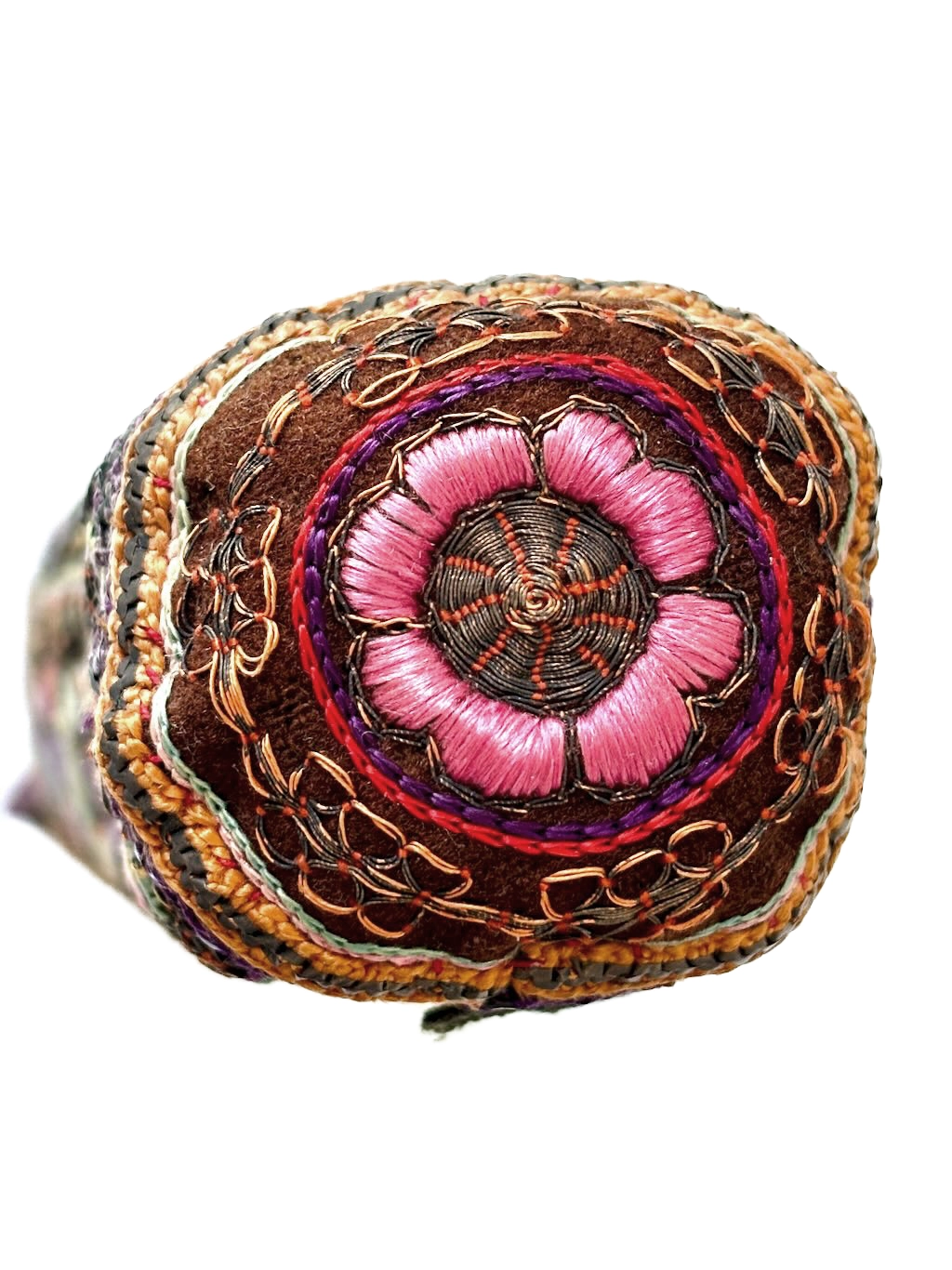
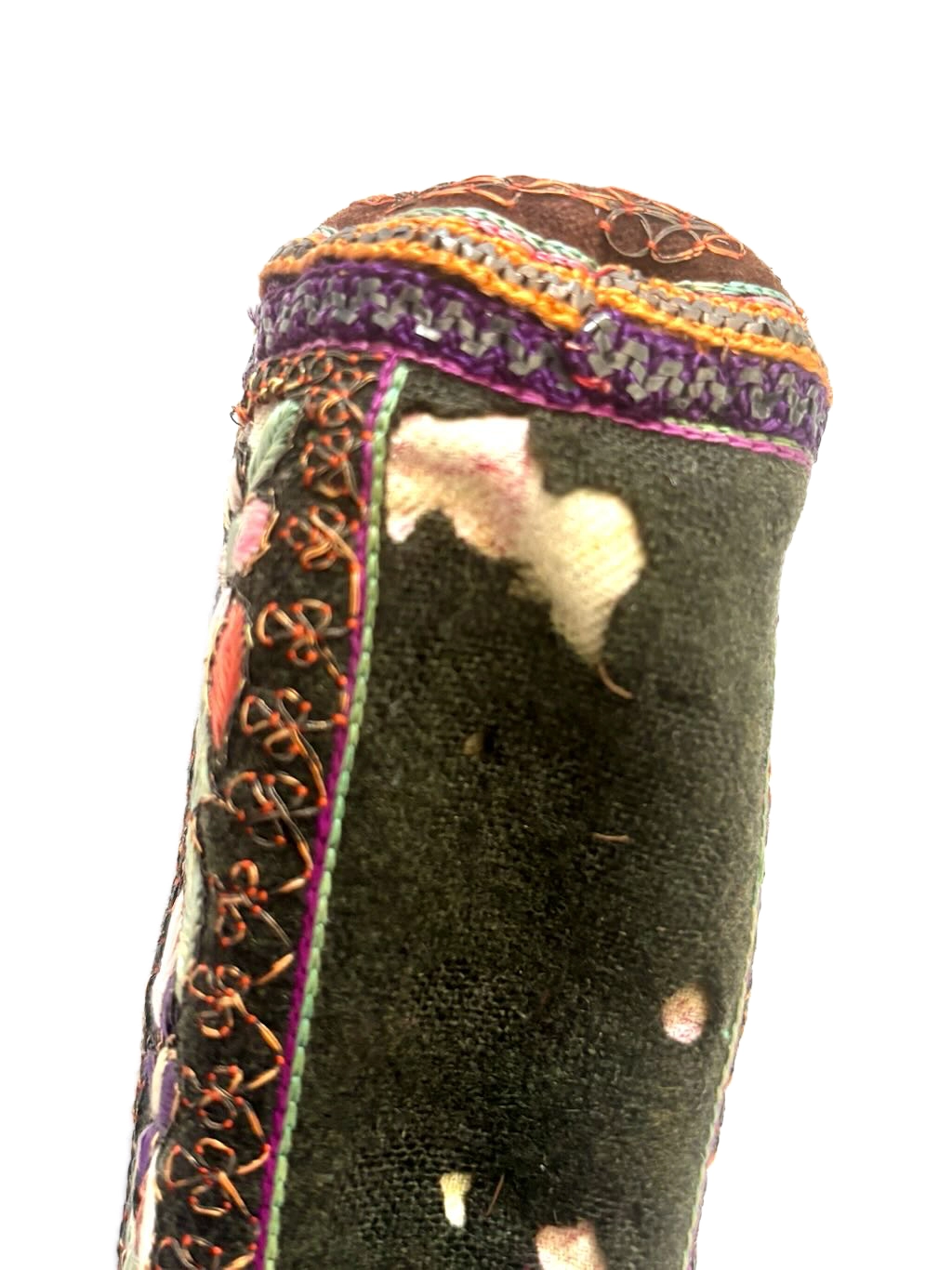
Metallic threads provide another level of ornament. They outline flowers and foliage, form looping borders and create delicate linear details throughout the composition. On the decorated end, metallic thread coils tightly around the center of a large pink flower, producing an intricate circular medallion.
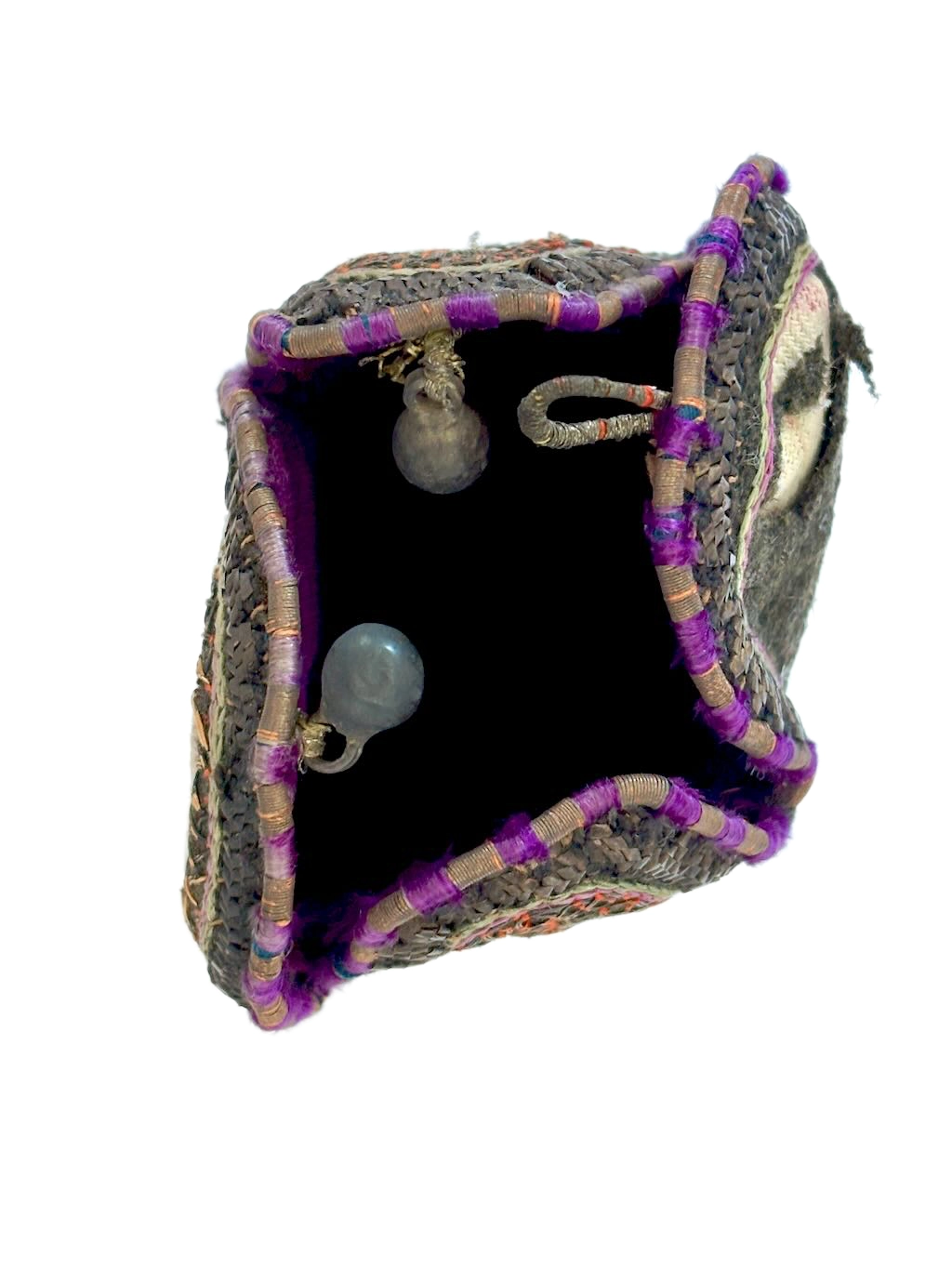
The maker also used narrow embroidered and woven borders to separate the larger floral panels. Purple, orange and other colored threads wrap and finish the edges, creating an exceptionally detailed object from virtually every viewing angle.
A Rare Textile Interpretation of the Persian Qalamdan
Qalamdan derives from the Persian qalam, meaning pen, and dan, meaning container or holder. These elongated cases traditionally protected the reed pens used by Persian calligraphers, scribes and scholars.
Surviving Persian qalamdans most commonly feature rigid lacquered papier-mâché, wood or metal construction. This embroidered example represents a much less frequently encountered textile interpretation of the form.
Its precise workshop and embroidery tradition remain unidentified. Based on its materials, construction, decoration and known acquisition history, we attribute it to Persia and probably to the late 19th or early 20th century.
Elaborate Embroidery Across the Decorated Surfaces
The long sides carry individual arrangements of flowers and foliage rather than simply repeating an identical design. Large blossoms alternate with smaller flowers, buds and leaves, while narrow embroidered borders frame the compositions. The rounded end receives equally careful treatment. A large pink flower surrounds an intricate coiled metallic-thread center, encircled by additional embroidered and metallic-thread borders.
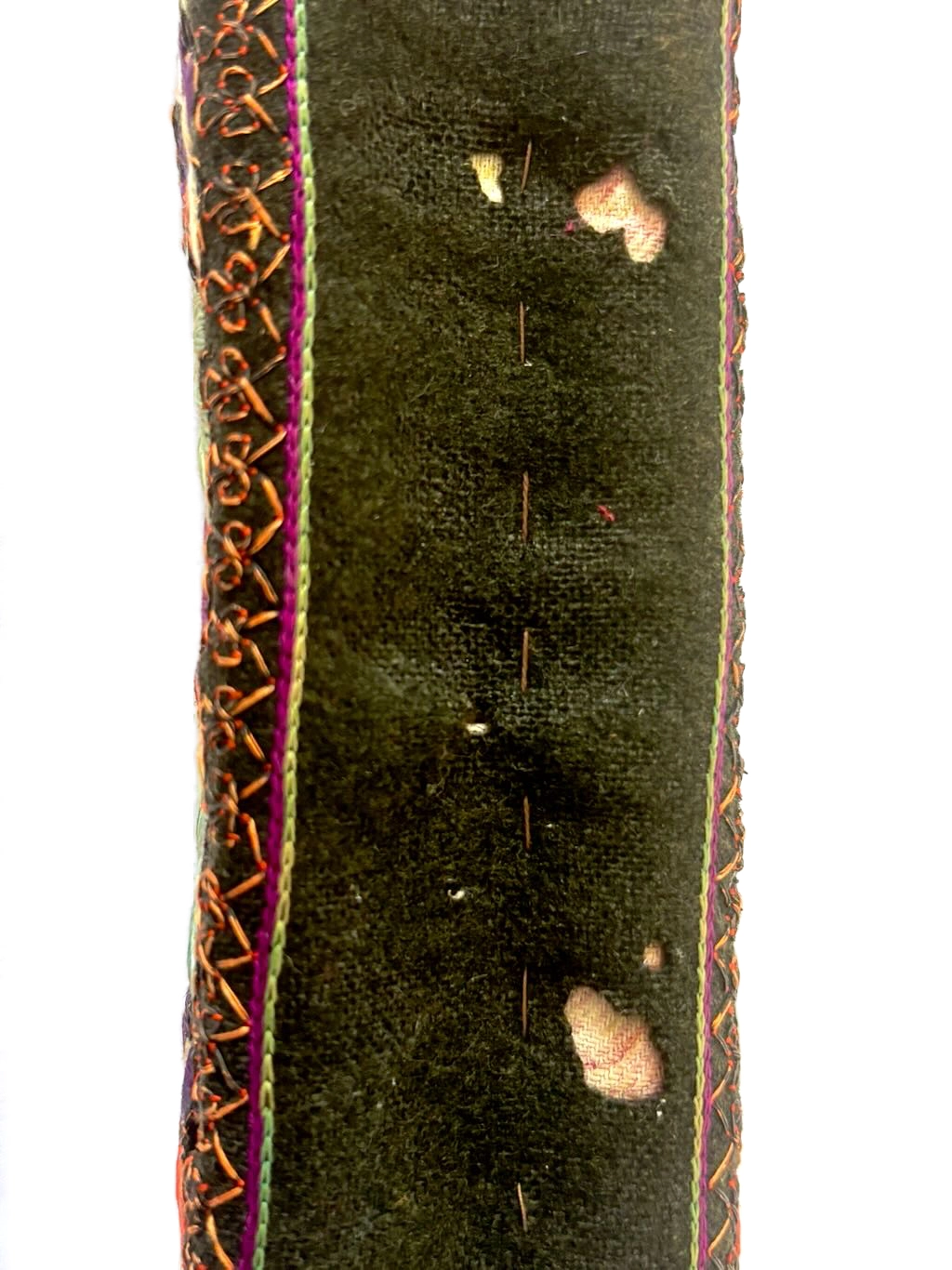
In contrast, the underside is covered in plain dark textile without floral embroidery. This surface also shows the most significant age-related wear, with areas where the outer fabric has deteriorated and the lighter underlying textile is visible. The interior has a dark lining and retains small metal fittings associated with the construction and closure of the case.
Condition of the Antique Persian Qalamdan
The qalamdan remains in good antique condition considering its age. The elaborate floral embroidery retains strong color and considerable detail, with expected age-related wear to the threads and textile surfaces.
The most noticeable deterioration occurs on the plain dark textile covering the underside. Several areas of this fabric have worn away, exposing the lighter underlying fabric or lining. There are also smaller scattered areas of wear and loss. The photographs document these areas closely.
The piece has not been restored. Its original materials, construction and signs of age therefore remain visible. We consider this particularly important for collectors interested in historic textiles and Persian needlework.
An Unusual Piece of Persian Decorative Art
This Antique Persian Qalamdan brings together two important Persian artistic traditions: the culture of calligraphy and the highly developed art of decorative needlework. Its embroidered construction makes it especially intriguing when compared with the familiar lacquered qalamdans of the Qajar period.
It would make an unusual addition to a collection of Persian decorative arts, antique textiles, Islamic writing implements or historic embroidery. It also offers a fascinating study piece for anyone interested in the way traditional functional objects could become vehicles for exceptionally detailed handwork.