
Description
Late 19th Century Tekke Turkmen Chyrpy Ceremonial Mantle
Few surviving Central Asian textiles combine artistic beauty, cultural symbolism, and historical importance as successfully as an authentic Tekke Turkmen chyrpy. Worn during important ceremonial occasions, these remarkable embroidered mantles represented a woman’s place within her community while showcasing the extraordinary needlework skills passed from one generation of Tekke women to the next.
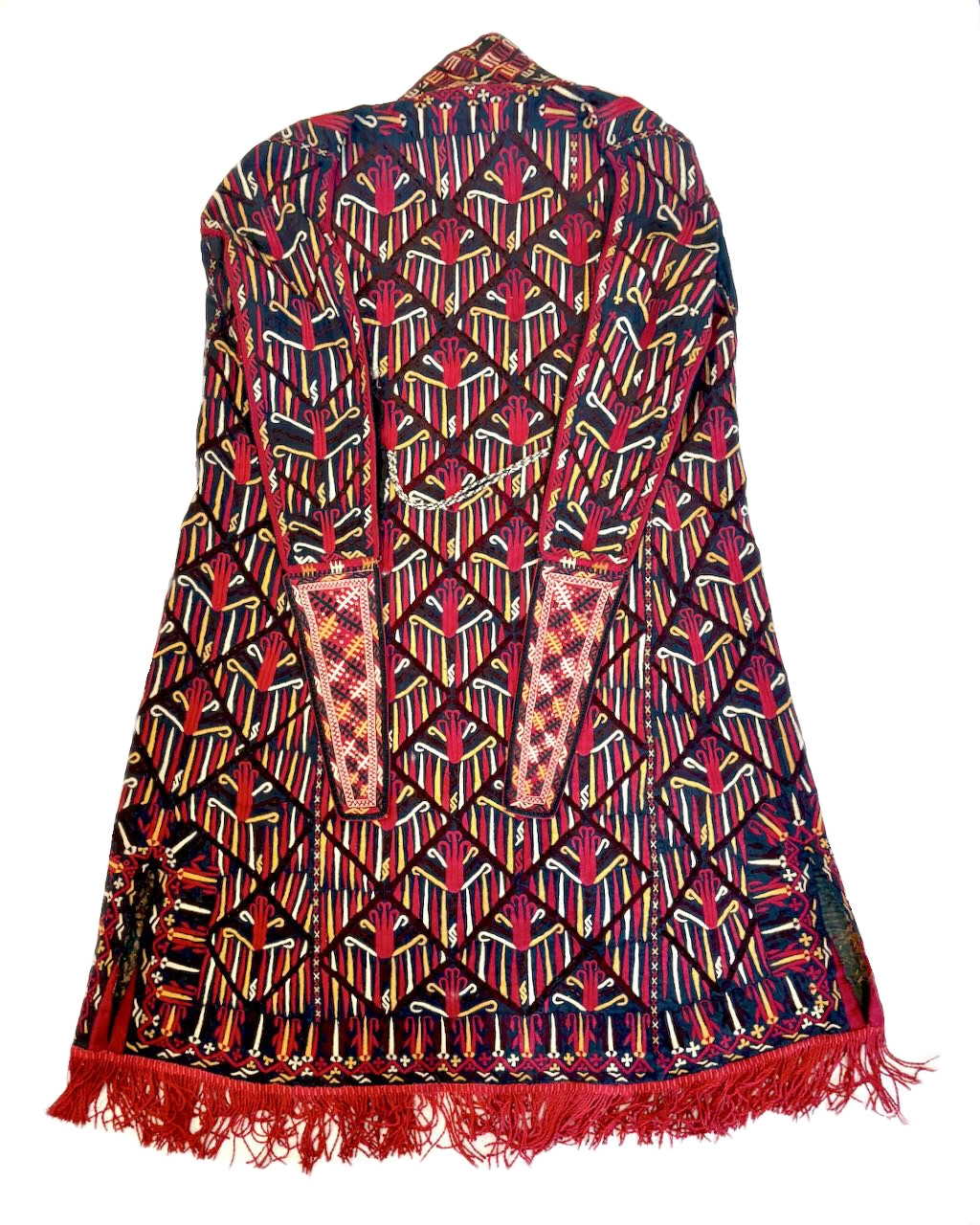
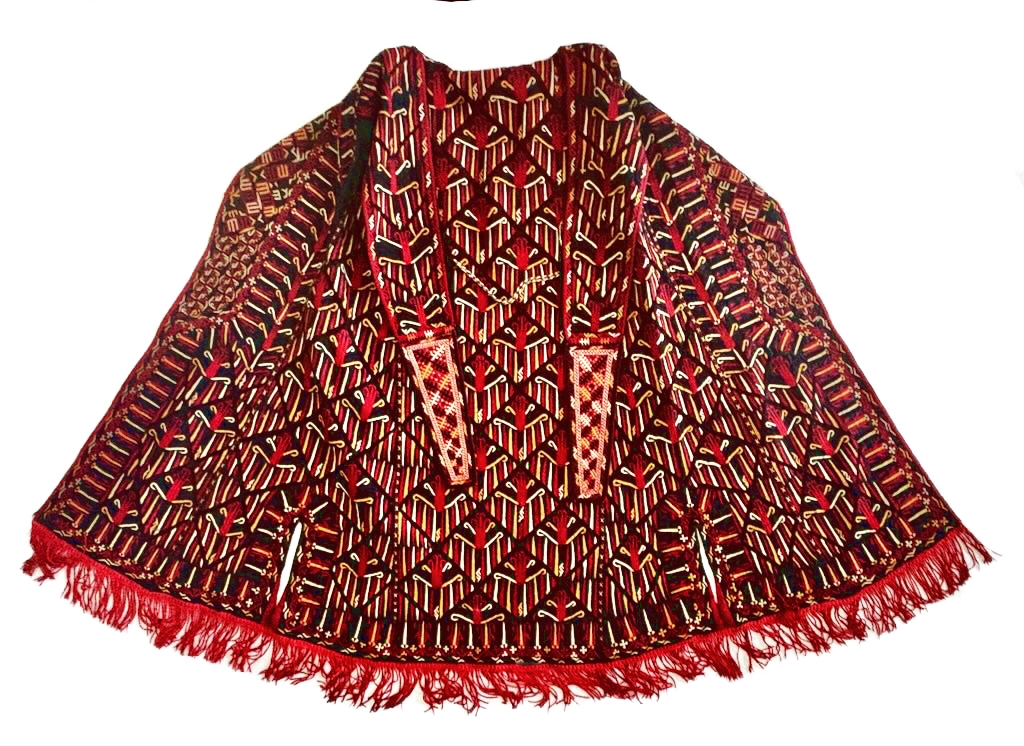
This exceptional late nineteenth-century example immediately captures attention through its richly embroidered silk decoration, deep ceremonial color, elegant proportions, and beautifully preserved construction. Every embroidered motif reflects the remarkable craftsmanship that has made authentic Tekke chyrpy highly desirable among collectors of tribal textiles, Islamic art, and Central Asian ethnographic material.
Unlike an ordinary robe, the chyrpy served as a ceremonial mantle. Women carefully draped it over the head and shoulders while allowing the magnificent silver jewelry beneath to remain visible. Its distinctive false sleeves hung gracefully behind the wearer, creating one of the most recognizable silhouettes in traditional Turkmen ceremonial dress.
Exceptional Tekke Craftsmanship
Tekke women earned widespread admiration for their extraordinary embroidery, and this mantle beautifully illustrates their artistic achievement. The carefully balanced composition, harmonious spacing, and confident execution demonstrate the skill required to produce ceremonial garments of this quality.
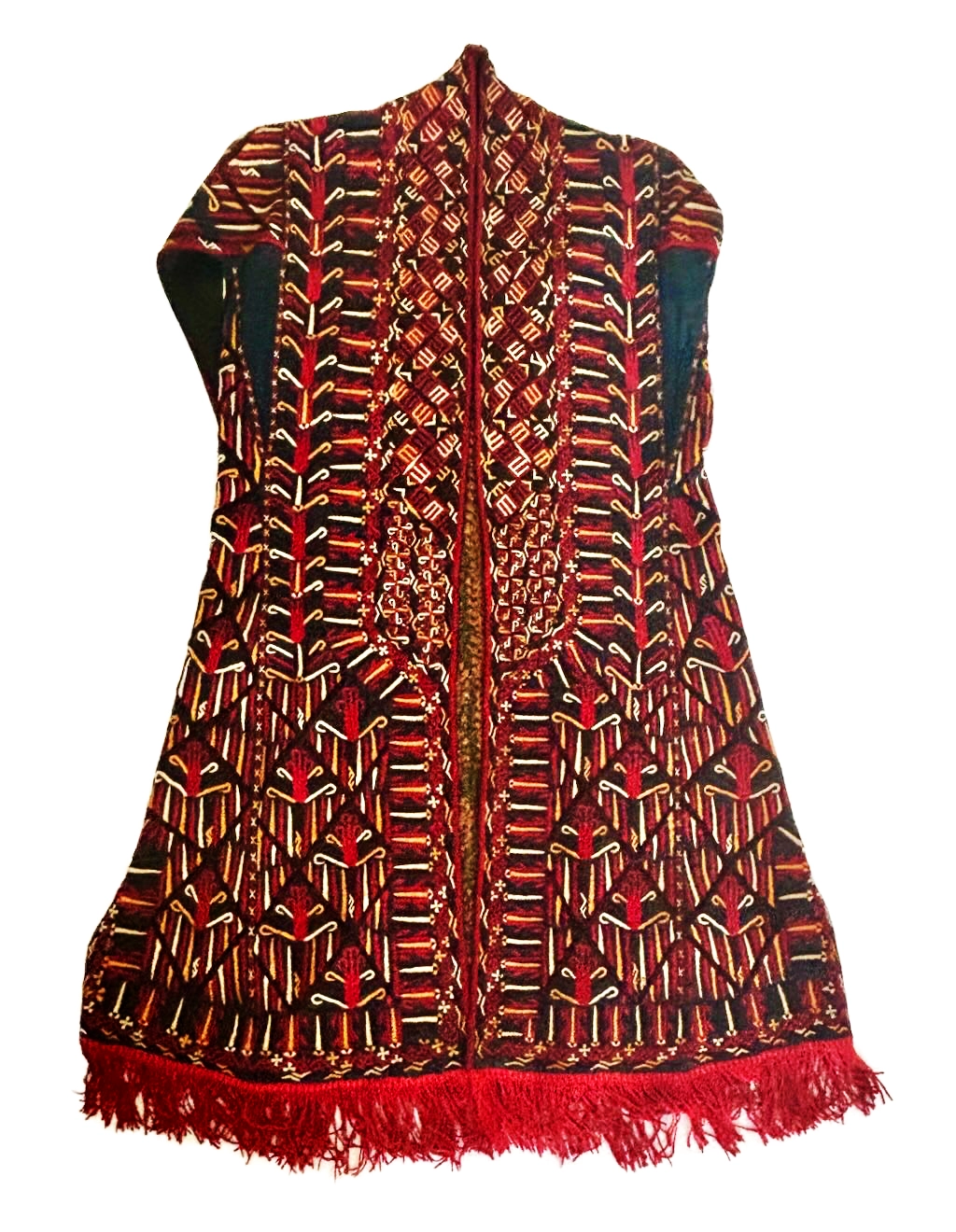
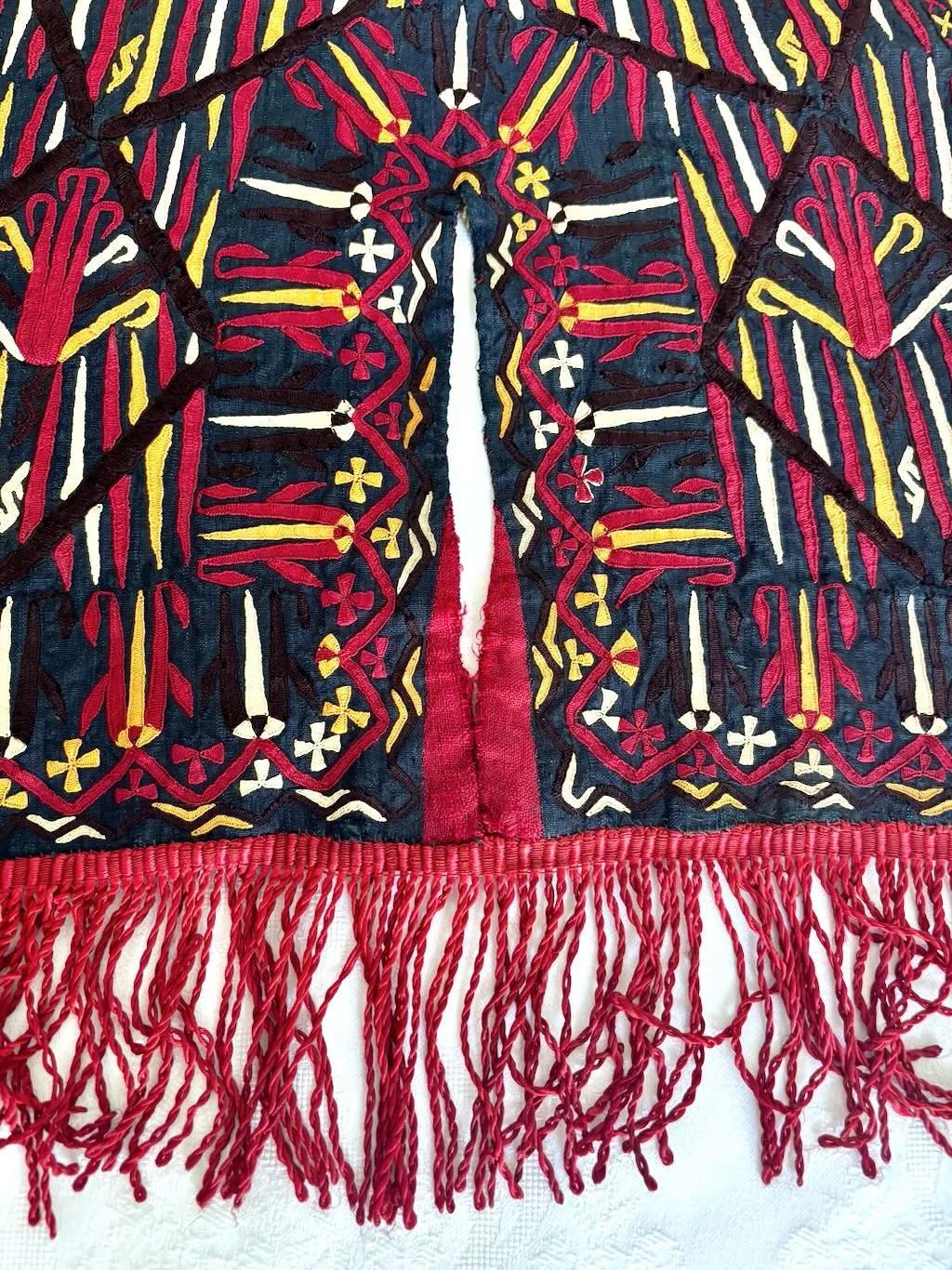
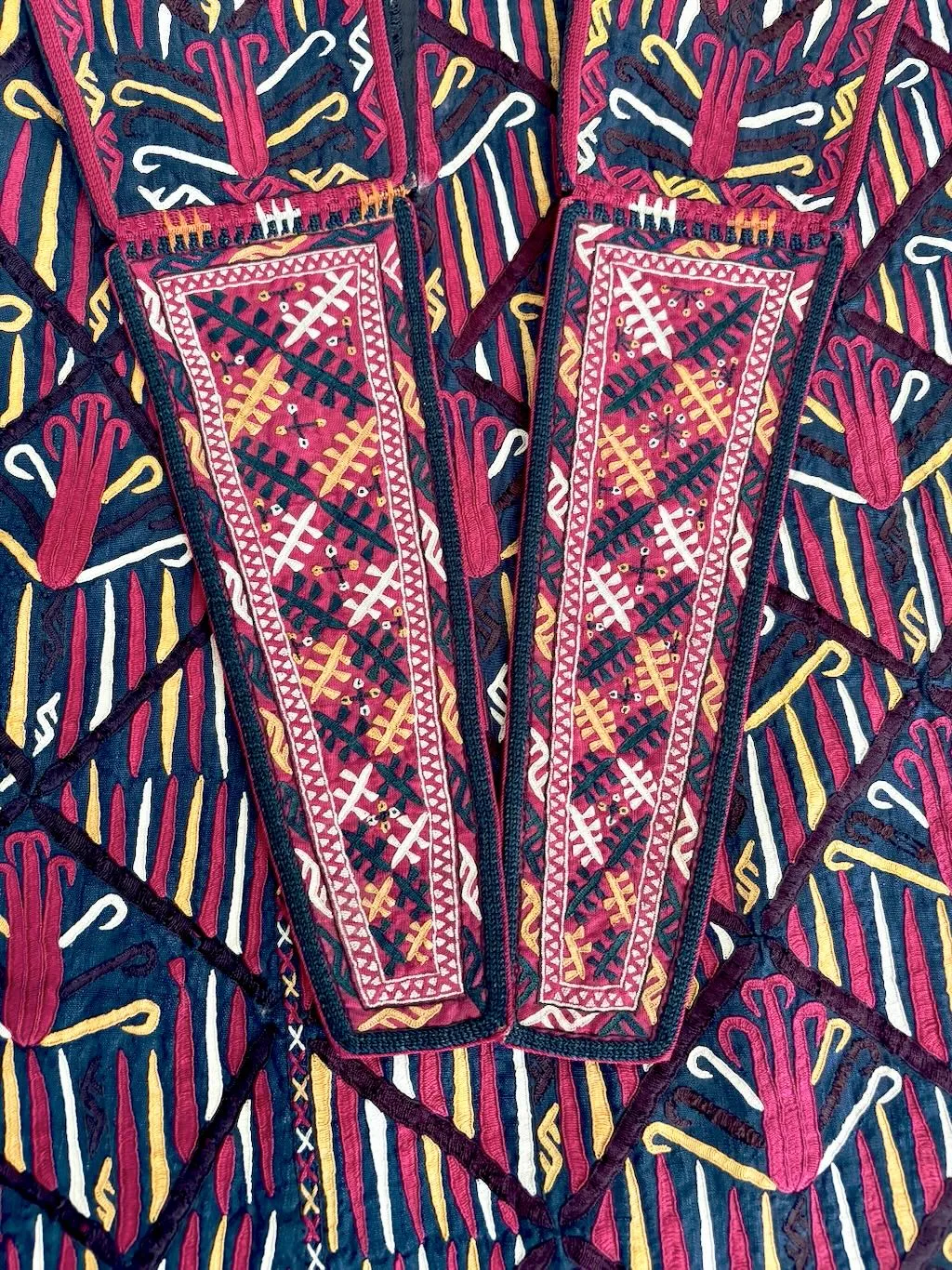
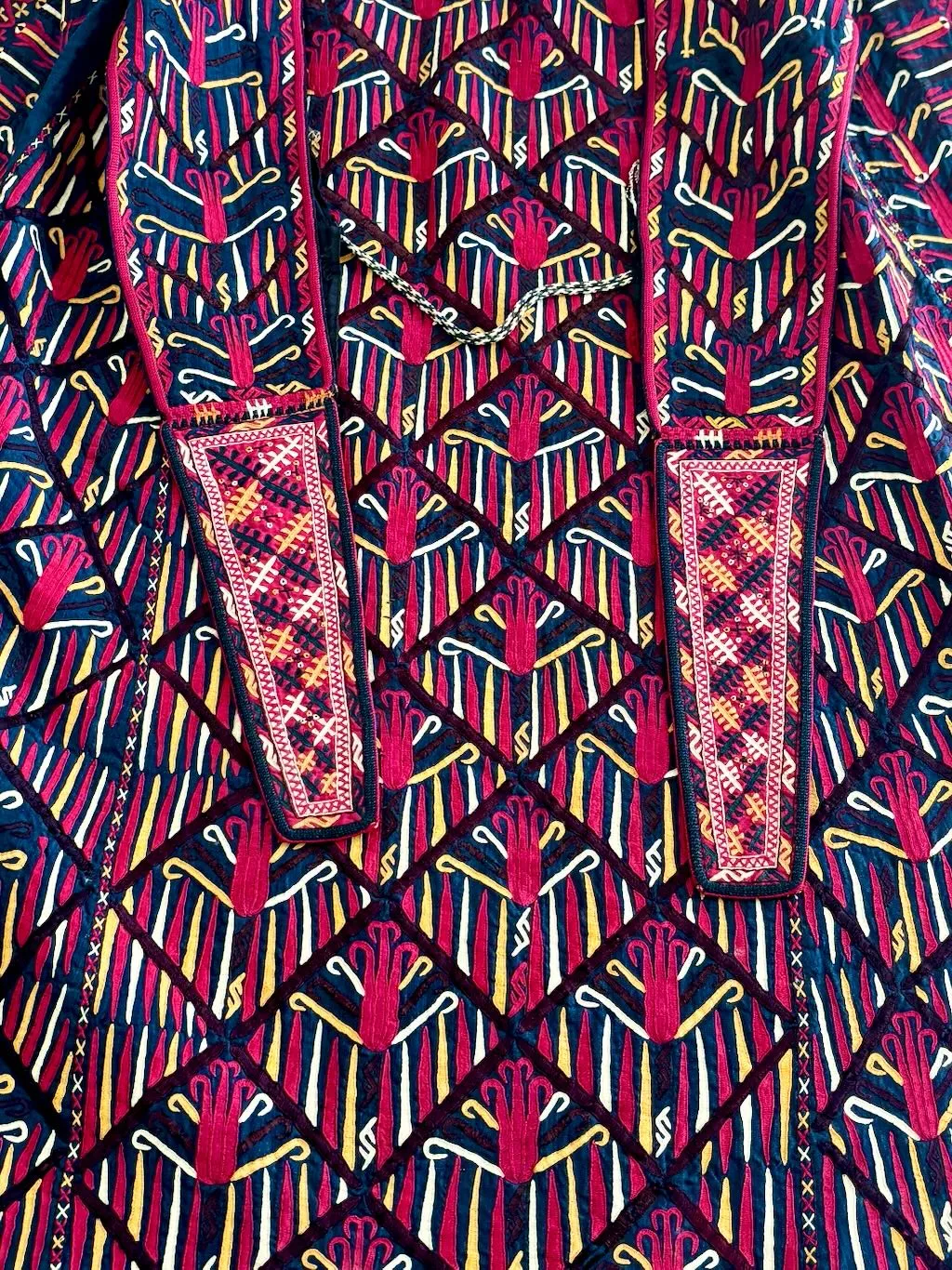
The embroidery retains remarkable clarity throughout the textile. Brilliant silk threads continue to contrast beautifully against the dark ground, allowing the decorative patterns to remain vibrant more than a century after they were created. The original decorative fringe further enhances the elegant proportions of the mantle while completing its ceremonial appearance.
Every section reveals the careful planning expected of authentic nineteenth-century Tekke work. Rather than filling the surface indiscriminately, the embroiderer created a disciplined rhythm of repeating motifs that guides the eye naturally across the garment. The result feels both refined and visually powerful.
Kesdi Embroidery and Symbolic Tulip Motifs
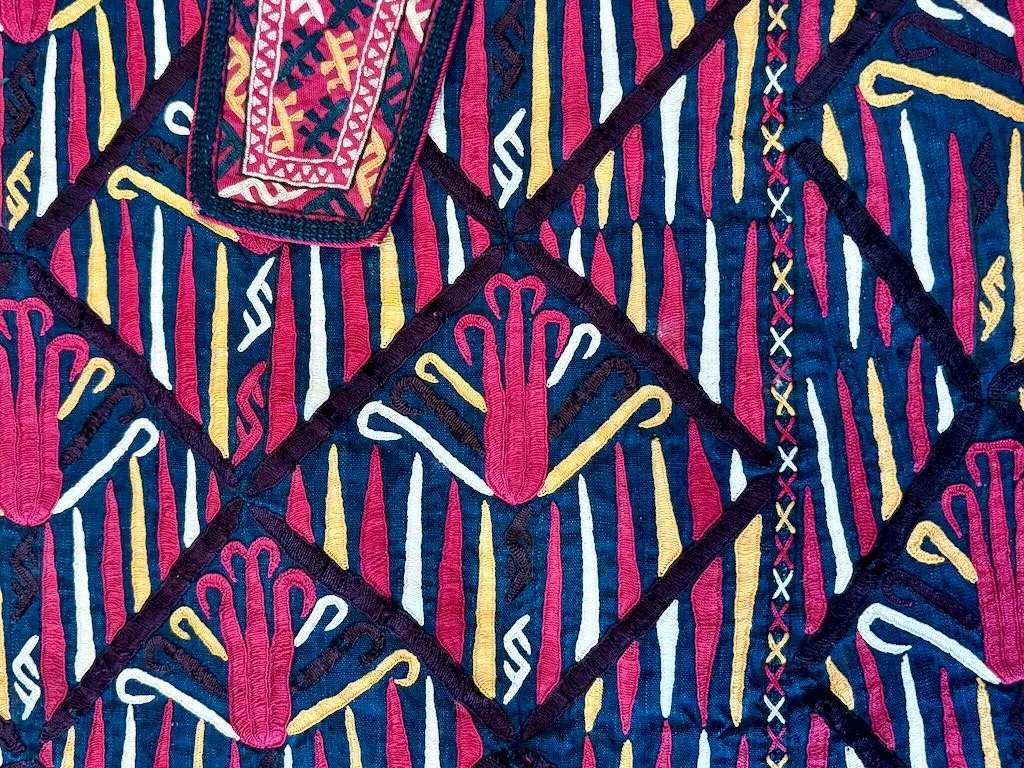
The decoration was executed using the traditional kesdi embroidery technique, one of the defining characteristics of Tekke ceremonial textiles. Women carefully laid brightly colored silk threads across the surface and secured them with fine couching stitches, creating crisp motifs with remarkable depth and brilliance.
Stylized tulips dominate the embroidery, continuing one of Central Asia’s oldest decorative traditions. The tulip symbolized fertility, abundance, and prosperity, making it an especially appropriate motif for ceremonial garments worn during life’s most important occasions. Geometric forms complement the floral designs, creating balance while reflecting the artistic language that distinguished Tekke embroidery for generations.
Viewed closely, the precision of the stitching becomes even more impressive. Tiny, consistent stitches and carefully aligned embroidered bands reveal countless hours of meticulous handwork, transforming the mantle into a lasting work of textile art.
A Ceremonial Mantle with Museum Recognition
Authentic nineteenth-century Tekke chyrpy have become increasingly difficult to acquire. Today, comparable examples reside in the collections of the Metropolitan Museum of Art, the Museum of Fine Arts, Houston, the Victoria and Albert Museum, the Cleveland Museum of Art, the Museum of Anthropology at the University of British Columbia, and the Powerhouse Museum in Sydney. Their preservation by these institutions reflects the lasting artistic and cultural importance of this remarkable textile tradition.
Interest in Tekke ceremonial mantles has also reached a wider audience through PBS Antiques Roadshow, where a late nineteenth-century chyrpy was presented and discussed by textile specialists. Together, museum collections and educational programs continue to highlight the extraordinary craftsmanship and historical significance of these increasingly scarce ceremonial textiles.
To learn more about the remarkable history, symbolism, and ceremonial traditions surrounding this extraordinary garment, we invite you to read our companion article, “Tekke Turkmen Chyrpy: The Remarkable History and Symbolism.”
Condition and Provenance
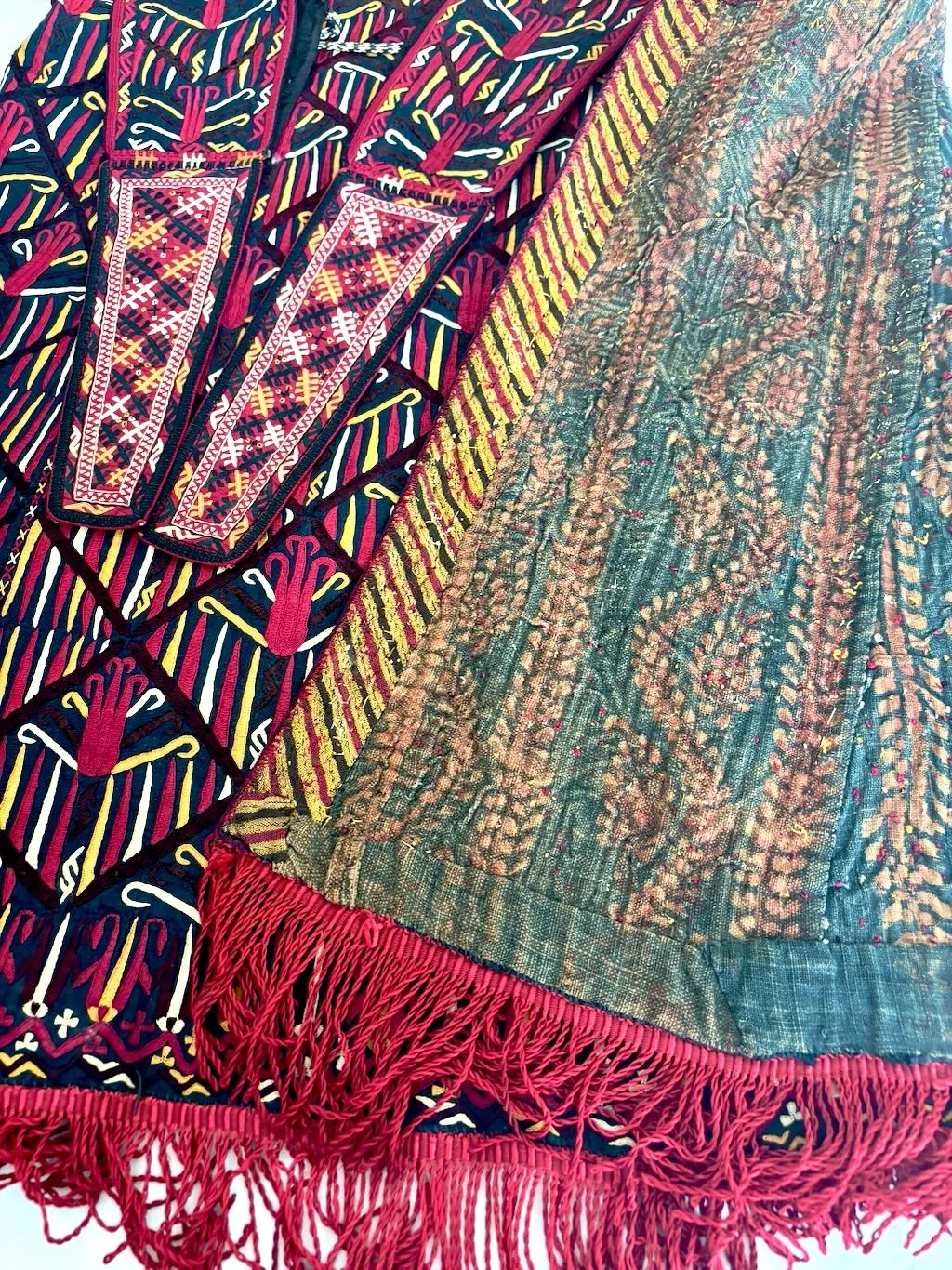
This chyrpy survives in excellent antique condition and remains an outstanding example of late nineteenth-century Tekke craftsmanship. The richly colored silk embroidery retains exceptional visual impact, while the decorative false sleeves and embroidered connecting band remain beautifully preserved. The original fringe completes the mantle and contributes to its elegant presentation.
The textile was acquired from an antique dealer in Tehran during the 1960s and has remained carefully preserved in the Bernardi Family Collection ever since. Its documented provenance, combined with its outstanding craftsmanship and excellent preservation, makes it an exceptional opportunity for collectors seeking an authentic nineteenth-century Tekke ceremonial mantle.
Whether displayed as an important work of textile art or preserved within a serious collection of Central Asian or Islamic decorative arts, this remarkable chyrpy represents a rare opportunity to acquire one of the finest surviving expressions of Tekke ceremonial embroidery. More than a century after it was created, it continues to celebrate the artistry, traditions, and cultural heritage of the women who embroidered it by hand.